

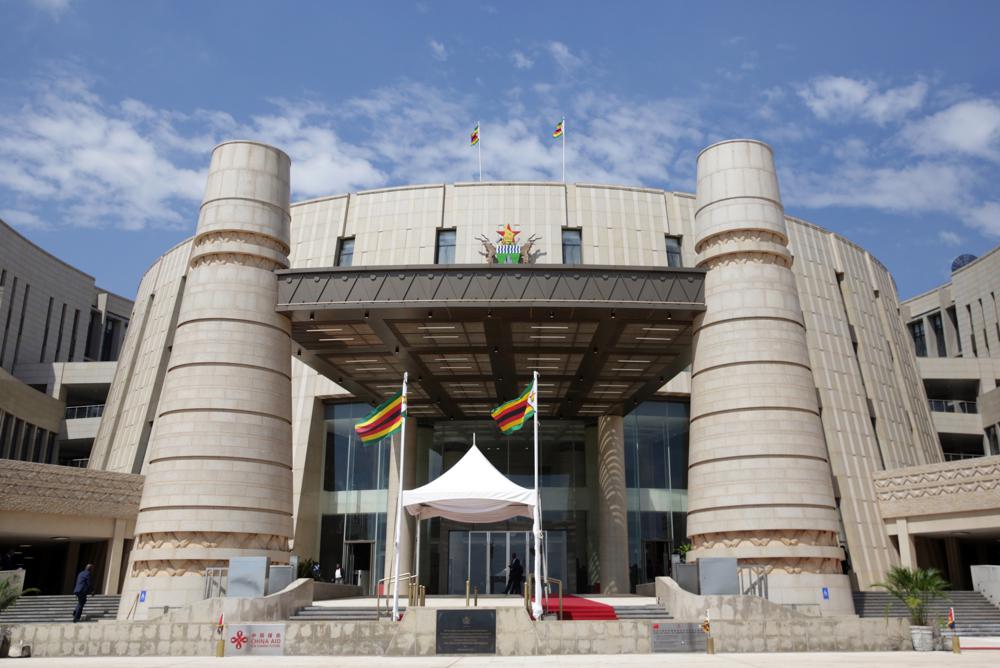

Six liberation war veterans have given Parliament a 72-hour deadline to stop the controversial Constitution Amendment Bill No. 3, accusing the Speaker of the National Assembly, Jacob Mudenda, and Senate President, Mabel Chinomona, of presiding over an “unconstitutional and procedurally fraudulent” process.
CAB3 sailed through the Senate this week with 75 out of 80 senators voting in favour. That followed its passage in the National Assembly last week, where it secured 216 votes against 42.
But in a scathing open letter dated 25 June 2026, the veterans demanded that Parliament immediately suspend all proceedings on the Bill and withdraw it from further consideration.
The signatories, Reuben Zulu, Godfrey Gurira, Shoorai Nyamangodo, Joseph Chinyangare, Dogmore Knowledge Ndiya and Joseph Chinguwa, described the proposed changes as “fundamentally flawed, substantively unconstitutional and procedurally fraudulent”.
Writing as “Concerned Citizens of the Republic of Zimbabwe” and “defenders of its Constitution”, the veterans said the passage of CAB 3 represented “a grave assault on the supreme law of Zimbabwe”.
At the centre of their objection is Section 328 of the Constitution, which governs amendments to presidential term limits.
The letter argues that Section 328(7) places a “substantive limitation” on amendment power: the incumbent cannot benefit from a term-limit extension without a national referendum.
CAB3, however, includes a “notwithstanding Section 328(7)” clause in Clause 3(2a). The veterans say this is “a brazen attempt to render Section 328(7) subject to the Bill, effectively nullifying its substantive limitation without a referendum”.
“This is not merely a procedural oversight; it is a substantive amendment in non-express terms, a direct violation of Section 328(2), and a calculated assault on the Constitution itself,” the letter reads.
The group also alleges that the Bill’s passage was “criminally contaminated” by inducements. They point to public reports that Members of Parliament were “induced, rewarded, or corrupted by vehicles and money linked to support for CAB3”.
The letter names Samantha Mureyani (CCC), Remigious Matangira (ZANU-PF), and Susan Matsunga (CCC) as MPs allegedly connected to benefits promised by businessman Wicknell Chivayo. It further claims MPs were given US$10,000 cash each, with the money coming from Scott Sakupwanya through the Chief Whips.
Section 18 of the Privileges, Immunities and Powers of Parliament Act, the veterans argue, prohibits MPs from accepting any “fee, compensation, gift or reward” in respect of promoting a Bill. Section 170 of the Criminal Law (Codification and Reform) Act also criminalises bribery by public officers, they said.
“A vote bought by cash and keys is not a constitutional vote; it is an exhibit in a criminal inquiry,” the letter states.
The veterans added that Standing Order 51 requires MPs to register financial interests, and failure to declare a “Fortuner and US$50,000” constitutes contempt of Parliament.
Addressing Mudenda and Chinomona directly, the veterans said the two presiding officers were “custodians of the integrity of our legislative processes” and had failed in that duty.
“We bring to your attention the critical deficiencies, illegalities, and unconscionable conduct that have marred the reading, debate, and purported passage of CAB3,” the letter says.
Among other demands, the veterans want Parliament to put all CAB3 proceedings on hold, declare the National Assembly vote invalid, and stop the Senate from considering the Bill any further.
They are also calling for a parliamentary privileges inquiry and for MPs to come clean about any benefits they received in connection with the constitutional amendment.
On top of that, the veterans want Parliament to refer the bribery and inducement allegations to the Zimbabwe Anti-Corruption Commission and the Prosecutor-General for investigation.

 Pindula WhatsApp Channel
 Facebook Page


Leave a Reply