

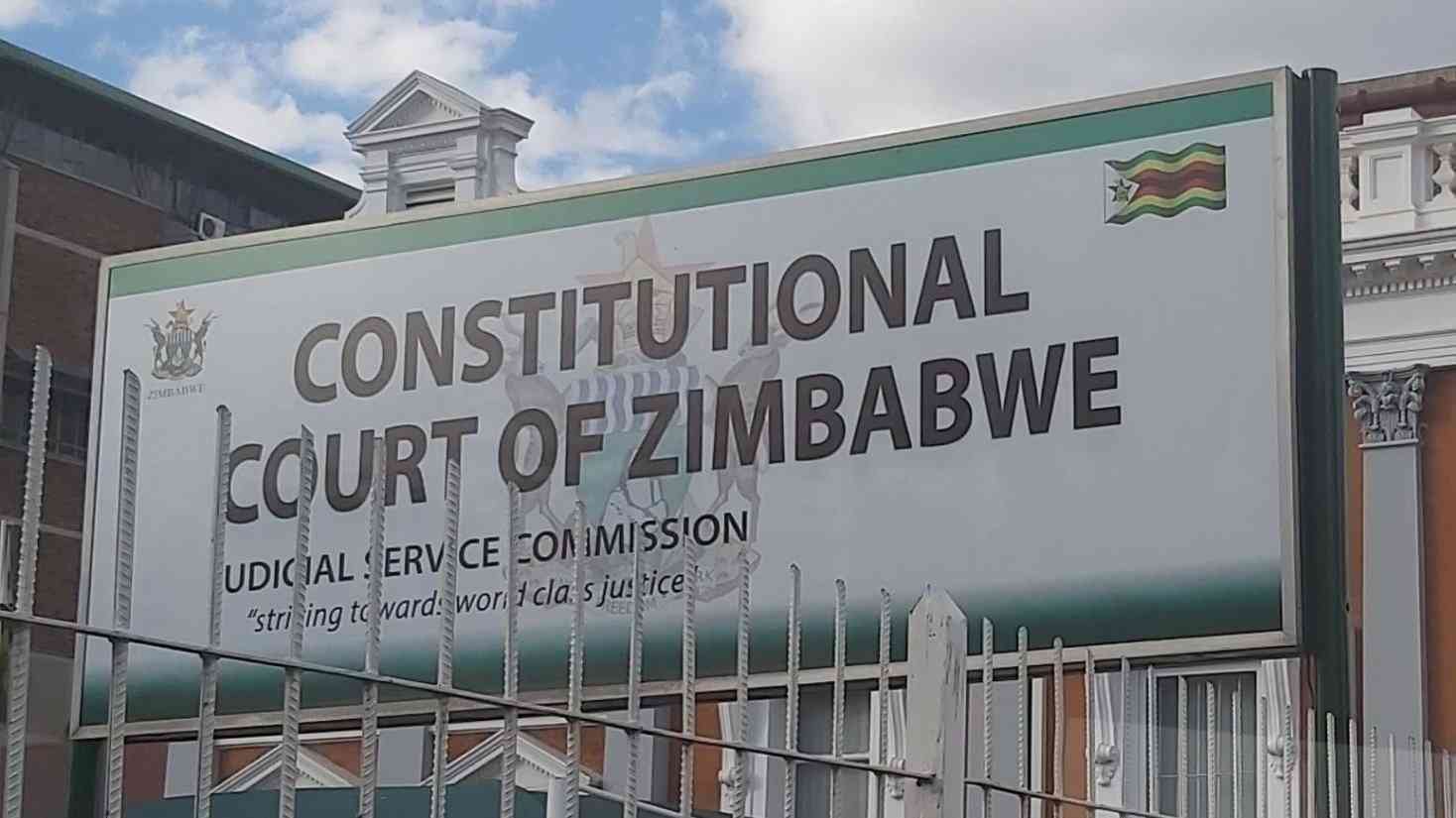

A National Constitutional Assembly (NCA) member has approached the Constitutional Court seeking a declaration that the Constitution of Zimbabwe Amendment Act No 3 of 2026 is null and void, arguing that Parliament and President Emmerson Mnangagwa failed to meet their constitutional obligations in passing and assenting to the law.
Vhurande Mahlupeko, a voter from Chiredzi East and member of the NCA national executive, filed his application on 18 July. He is represented by Professor Lovemore Madhuku.
Mnangagwa assented to the Constitution of Zimbabwe Amendment Bill No 3 of 2026 on or about 7 July, and it was gazetted as Act No 6 of 2026. The Bill had earlier been passed by the Senate by 75 votes to four.
Mahlupeko’s challenge is at least the fourth against the amendment, following applications by Prince Dubeko Sibanda, Youngerson Matete and Tambara Casper. Unlike the earlier cases, his application targets the validity of the entire amendment exercise and asks the court to strike down the Bill and the resulting Act in full.
His first ground is based on section 328(3) of the Constitution, which bars Parliament from amending any provision unless the precise terms of the proposed amendment were gazetted at least 90 days before being tabled. He argues Parliament “went on a frolic of its own” and amended nine provisions that were never contained in the Bill as originally gazetted.
The nine provisions are sections 94(3) on assumption of office by a vice-president acting as president, 101 on presidential succession, 145 on the first sitting of a new parliament, 163 on the composition of the judiciary, 166 on the make-up of the Constitutional Court, 181 on the appointment of acting judges, 243 on the Zimbabwe Human Rights Commission, 277 on local authority elections and 285 on the National Council of Chiefs.
Mahlupeko argues these changes have serious consequences that the public was never given a chance to debate. He says an amendment to section 168 has removed the Chief Justice and Deputy Chief Justice from the Supreme Court bench while keeping them as part of the High Court under section 170, and that removing the cap on the number of Constitutional Court judges under section 166 could lead to undermining judicial independence through “packing the bench”.
He also questions shifting responsibility for convening the first sitting of a new parliament to the Clerk of Parliament, which he describes as a sensitive and onerous duty, and changes to the appointment of acting judges that could see “politically partisan legal practitioners” appointed for short-term political ends.
His second ground relies on section 328(7), which prohibits Parliament from amending a term-limit provision in a way that benefits sitting office-holders. He points to clauses that extended presidential and parliamentary terms from five to seven years, amending sections 95 and 143. This, he argues, benefits the incumbents, as both Mnangagwa and the current Parliament will serve two years longer than under the unamended Constitution. His affidavit says debate in both Houses made clear the amendments were intended to allow the President to extend his term.
Third, he argues Parliament breached section 328(2), which prohibits amendment by implication. The Bill rewrote section 92 to provide for the President to be elected by Parliament sitting jointly, rather than directly by voters. Mahlupeko argues this by implication amends sections 67, 91 and 155, which guarantee the right to vote for elective public office, describe the presidency as elective and entrench universal adult suffrage and equality of votes.
His fourth ground is that Parliament failed to give public notice, as required by section 131(5)(b), of the date the Bill was transmitted to the President for assent. He says the public only learned that Mnangagwa had signed the Bill after the fact on 7 July, with no prior notice in the Gazette.
The final ground is directed at the President personally. Mahlupeko argues that under section 196(2) read with section 110(2)(a), Mnangagwa should not have assented to a Bill in which he had a direct personal interest and should have recused himself and allowed an acting president to sign.
Mahlupeko wants the court to declare that Parliament and the President failed to fulfil their constitutional obligations and that the passage of the Bill by both Houses is null and void, rendering Act No 6 of 2026 a nullity.
In the alternative, he asks the court to strike down only the affected portions. He argues a constitutional amendment should be treated as all or nothing, with no room to separate objectionable from unobjectionable parts. He also asks that Parliament pay costs on the higher legal practitioner-and-client scale.
Parliament, the President, the Attorney-General and the Minister of Justice, Legal and Parliamentary Affairs are cited as first to fourth respondents. Under Constitutional Court rules, respondents have 21 days from service to file a notice of opposition.
More: ZimLive


 Pindula WhatsApp Channel
 Facebook Page


Leave a Reply