

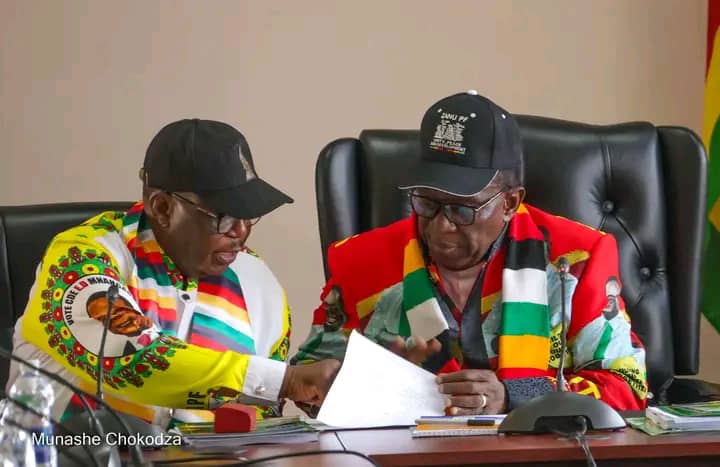

ZANU-PF has announced plans to begin a process to extend President Emmerson Mnangagwa’s term by two years, potentially keeping him in power until 2030.
The proposal was endorsed on Saturday at the party’s 22nd annual conference in Mutare, where delegates instructed the government to start drafting legislation to amend the Constitution.
Mnangagwa, 83, is constitutionally required to step down in 2028 after serving two elected terms. Legal experts note that any change would require a constitutional amendment and possibly a referendum.
With a two-thirds majority in the National Assembly and a majority in the Senate, ZANU-PF holds significant leverage to pursue such amendments.
Speaking at the close of the conference, party Secretary for Legal Affairs Ziyambi Ziyambi urged the government to ensure that all constitutional requirements are met ahead of next year’s conference. He said:
“The 21st National People’s Conference of ZANU PF held in 2024 in Bulawayo resolved that, in recognition of the extensive development milestones achieved under the Leadership of His Excellency President Emmerson Mnangagwa, it is resolved that his term of office be extended from 2028 to 2030.
“Party and Government are urged to do the needful to ensure all constitutional legalities are in place before next year’s conference.
“Noting that no notable steps have been taken to implement the above resolutions, this conference, hereby reaffirms these resolutions and direct the secretary for legal affairs and minister of Justice to ensure that before the 23rd National People’s Conference, this resolutions of the party is fully implemented.”
Mnangagwa has previously insisted he is a “constitutionalist” with no interest in clinging to power. But his loyalists have quietly been pushing for him to stay longer since last year’s disputed election, while rivals inside the party, aligned with Vice President Constantino Chiwenga, are openly opposing any extension.
The president made no mention of the proposed extension during his closing remarks at the conference.
Mnangagwa came to power in 2017 promising democratic and economic reforms after toppling longtime leader Robert Mugabe.
Since then, however, Zimbabwe has faced a severe economic crisis, with hyperinflation, high unemployment, and repeated allegations of corruption.
Critics say ZANU-PF has crushed dissent, weakened the judiciary, and turned elections into a managed process rather than a true democratic contest.
 Pindula WhatsApp Channel
 Facebook Page


Leave a Reply