



Members of Parliament have criticised Zimbabwe’s wildlife protection laws, arguing that they place the interests of animals above human safety and livelihoods.
The issue was raised in the National Assembly last Wednesday by Elizabeth Masuku (MP), who asked the Minister of Environment about the government’s policy on how people and wild animals can coexist, citing recent incidents in Hwange and Tsholotsho. She said:
“Since a lot of people are being killed by these animals, what is the government doing to protect communities living near wildlife areas?”
In response, Minister of Justice, Legal and Parliamentary Affairs Ziyambi Ziyambi said there are policies in place to manage the coexistence of humans and wildlife within their respective habitats. He said:
“We have a policy. However, once in a while, you cannot control animals crossing into areas where people live.
“In those circumstances, our Parks and Wildlife personnel are called in to ensure that they either put down the animals or take them back.”
“We have a policy where animals stay in their game parks. If an animal strays and becomes dangerous to the inhabitants of that area, Parks officials will come and put that animal down.
“However, we must also co-exist with our wild animals, in their space and in ours.”
Contributing to the debate, MP Shakespear Hamauswa criticised the legal framework for what he called a lack of fairness, arguing that the laws seem to prioritise the protection of animals over that of people. He said:
“Why has the government not put in place a law that says when a person kills or injures a wild animal, that person is severely sentenced, yet, on the other hand, when a wild animal attacks a human being, there is no compensation for the humans?”
Ziyambi rejected the claim, saying it was incorrect to suggest that the law prioritises wildlife over people. Said Ziyambi:
“I have indicated in my earlier response that when an animal strays and becomes dangerous to human beings, many times Parks and Wildlife personnel put it down rather than take it back to its original habitat.
“It is not correct to say that the law favours animals over human beings. The animals are being put down, and human beings must also act responsibly around wildlife.”
According to statistics from the Zimbabwe Parks and Wildlife Management Authority (ZIMPARKS), 18 people were killed and 32 others injured by wild animals between January and March 2025.
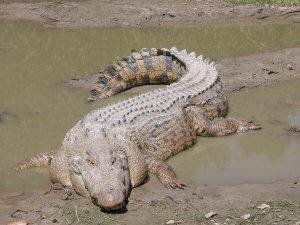
Crocodiles, hippos and elephants are regularly cited as the main threats to human life, especially in areas near water bodies such as Lake Kariba.
During the same period, wild animals attacked 53 cattle and 85 goats.
Extended droughts, often linked to the El Niño weather system, are forcing both people and wildlife into shared spaces, such as rivers and settlements, in search of scarce food and water.
At the same time, the expansion of human settlements into traditional wildlife corridors and habitats is reducing the natural buffer zones between humans and animals.
More: CITE
 Pindula WhatsApp Channel
 Facebook Page


Leave a Reply