

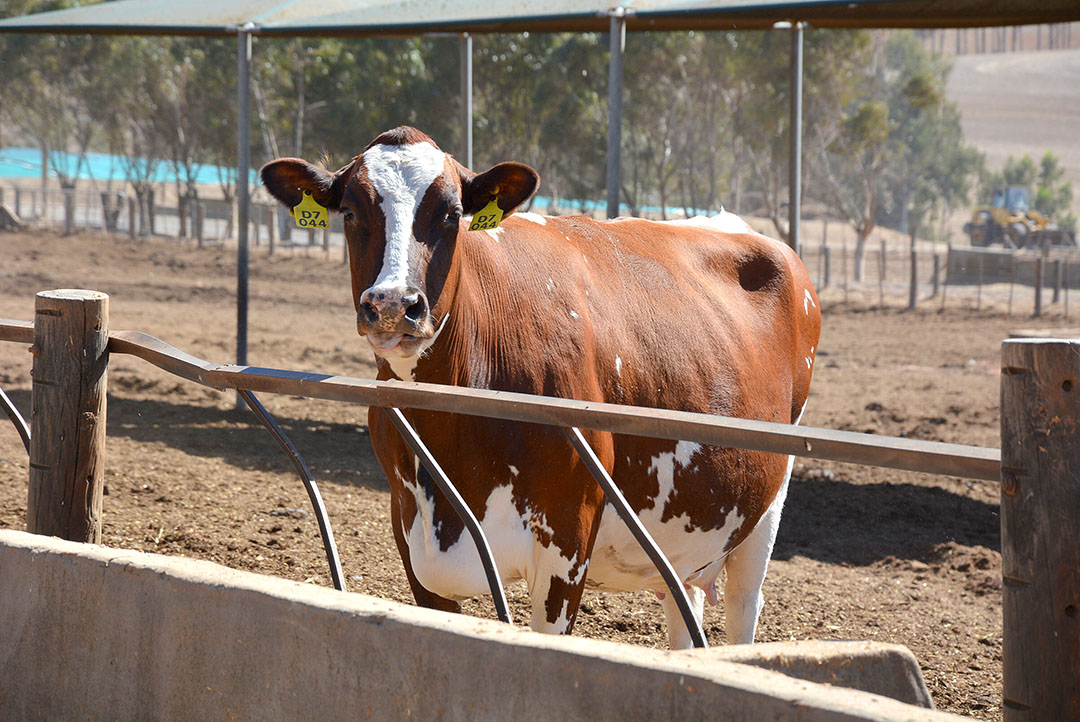

Zimbabwe’s raw milk output rose by 4 percent to 78.3 million litres in the eight months to August, compared to the same period last year, as the government seeks a US$71.4 million investment.
According to the Dairy Services Unit (DSU), the country is on track for growth in milk production in 2025, although Zimbabwe Association of Dairy Farmers (ZADF) national chairman Edward Warambwa noted it may fall slightly short of the projected annual target of 15 percent. Said Warambwa:
“We are confident that growth will be attained, given the joint efforts by stakeholders in the dairy industry to revitalise the sector.
“The good rains over the past season have been quite helpful in improving feed availability and quality of pastures.”
Warambwa said that consistent support through government and private-sector extension services in dairy production, genetics, animal health, and nutrition has helped farmers improve yields.
He added that recent government moves to reduce fees and remove regulatory duplications are expected to create a more favourable business environment for dairy producers, although the measures are yet to be officially implemented.
Industry stakeholders say milk output has growth potential, but low producer prices, rising production costs, especially feed, limited dairy financing, and unreliable power supply continue to pose challenges. Erratic weather patterns also affect production.
Lands, Agriculture, Fisheries, Water and Rural Development Deputy Minister, Vangelis Haritatos, said raw milk production is projected to rise to 125 million litres in 2025, up from 115 million litres in 2024.
He made the comments during talks with a Danish business delegation on investment opportunities in Zimbabwe’s agriculture and food sectors. Said Haritatos:
“Some 25 years ago, national milk output was around 250 million litres; it dropped to 37 million litres in 2009, resulting in the Government’s intervention to rescue the industry.”
“The fruits of the intervention are now bearing fruit as production has recorded an exponential growth over the years, with this year’s projections indicating an output of 125 million litres.”
Milk production peaked in 1990 at 262 million litres, supported by the largest total dairy herd of 119,220.
The country is expected to be self-sufficient next year, with local production projected to exceed the 131 million litres required annually. By 2030, milk output is expected to reach 155 million litres.
Haritatos said an investment of US$71.4 million is needed to procure breeding stock, processing equipment, and cold chain facilities.
He added that the funds will also support mechanisation, including tractors, hay baling and cattle-handling facilities; production of inputs such as stock feed, veterinary chemicals, vaccines, dipping and vaccination equipment, spray races, feeding and water troughs; as well as paddocks and fencing.
More: The Herald
 Pindula WhatsApp Channel
 Facebook Page


Leave a Reply