


Zimbabwe’s economy grew by 8.3 per cent in 2025, significantly higher than the initial projection of 6.6 percent, on the back of price stability and strong performance across productive sectors.
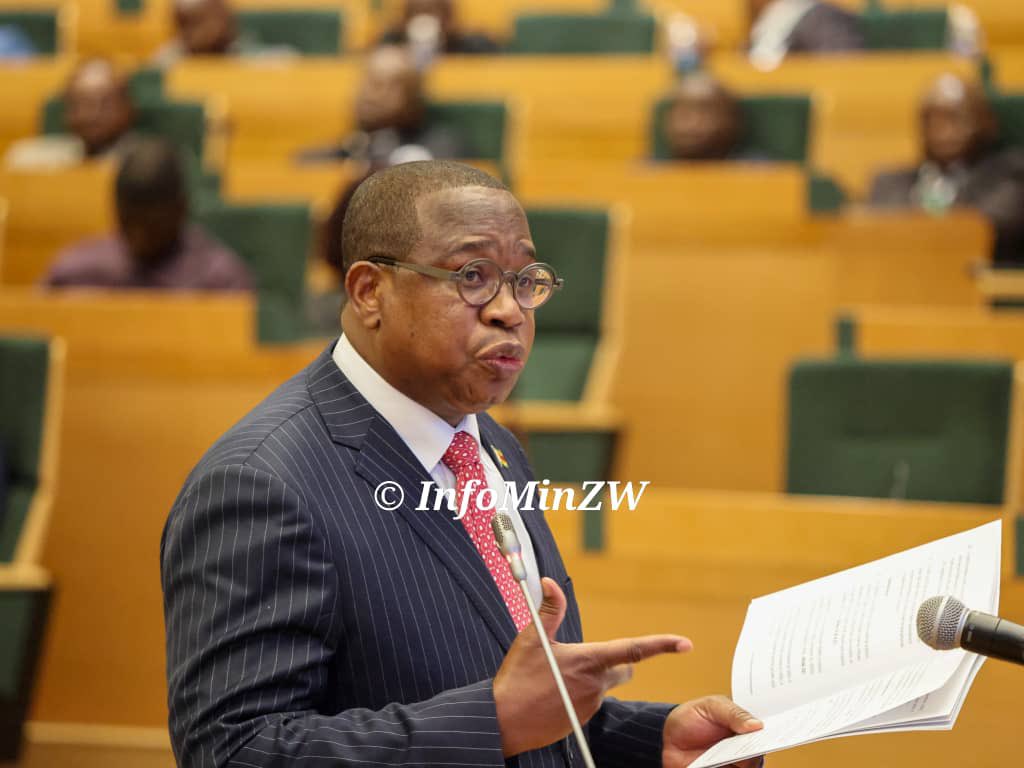
Presenting the 2026 Mid-Term Budget and Economic Review in Parliament on Thursday, Finance, Economic Development and Investment Promotion Minister Mthuli Ncube said the domestic economy had experienced robust growth due to a favourable macroeconomic environment characterised by price, currency and exchange rate stability, as well as improved energy availability.
He said the economy also benefited from strong export performance, increased investment activity and continued growth in domestic demand, which reinforced business confidence.
“The stronger-than-anticipated outturn was underpinned by above-average rainfall and favourable international mineral commodity prices,” Ncube said. “Improved electricity generation at both public and private power stations supported robust performance across key sectors.”
The growth rate places Zimbabwe among the top-performing economies in Africa in 2025, behind Ethiopia, which recorded 9.2 per cent, while most countries recorded growth of less than 4 per cent, he said.
Ncube said the economy recorded strong annualised quarterly growth of 6.8 per cent in the first quarter of 2026, driven by double-digit growth in manufacturing, mining, agriculture and wholesale and retail trade.
Riding on the momentum of 2025 and a strong performance in the first half of 2026, the economy is projected to grow by 5 per cent in 2026, reflecting expanded domestic production capacity, enhanced energy availability and macroeconomic stability.
From the expenditure side, Ncube said growth is expected to remain broad-based, supported by expansion in domestic demand and external trade. Private consumption is projected to remain strong, while gross fixed capital investment is projected to grow by 3.0 per cent, underpinned by investment in infrastructure, mining, manufacturing and energy projects.
Exports of goods and services are projected to grow by 6.7 per cent, supported by sustained mineral exports and increased manufacturing output, while imports are expected to rise by 5.0 percent in line with growing demand for capital goods, intermediate inputs and raw materials.
Nearly all sectors are expected to record positive growth in 2026, with agriculture projected to contribute about 0.8 percentage points to overall growth, benefiting from favourable production conditions, increased tobacco output, sustained high production of maize and wheat, and improved livestock and dairy production.
The mining sector is projected to grow by 5.6 per cent, contributing about 0.9 percentage points to GDP, underpinned by firm international prices for gold and platinum group metals, expansion projects in gold and lithium, increased beneficiation and sustained investment.
Manufacturing is projected to contribute about 1.0 percentage point to growth, supported by macroeconomic stability, improved energy supply and investments in non-metallic mineral products, metals and metal products, foodstuffs, drinks, tobacco and beverages, and chemical and petroleum products.
Other service activities are projected to grow by 3.8 per cent, driven by transportation and storage (7.2 per cent), real estate (5.7 percent), construction (5.3 percent) and information and communication (4.8 percent), reflecting increased business activity, infrastructure development and demand for logistics and property.


 Pindula WhatsApp Channel
 Facebook Page


Leave a Reply