


World Wide Fund (WWF) for Nature Zimbabwe has donated uniforms, camping gear, and communication gadgets worth about US$20,000 to the Zimbabwe Parks and Wildlife Management Authority (ZimParks), bolstering efforts to conserve wildlife in Sinamatella-Hwange and Kazuma Pan National Parks.
These parks are among the critical yet under-supported wildlife areas that play a key role in maintaining ecological connectivity within the Kavango-Zambezi (KAZA) Transfrontier Conservation Area.
Speaking at the handover ceremony in Victoria Falls on Saturday, WWF country coordinator Itai Chibaya stressed that conservation initiatives must also empower local communities. He said:
“WWF continues to support inclusive approaches that promote local stewardship and sustainable livelihoods.
“Ranger welfare is a priority. These men and women are the backbone of our efforts, and they deserve the tools, safety, and respect that match the scale of their sacrifice.”
ZimParks director-general Edson Gandiwa thanked WWF Zimbabwe for strengthening conservation efforts through the donation. Said Gandiwa:
“The rangers’ work, supported by this donation, helps protect wildlife, which brings lasting benefits to local communities through better conservation and new eco-tourism opportunities.”
Located in the northwestern sector of Hwange National Park, Sinamatella is a rugged, hilly landscape defined by rocky outcrops, mopane woodlands, and grassy vleis.
It’s one of Hwange’s three main camps and was declared an Intensive Protection Zone (IPZ) to safeguard endangered species—especially the black rhino, whose population has been severely impacted by poaching.
Sinamatella is renowned for high densities of elephant and buffalo.
Meanwhile, the Kazuma Pan National Park is tucked into the remote northwestern corner of Zimbabwe near the Botswana border.
Kazuma Pan is one of the country’s least visited but most ecologically unique parks.
Covering 33,500 hectares, it forms part of the Kavango-Zambezi Transfrontier Conservation Area (KAZA TFCA), a critical wildlife corridor linking Zimbabwe, Botswana, and Zambia.
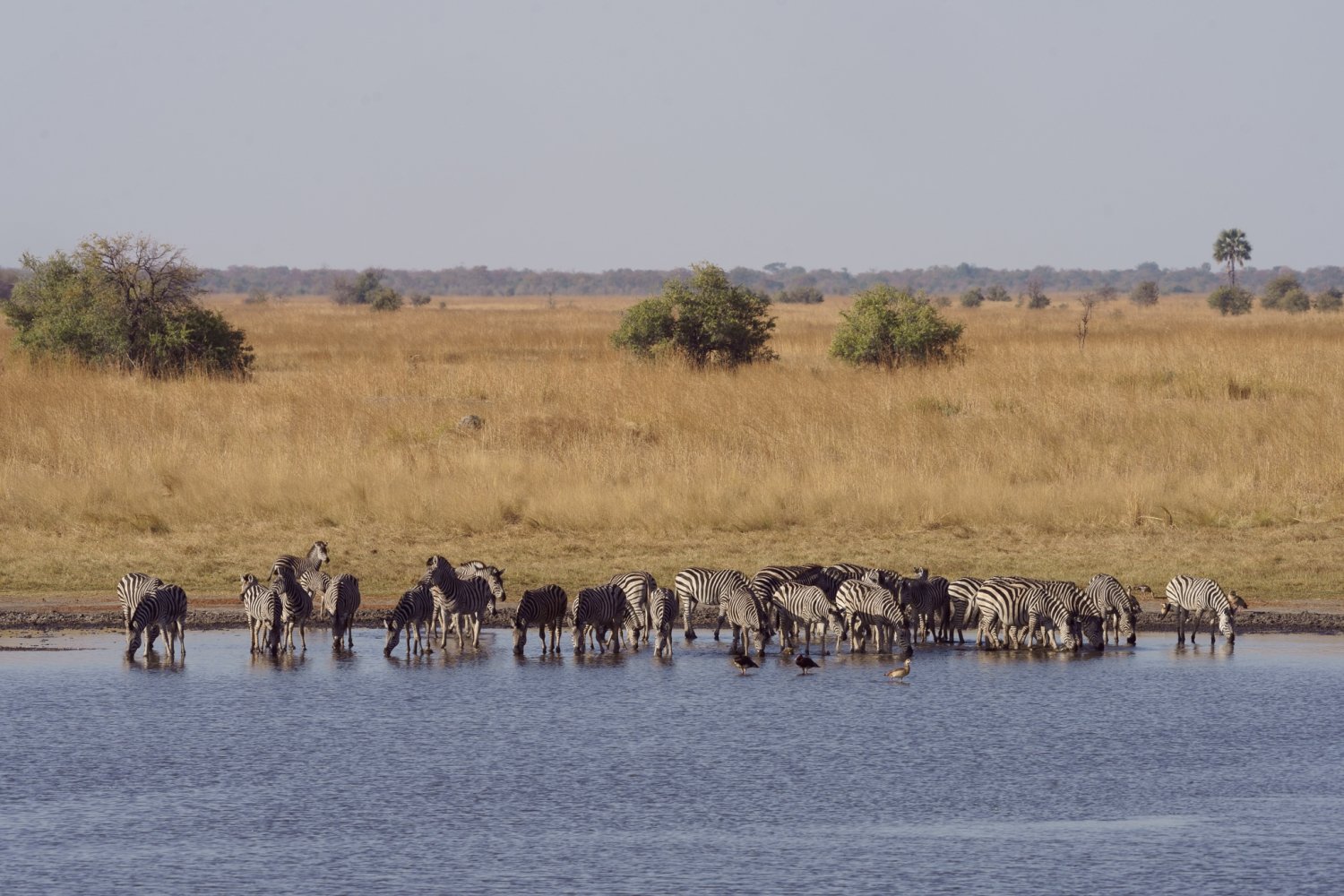
Kazuma Pan is characterised by seasonal depressions (pans) that fill with water during the rains, attracting vast flocks of waterfowl and herds of elephant, buffalo, roan, sable, tsessebe, and oribi.

 Pindula WhatsApp Channel
 Facebook Page


Leave a Reply