



By Advent Shoko
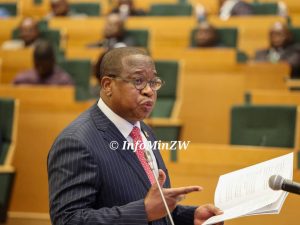
Finance Minister Professor Mthuli Ncube has offered Zimbabwe a stark choice: keep closing shop at 4:30pm, or mobilise the investments, power and people needed to make the country a place where commerce and industry never sleep. He unveiled the pitch at ZEDCON 2025, arguing that long night-time “dead hours” are an untapped national asset that could be converted into production, jobs and foreign exchange.
The Pitch In A Sentence
Ncube says Zimbabwe must move from an “eight-hour” to a 24-hour economy — stretching manufacturing, logistics, tourism and services into the night to better exploit existing infrastructure and off-peak energy. He frames the move as a way to raise productivity, attract investment and align Zimbabwe with global hubs that operate around the clock.
Business Leaders Weigh In: Optimism Hinges on Power and Policy
Executives in tourism, energy, manufacturing, and automotive welcomed the vision, saying it could unlock new revenue streams and make Zimbabwe more competitive in the region. Tourism operators foresee extended service hours that could attract international visitors with late-night products and smoother connections. Industrialists believe longer operating hours would boost productivity and strengthen export capacity, while energy firms stressed that renewable solutions, especially solar, must be scaled up to sustain continuous operations.
These endorsements reveal strong private-sector appetite, but they come with a cautionary note: the success of this plan depends on government’s ability to back ambition with hard infrastructure and policy support. At the core lies one unavoidable fact, nothing will run overnight without reliable electricity. Ncube himself admitted that much of Zimbabwe’s generation capacity currently sits under-utilised during off-peak hours, a technical opportunity that, with proper investment, could be transformed into an economic advantage. In essence, the viability of the 24-hour economy rests squarely on whether the power sector can deliver consistent, affordable energy to fuel it.
Pay, Shifts and the Politics of Compensation
Here is the critical, often-overlooked test of the 24-hour idea: remuneration. Running factories and services at night means higher wage bills, night-shift premiums, overtime, transport allowances, and extra security costs. So far, Ncube has set out the vision but has not announced a dedicated wage or compensation package to make night work attractive and fair.
Many public-sector workers still take home net monthly pay in the low hundreds of US dollars for common grades, and unions have been pressing for substantial increases for years. Recent reporting of a new pay structure shows many civil servants still on modest pay, while educators and other unions continue to demand far larger, living-cost-linked salaries.
Lawmakers have also asked the government what concrete plans exist to raise pay beyond standard negotiating forums. Without clear commitments on shift pay, social protections, transport and safety, the 24-hour economy risks running into immediate labour pushback and industrial action.
Bottom line
Professor Ncube’s 24-hour economy is a big, plausible lever for growth, but it is not a self-executing promise. It requires honest budgeting for higher labour costs, explicit compensation packages for night work, and rapid investment in power, transport and safety. Without those pieces, and without clear signals the government will address pay and worker welfare, the idea risks becoming an aspirational slogan rather than an inclusive national policy shift.

 Pindula WhatsApp Channel
 Facebook Page


Leave a Reply