

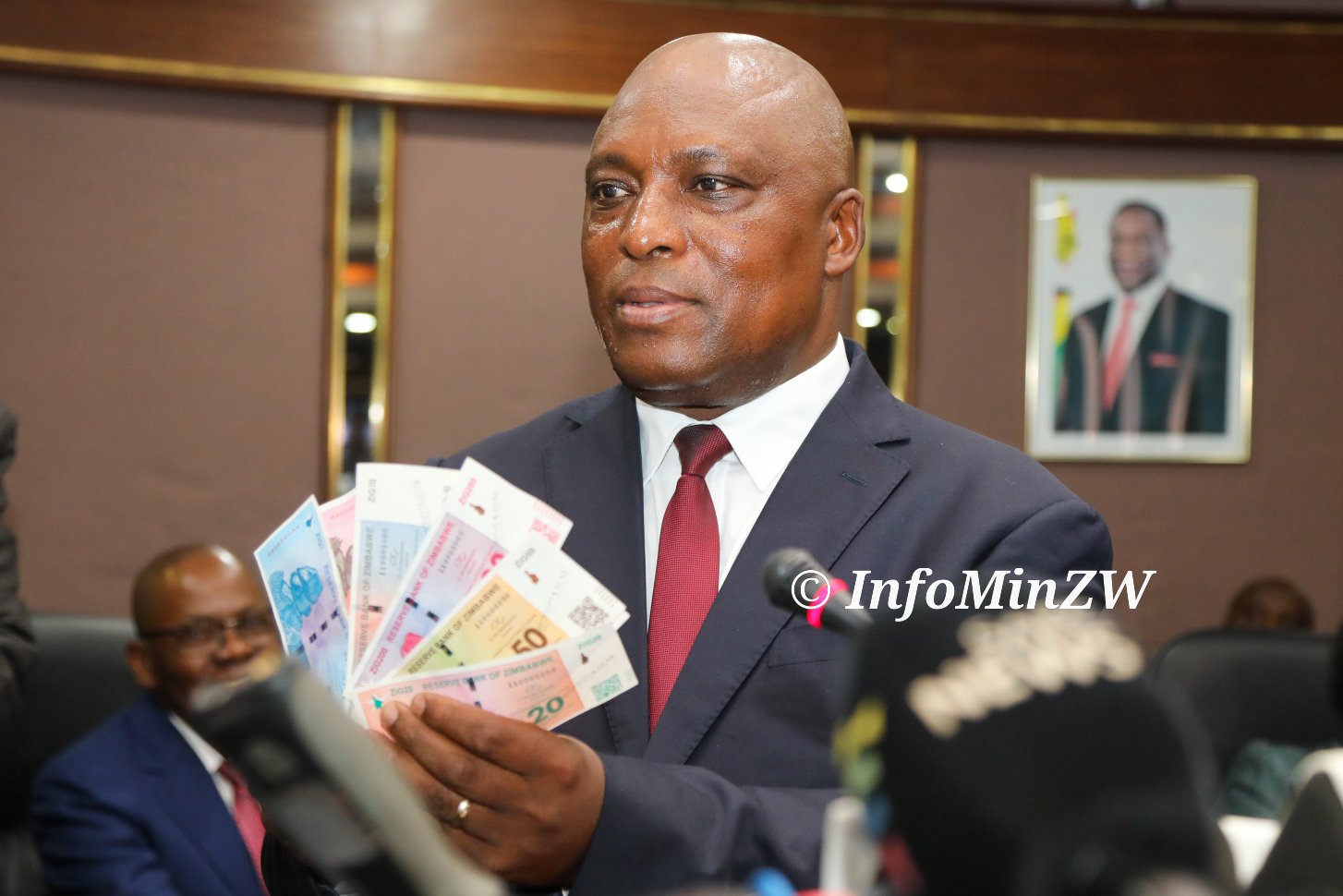

Reserve Bank of Zimbabwe (RBZ) Governor John Mushayavanhu has expressed confidence in the country’s economic recovery, projecting a 6% growth rate for 2025, up from an estimated 1.7% in 2024.
In his Mid-Term Monetary Policy Statement issued on 7 August 2025, Mushayavanhu attributed the strong rebound to stable macroeconomic conditions underpinned by the successful rollout of the Zimbabwe Gold (ZiG) currency introduced in April 2024, which has anchored price and exchange rate stability while supporting growth across key economic sectors.
He said the Reserve Bank had “walked the talk and stayed the course” by ensuring that money supply growth remained aligned with inflation targets and economic growth projections.
This approach, Mushayavanhu said, had helped sustain disinflation without undermining growth. He said:
“The strong growth rebound also benefited from the recovery in the performance of the agricultural sector and the growth in the mining, manufacturing and tourism sectors.”
The central bank highlighted the relative stability of the ZiG/US dollar exchange rate and low volatility in the foreign exchange market as key signs of progress. From February to July 2025, monthly ZiG inflation averaged just 0.6%.
Mushayavanhu said that although annual inflation remained elevated due to base effects, it is expected to moderate significantly and close the year at around 30%. He said:
“Foreign currency reserves have grown by over 150% from US$285 million in April 2024 to over US$730 million in June 2025.
“The Reserve Bank will continue to accumulate foreign currency reserves to achieve the regional benchmark of 3-6 months of import cover to support the sustained stability of the local currency.”
The central bank chief said foreign currency inflows have also been strong, reaching US$7.2 billion in the first half of 2025—an increase from US$5.9 billion over the same period in 2024.
These inflows, driven mainly by export earnings and remittances, have helped the RBZ build up reserves and maintain exchange rate stability through targeted interventions.
According to Mushayavanhu, Zimbabwe’s foreign currency reserves have more than doubled, rising from US$285 million in April 2024 to over US$730 million by June 2025.
The RBZ intends to continue building reserves to meet the regional benchmark of 3 to 6 months of import cover, seen as critical for maintaining currency stability.
Mushayavanhu also said there has been an increase in the use of the ZiG in both cash and electronic transactions. He said:
“The stable macroeconomic conditions have also resulted in increased usage of ZiG in the economy.
“The proportion of ZiG in National Payment System electronic transactions rose from 26% in April 2024 to over 40% in June 2025, reflecting increased usage of ZiG.
“In addition, local currency cash usage in the economy has increased. In this regard, the Reserve Bank continues to ensure the wider availability of ZiG cash through the banking system.”

 Pindula WhatsApp Channel
 Facebook Page


Leave a Reply