

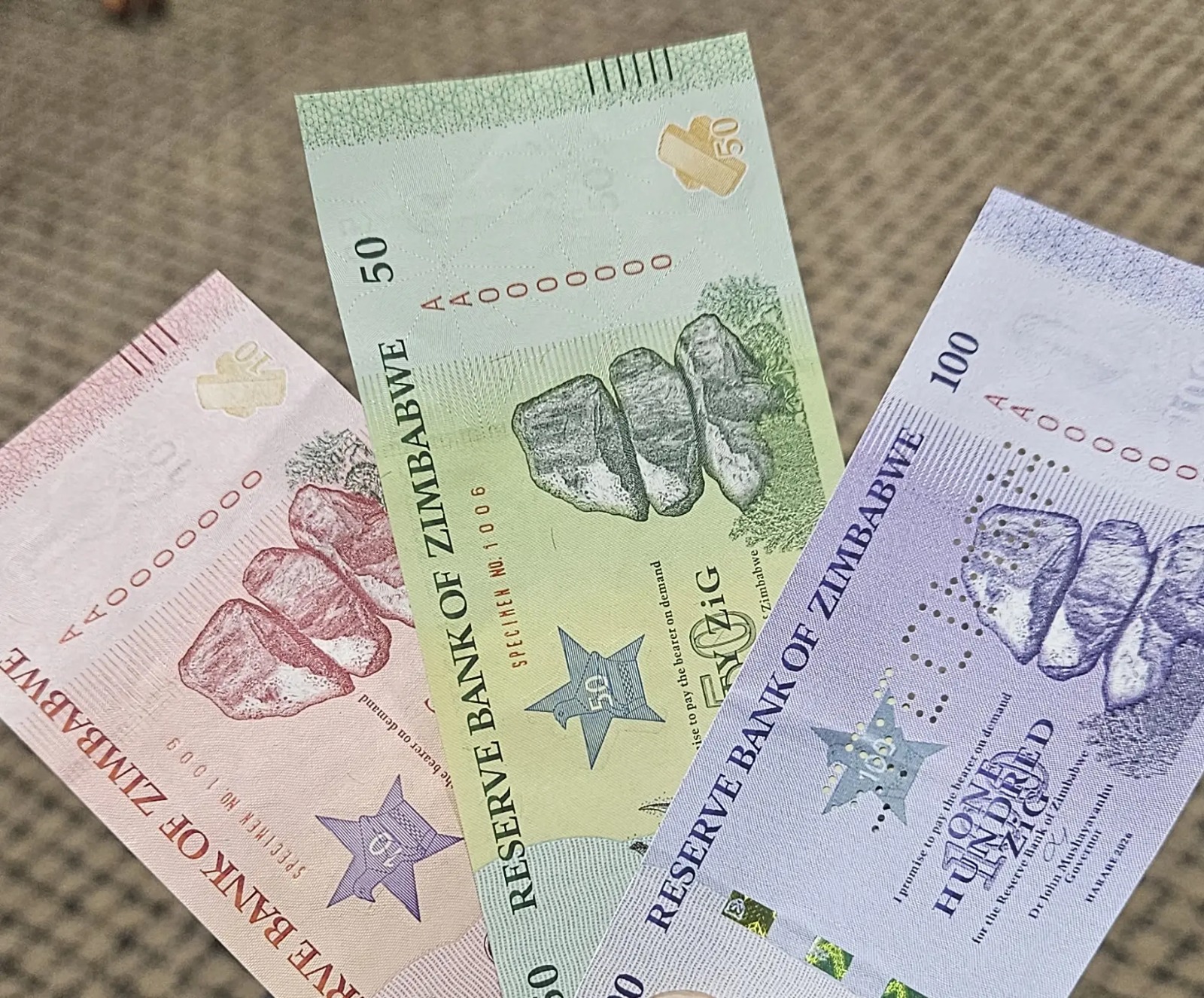

The Reserve Bank of Zimbabwe Governor John Mushayavanhu says the country is moving closer to sole use of the local currency, ZiG, for domestic transactions after meeting six of the eight conditions the government believes will sustainably anchor the unit.
In an interview with The Sunday Mail, Mushayavanhu said the transition to exclusive use of ZiG for all domestic transactions will be gradual and anchored in macroeconomic stability.
He stressed that the transition is not date-based but depends on the achievement of specific conditions.
The central bank, drawing from experiences of other countries, has identified eight critical conditions that must be met before Zimbabwe can fully transition to a single-currency regime.
These are: durable macroeconomic stability with single-digit inflation; adequate foreign currency reserves of at least three to six months of import cover; stable exchange rate dynamics; an efficient foreign exchange management system; increased demand for the local currency; financial sector stability; an efficient National Payments System; and fiscal and monetary policy cohesion with no monetisation of the Budget.
Of the eight conditions, the RBZ says it has achieved six through maintaining stable and low inflation within single-digit levels since January 2026, ensuring an efficient foreign exchange trading system, containing the parallel market premium below 20 per cent, sustaining financial sector stability and an efficient National Payments System, and ensuring the central bank does not finance fiscal deficits.
The RBZ is now working on the two outstanding conditions by entrenching confidence in and use of ZiG through broadening payment for public sector goods and services in the local unit, as well as boosting foreign currency reserves to attain the minimum threshold of three months’ import cover.
The country’s foreign currency reserves had grown to US$1.6 billion by last month, enough to cover 1.6 months of imports, of which gold holdings accounted for about 40 per cent of the portfolio.
The central bank expects that by the time of the transition to full use of ZiG, it will be holding more than 11 tonnes of gold in its vaults.
“The transition to the exclusive use of ZiG for settling all domestic transactions will be a gradual process anchored on macro-economic stability,” said Mushayavanhu.
“As such, the transition is not date-based but is dependent on the achievement of the conditions precedent (CPs).
‘The country is on course to meet the conditions precedent, as evidenced by sustained single-digit inflation.
“Important to note is that the country has already achieved most of the CPs and has made significant progress towards achieving the remaining ones.”
Annual ZiG inflation has averaged 4.4 per cent in the first six months of 2026, and inflation is expected to remain low and stable within single-digit levels in the medium to long term.
The Reserve Bank, working with the World Bank, is finalising development of an automated foreign currency trading system.
As a major boost to the market and the transacting public, the parallel market premium has been contained below 20 per cent in the first six months of the year, while the financial sector has remained stable.
Mushayavanhu also said there has been no central bank financing of fiscal deficits since April 2024.


 Pindula WhatsApp Channel
 Facebook Page


Leave a Reply