




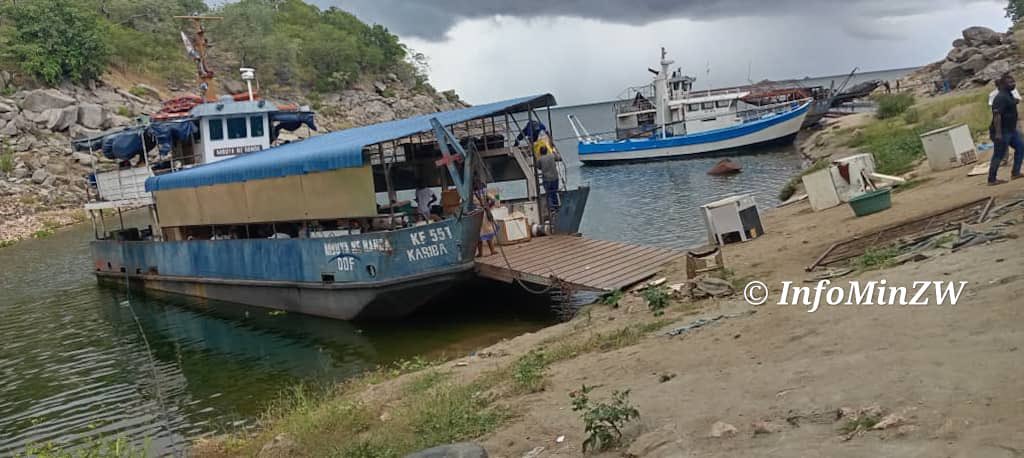


Exactly a month after the Mbuya Nehanda ferry capsized on Lake Kariba on 11 August 2026, it has emerged that its problems started years before it sank.
According to Pachena Online, Chief Secretary in the Office of the President and Cabinet Martin Rushwaya, then the deputy chief secretary, was warned as far back as 2021 that the Mbuya Nehanda, Chaminuka and Nyaminyami vessels were suffering constant breakdowns and high operating costs.
The three vessels were built by Struer Shipyard in Denmark and have been operating on Lake Kariba since 1985.
The warnings continued. In December 2024, the ferry nearly capsized. Operators told Pachena it suffered another serious incident in February this year, when its boarding ramp broke away and fell into the lake, putting passengers at risk. Those on board called for help, and witnesses said there were not enough life jackets for everyone.
The February incident prompted Kariba legislator Shine Gwangwaba to raise safety concerns with the Rural Infrastructure Development Agency, RIDA.
He said he led a Constituency Development Fund Committee meeting with RIDA officials, including a Mr Chiome, and suggested that RIDA provide smaller boats and at least two speedboats to rescue people in an emergency.
“They said they had no money to address all issues at once but would look into my recommendations,” Gwangwaba said.
The committee also asked whether RIDA was working with teams that monitor weather conditions on the lake and with the Kariba district emergency preparedness unit.
Gwangwaba would later lose 16 relatives, including his sister, when the Mbuya Nehanda sank. His account corroborates what engineers have told Pachena.
RIDA Director General Christopher Shumba, however, said the agency was not legally required to have tender boats or other small boats attached to larger vessels for emergencies.
“If the authorities have not seen it fit that we should do that, we have no obligation of having tender boats on big vessels,” he said.
He also questioned Gwangwaba’s ability to assess the ferry’s mechanical condition because he is not an engineer.
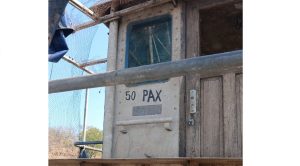
Survivors who spoke to Pachena described routine overcrowding, particularly at the start and end of school terms when more than 200 people could be squeezed onto the vessel.
They said modifications to the ferry had made it more dangerous. Seats were welded around the cargo area, leaving passengers sitting among fish, ice blocks, cement and vehicles.
The original design placed the captain on the upper deck with a clear view of the deck below, so he could see how cargo and passengers were distributed and judge the boat’s stability. A later modification added a roof that blocked that line of sight.
Basic safety procedures had all but disappeared. Life jackets were stored under passenger seats and were hard to reach in a crisis – even harder for those wedged among cargo on the lower deck.
There were no routine safety briefings and no demonstrations of how to use a life jacket. On the morning of the disaster, the only message on RIDA’s WhatsApp platform was that the ferry would reach Kings Camp at midday. The only instruction on board, survivors said, was to get in and sit down.
Cargo was weighed by estimation, judged by feel rather than by scales. Passenger records were in disarray. Luggage was logged and paid for, but children were not reliably counted. Heads were tallied from a distance and never checked against the number of people actually on board.
Authorities have since said the number of children on board is unknown because those below ticketing age were not included in passenger estimates.
As a result, the precise number of people on the ill-fated 11 August voyage is still unknown. Officially, the death toll was put at 97.
Shortly before the disaster, on 22 July, RIDA issued a notice asking passengers to give their correct names when buying tickets so they could be traced in an emergency, and said the ferry was fully insured.
Tickets seen by Pachena have spaces for children’s details, but regular users said these were routinely left blank.
While survivors said there were not enough life jackets, Shumba insisted the vessel had adequate numbers. He said some may have been lost during a stampede for jackets when the vessel got into trouble – an account passengers confirmed.
“We are talking of an accident involving many people, some children and adults. There was obviously commotion which disturbed orderly distribution of the life jackets. The issue of overcrowding will be established by the full investigation underway,” he said.





Leave a Reply Cancel reply