

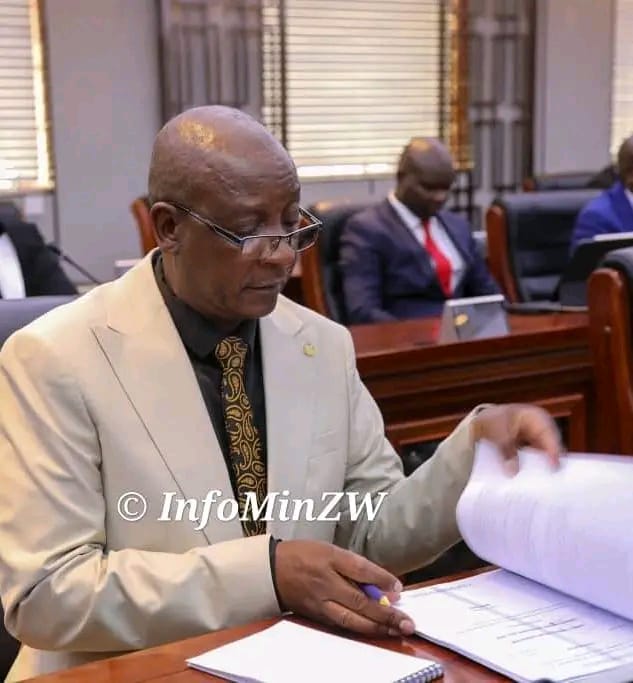

Zimbabwe has taken a step towards the legal recognition of intersex rights after the Ministry of Justice, Legal and Parliamentary Affairs convened a high-level breakfast meeting in Harare on Wednesday, 5 August, to strengthen the country’s approach to protecting intersex people and addressing gaps in existing laws.
The meeting, held at the Holiday Inn, was attended by Justice, Legal and Parliamentary Affairs Minister Ziyambi Ziyambi, Public Service, Labour and Social Welfare Minister Edgar Moyo and Health and Child Care Minister Douglas Mombeshora.
Officials who spoke at the meeting stressed the need for public understanding of what intersex means and why it is often misinterpreted.
Intersex refers to a range of natural biological traits — such as chromosomes, gonads, hormones or reproductive anatomy — that do not fit typical definitions of male or female.
They said it is not a choice or a disease and is not caused by wrongdoing, but is a form of human biological variation.
Speaking on the sidelines of the meeting, Ziyambi said the Government’s work began after a court challenge involving intersex rights.
“Basically what we have done is we have received a court challenge regarding this issue (intersex) and we referred it to the Attorney General,” he said. “After that we decided as a Ministry that we need to undertake research.”
Ziyambi explained that while Zimbabwe’s Constitution recognises two sexes, the legal and administrative systems must respond to lived realities where people do not fit neatly into the binary classification used in many Government processes.
The Ministry said the research was conducted through the Law Development Commission, with support from the UNDP, and that the breakfast meeting was convened to gather expert input.
Moyo described the meeting as both a wake-up call and a pathway towards legal reform, saying there was a gap in the law.
“There is a real gap in our statutes to address those issues. Because we are basically classified as male and female, and then there are people falling in between,” he said.
Moyo said stigma and cultural barriers had contributed to intersex issues being swept under the carpet.
He noted that intersex persons often face repeated humiliation and exclusion when official documents and identity processes do not match their biological traits.
He said awareness and support services must be strengthened, including within families and child protection systems.
“Testimonies were heartbreaking, noting that parents may not always know or may not understand the issue early enough, particularly when traits emerge later,” he said.
Moyo added that his Ministry would work towards providing inclusive support and recognition, stressing that Government must “live beyond culture” and “be adaptive” in promoting inclusivity.
Participants reviewed the barriers faced by intersex persons in Zimbabwe’s documentation and public services systems, including legal documentation that recognises only binary sex markers, difficulties in obtaining birth certificates and national identity cards due to mismatches between biological variation and documentation categories, and exclusion from school enrolment, health services, banking, employment and voting, among other challenges.
The Ministry of Justice said it would validate the findings, draft legal and policy recommendations for Cabinet consideration, maintain ongoing engagement with intersex persons and civil society organisations, and provide feedback to participants on progress made.

 Pindula WhatsApp Channel
 Facebook Page


Leave a Reply