



Opposition politician Jameson Timba has said Zimbabweans must move beyond hope and focus on building strong institutions, strategy and collective action to address the country’s challenges.
Timba said Zimbabweans remain among the most hopeful people in the world, having hoped through economic collapse, political violence, disputed elections, hyperinflation, unemployment, currency instability and the erosion of public institutions.
“Hope has sustained us. But hope alone has not transformed our circumstances,” he said.
Citing an African proverb that a reed never becomes an Iroko tree simply by dreaming, and James 2:17 that “faith by itself, if it has no works, is dead”, Timba argued that hope is the beginning of change but not the mechanism for it.
He said much of Zimbabwean public discourse has elevated hope from a virtue into a strategy, with citizens repeatedly invited to believe that problems will resolve themselves if they wait long enough or place confidence in the next charismatic leader.
“But hope is not a strategy,” he said. “Hope is the beginning of change, not the mechanism by which change occurs. It gives people the courage to begin the journey, but it is strategy, institutions and action that get them to the destination.”
Timba said those who offer hope without a credible plan waste lives, squander opportunities and betray public trust, adding that “false hope is not merely poor leadership. It is a moral crime.”
He said Zimbabwe’s greatest challenge has not been a shortage of hope but the absence of institutions capable of translating hope into measurable progress, noting that no nation has eliminated poverty through slogans, attracted investment through charisma, or improved schools and hospitals through rhetoric.
“Families require jobs. Businesses require policy certainty. Farmers require functioning markets. Students require quality education. Workers require productive economies. All these are delivered not by personalities but by institutions,” he said.
Timba said the country has become accustomed to searching for heroes instead of building systems, and to personalising politics when it should be institutionalising governance.
He argued that prosperous nations are built by ordinary institutions performing consistently over many years, not by extraordinary individuals acting alone.
“Leadership certainly matters. But institutions matter more,” he said.
He called for a shift in political culture, urging citizens to ask what institutions must be built rather than who will save them, and for political parties to be judged on policy rather than the popularity of their leaders.
He also urged civil society, business, universities and the Church to play a more active role in strengthening democratic institutions and promoting responsible citizenship.
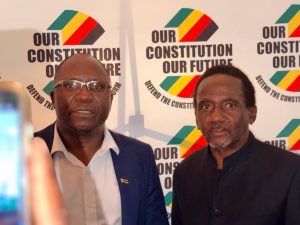
Timba linked his argument to the enactment of Constitutional Amendment Act No. 6 of 2026, formerly Constitution Amendment Bill No. 3, which he said now forms part of Zimbabwe’s constitutional landscape.
He said the Act will not disappear through wishful thinking or public outrage, and that constitutional democracy will not restore itself.
“If we genuinely believe that Constitutional Amendment Act No. 6 undermines the sovereignty of the people and weakens our constitutional order, then every citizen has both a right and a civic responsibility to participate peacefully and lawfully in its restoration,” he said, citing constitutional litigation, public education, petitions and peaceful civic action as lawful avenues.
“Constitutions are not self-executing documents. They endure only when citizens are prepared to defend them,” he said.
 Pindula WhatsApp Channel
 Facebook Page


Leave a Reply