

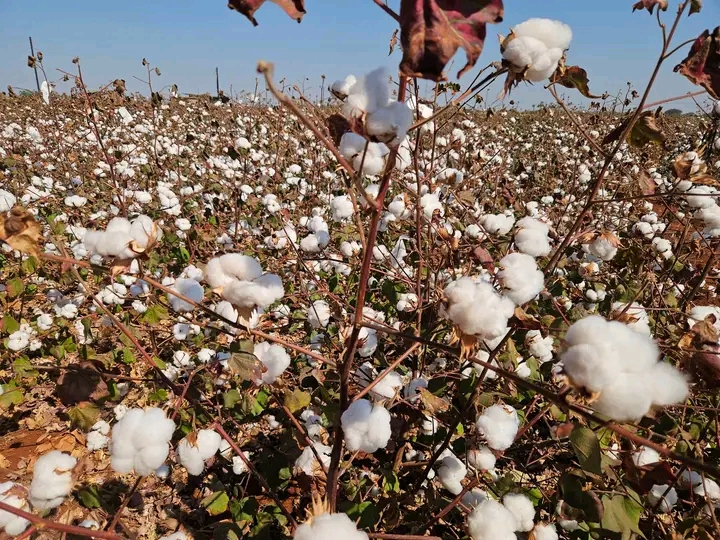

Cotton farmers across the country have earned US$1.2 million and ZiG14.3 million from seed cotton sales during the ongoing 2026 marketing season.
The Agricultural Marketing Authority’s (AMA) weekly report dated 19 June 2026, showed that seed cotton intake jumped by 1,535 per cent – from last year’s 310,625 kg to 5,079,907 kilogrammes as of June 18 this year.
Officially launching the 2026 cotton marketing season in May, AMA chief executive Alice Mapfiza said minimum cotton prices were agreed after negotiations between farmers and contractors.
For Grade A, the price was set at US$0.43 per kg; Grade B at US$0.41 per kg; Grade C at US$0.38 per kg; and Grade D at US$0.35 per kg.
Seventy per cent of payments will be in US dollars and the balance in local currency across the 173 permanent and 398 mobile cotton buying points set up countrywide, in line with Reserve Bank of Zimbabwe (RBZ) guidelines.
The biggest contractor, COTTCO, has bought 62 per cent of the crop sold so far – 3,169,424 kg – followed by Alliance Ginneries with 19 per cent (975,000 kg) and Southern Cotton at 11 per cent (567,172 kg).
Agri Value Chain came fourth after buying six per cent (295,336 kg), with Cangrow last at one per cent (72,975 kg).
AMA said payments should be made instantly on delivery, not later than 48 hours, in line with RBZ payment guidelines.
“No bale shall be removed from the CBP unless it has been paid for in terms of the minimum price,” AMA said.
“Contractors shall deliver individualised statements of grades and intake to the farmers by November 30.”
A joint validation exercise by AMA, government departments, contractors and farmers’ unions shows seed cotton output is set to increase by 33% this year – from 29,000 tonnes last season to around 38,500 tonnes.
The exercise was carried out in most cotton-growing regions between 13 and 17 April.
Zimbabwe’s cotton is mainly grown by smallholder farmers in the lowveld and middleveld, where it’s warm, and the rainfall is moderate.
The biggest producing areas include Gokwe, Mt Darwin, Rushinga, Muzarabani, Guruve, Mbire, Sanyati, Hurungwe, Chiredzi, Chipinge and Hwange, among others.
More: Chronicle
 Pindula WhatsApp Channel
 Facebook Page


Leave a Reply