

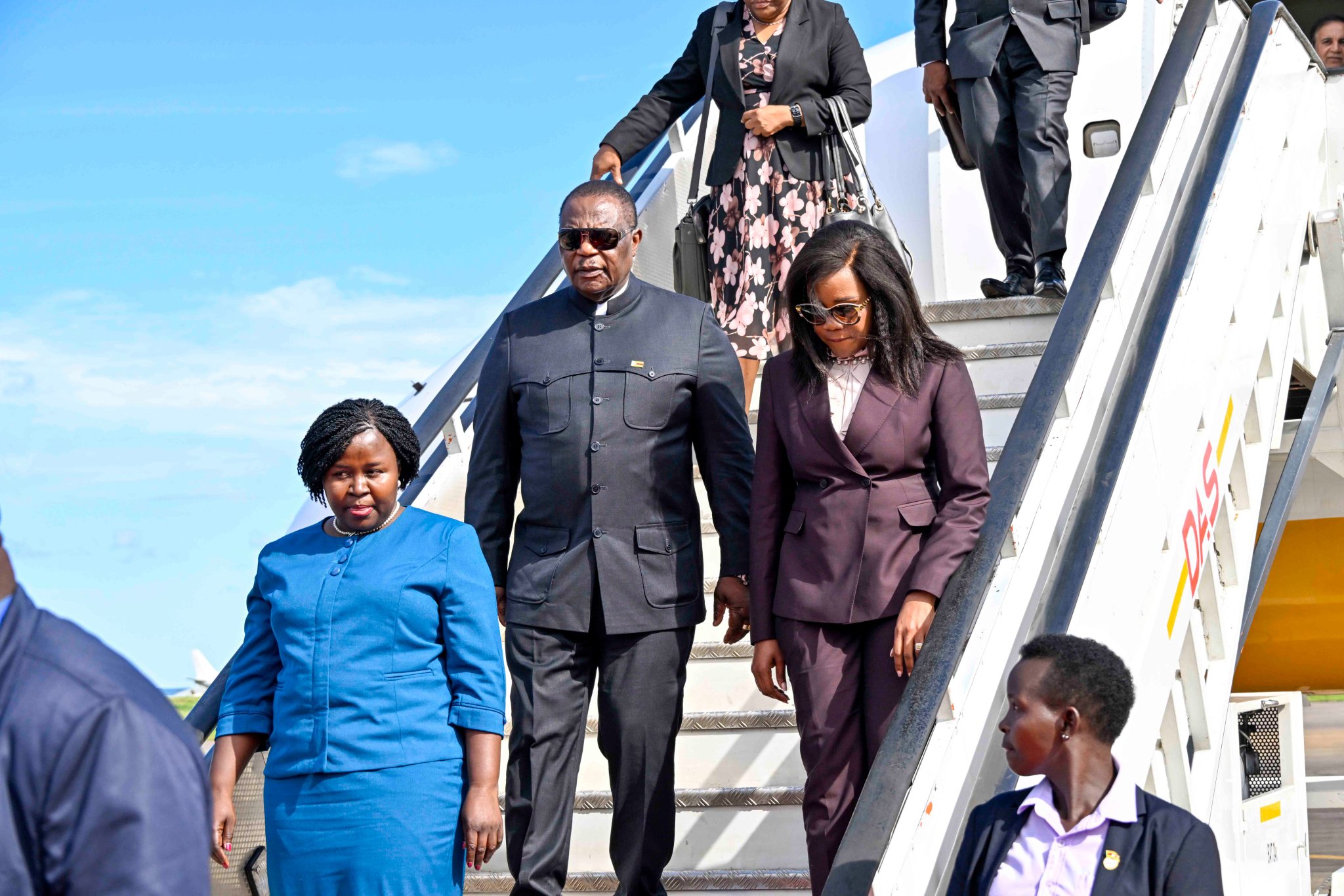

Vice President Constantino Chiwenga has again demonstrated his mastery of diplomatic double-speak, using a speech at President Yoweri Museveni’s seventh-term inauguration to deliver pointed jabs at both the Ugandan leader and his own boss, President Emmerson Mnangagwa.
Chiwenga flew to Kampala to represent Zimbabwe at the swearing-in ceremony. But his address to the media sounded less like a congratulatory message and more like a masterclass in veiled criticism.
“African countries came together to form the Organisation of African Union,” Chiwenga said. “Each period of time, they gave themselves objectives to meet, principles to meet.”
He traced the AU’s journey from liberation to democratic governance. “In 1981, there was the Banjul Declaration, which was done in The Gambia on human rights, on corporate governance. Later on, the Africans again sat down and gave themselves the way they should govern themselves by way of having elections, and that declaration was done in Addis Ababa in 1987.”
The history lesson was deliberate. Museveni, now serving a seventh term after scrapping presidential age limits in 2017, has ruled Uganda since 1986 nearly 40 years. Chiwenga did not need to say, “You stayed too long.” He simply recited the AU’s own rulebook.
Then he moved to Agenda 2063, the continent’s 50-year development blueprint.
“In 2013, which is known by everyone, the African heads of state came up with Agenda 2063 to say what Africa should be like. Of course, the majority of us will not be there, but these are set objectives that whoever comes in will say what do we want Africa to be like in 2063.”
The line “the majority of us will not be there” was loaded. For a man sitting behind a president seeking to extend his own rule, it carried weight.
Back home, Mnangagwa is pushing Constitutional Amendment Bill No. 3 (CAB3). The bill scraps direct presidential elections, hands the presidency to a parliamentary vote, and extends terms from five to seven years. It pushes the next general election from 2028 to 2030, effectively resetting Mnangagwa’s term clock and potentially allowing him to rule until 2044.
Chiwenga’s emphasis on democracy was not accidental.
“We are learning how the different parts of our continent are developing in terms of their democracy,” he said. “African countries agreed on the election and how we should develop our own democracy.”
He added that Zimbabwe sends its electoral commission to observe polls across the continent “to see how they do and where we can learn ourselves and how we can do better.”
The implication was unmistakable: removing direct presidential elections is not learning. It is backsliding.
Chiwenga wrapped his critique in the language of solidarity and observation. “By coming here now to see what has happened and their election, which we are going to see you know pretty soon, we are learning how the different parts of our continent are developing.”
But for anyone tracking Zimbabwe’s succession wars, the subtext was clear. Chiwenga cannot openly oppose Mnangagwa without risking dismissal or worse. So he borrowed Museveni’s stage, a leader already condemned by many for killing term limits, and used the AU’s own founding principles to warn both presidents.
One message for Museveni: forty years is not the Africa we want by 2063.
Another message for Mnangagwa: if you break the rules to stay in power, you will stand alongside the continent’s other overstayers. And history will not be kind.
The Vice President returned to Harare without making a single direct comment on CAB3. He did not need to. He said everything in Kampala and made sure everyone heard it.
Contributed by Benedict Makore, a political and social commentator based in Harare.
 Pindula WhatsApp Channel
 Facebook Page


Leave a Reply