

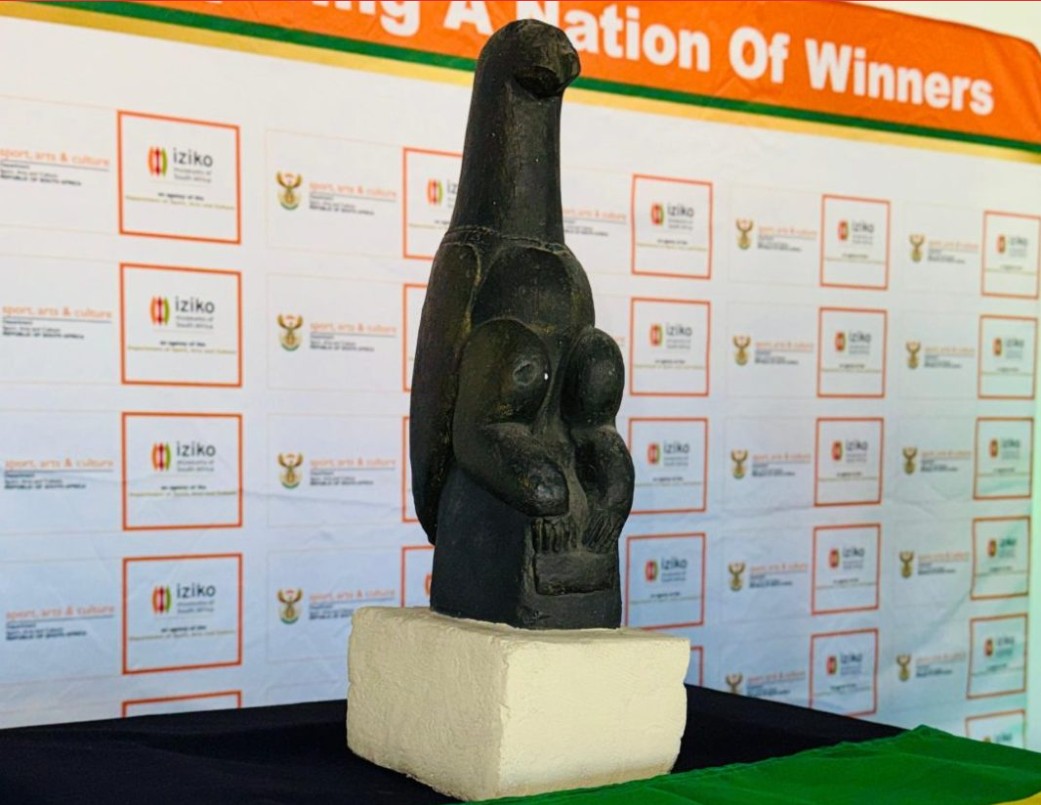

South Africa’s Minister of Sport, Arts and Culture, Gayton McKenzie, has handed over the last Zimbabwe Soapstone Bird and ancestral human remains to Deputy Chief Secretary to the President and Cabinet, Reverend Paul Bayethe Damasane.
The handover ceremony took place on Tuesday, 14 April 2026, at the Iziko Museums of South Africa in Cape Town, following a directive by President Cyril Ramaphosa to return the artefact ahead of Zimbabwe’s Independence Day commemorations.
Rev Damasane said the Zimbabwe Birds and human remains were taken during a period of colonial expansion and exploitative extraction that sought to erode African identity.
He said they were not merely artefacts, but part of a shared heritage, adding that their return reflects efforts by both countries to restore historical memory for future generations.
Rev Damasane added that the ancestral remains were not scientific specimens but represent lived histories and sacred identities of Zimbabwean communities.
“These remains belong to individuals from various parts of Zimbabwe, including Chivhu, Goromonzi, Mazowe, Kwekwe and Mberengwa, among others.
“Their removal disrupted not only their physical resting places but also the spiritual continuum that binds communities to their ancestors,” he said.
Rev Damasane called for deeper cooperation between the two countries in arts, culture and heritage, including research, conservation and education, to preserve African history for future generations.
The artefact, known as Hungwe, is one of the revered Zimbabwe Birds carved centuries ago at Great Zimbabwe, where they served as sacred symbols of spirituality, sovereignty and identity in a thriving civilisation between the 11th and 15th centuries.
Historians say that during the late 19th century, at the height of colonial plunder, several of the sculptures were removed from Zimbabwe and dispersed globally, severing them from their cultural origins.
The bird now being returned is believed to be the last and most significant of the eight, taken nearly 140 years ago and linked to colonial figure Cecil John Rhodes.
Following Zimbabwe’s independence in 1980, some artefacts were repatriated through diplomatic efforts.
The Zimbabwe Bird remains a key national symbol, featured on the country’s flag and coat of arms.
More: The Herald


 Pindula WhatsApp Channel
 Facebook Page


Leave a Reply