

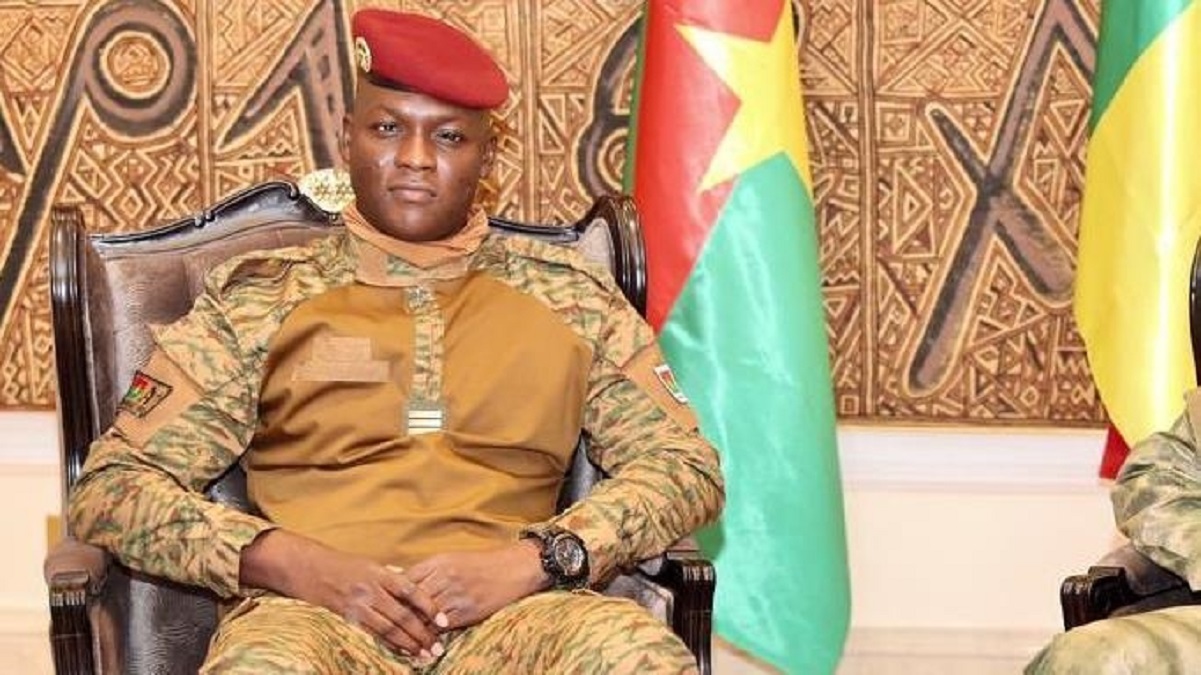

Burkina Faso’s military leader, Capt Ibrahim Traoré, who came to power in a coup three years ago, has dismissed democracy, saying it “kills” and urging the people of Burkina Faso to “forget” it.
In an interview broadcast on state television, Traoré suggested that most Africans do not want democracy and claimed that Burkina Faso has its own alternative system, though he did not provide further details.
Traoré had initially promised to restore democratic rule by July 2024, but just two months before that deadline, the junta announced it would extend its rule for another five years.
In January, the government also banned all political parties as part of a broader plan to “rebuild the state.”
During the interview on Thursday night, Traoré said, “People need to forget about the issue of democracy. Democracy is not for us. Look at Libya, this is an example close to us.”
Libya was ruled for four decades by Colonel Muammar Gaddafi, who ran a harsh autocratic regime while also providing subsidised housing, free education, and free healthcare for Libyans.
He was killed during a rebellion backed by Western military intervention. Since his death, the North African country has struggled to hold elections and remains divided between two rival administrations, alongside numerous armed groups.
The 38-year-old Traoré, who presents himself as a revolutionary leader resisting Western imperialism, argued that wherever Western powers attempt to impose democracy, it is always accompanied by bloodshed.
He also addressed the dissolution of political parties in Burkina Faso, saying, “A real politician is someone who embodies every vice: a liar, a sycophant, a smooth-talker.”
Traoré has clamped down on dissent during his rule, targeting the opposition, media, and civil society groups.
His government has even faced accusations of punishing critics by sending them to the front lines in the fight against Islamist militants.
Despite this, Traoré has built a significant following across Africa, admired for his pan-Africanist vision and outspoken criticism of Western influence.
More: BBC News
 Pindula WhatsApp Channel
 Facebook Page


Leave a Reply