

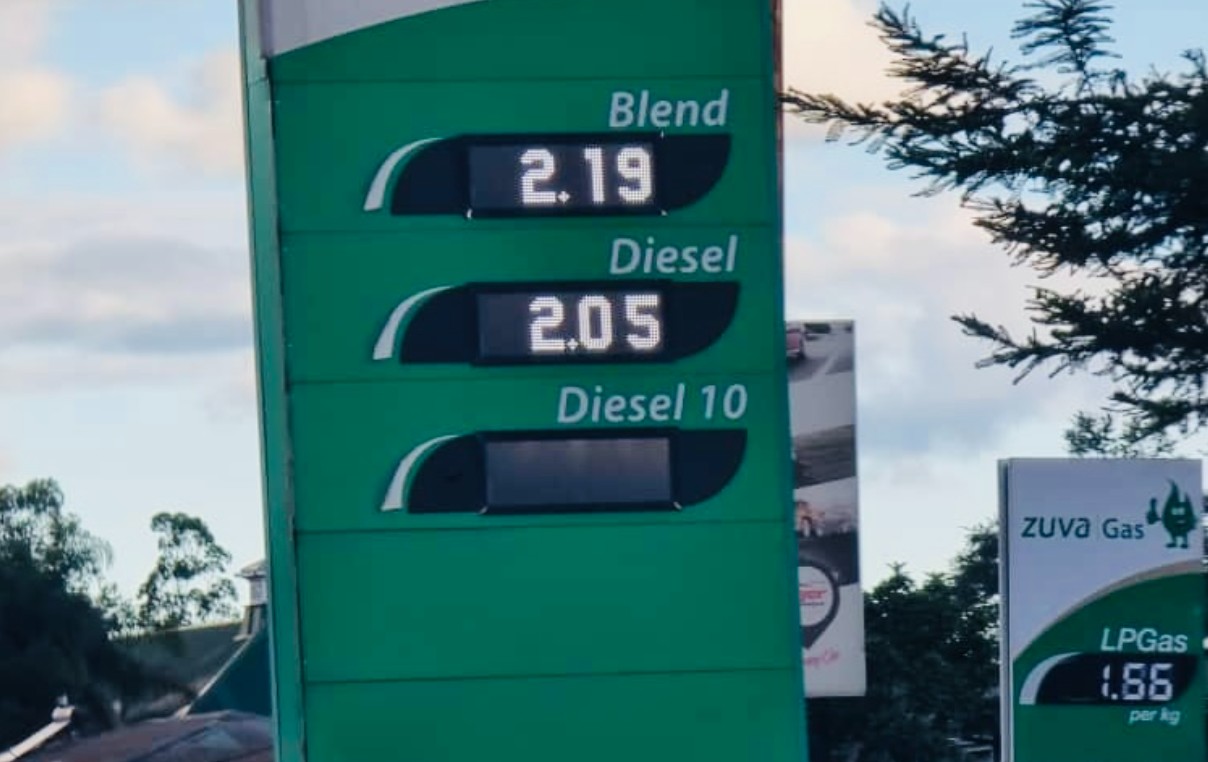

Parliament want to extend the President’s term to 2030, citing good performance. Yet fuel, the lifeblood of the economy, is now the most expensive in Southern Africa. If this is a good job, the poor are paying for it.
The constitutional amendment that seeks to extend the President’s term from five to seven years was sold on a simple promise: the President is doing a good job and needs more time to deliver. But for ordinary Zimbabweans, the gap between that promise and their daily reality is measured in litres.
Fuel is now $2.17 per litre for petrol, the highest pump price in the region. In Botswana, a landlocked neighbour, the price is roughly $1.15. In Zambia, around $1.40. The difference is not geography. It is policy.
And the ripple effects are everywhere. Commuter omnibus fares have climbed. Bakeries have raised bread prices. The cost of basic goods is rising, squeezing households that were already struggling.
If this is a good job, it is the poor who are doing the heavy lifting.
What the numbers show
When ZERA set the current price on March 18, Brent crude was above $112. Today, Brent trades around $103 per barrel, down nearly $9. Yet the pump price has not moved.
ZERA’s own price build‑up reveals why. Of every litre: $1.16 is the landed cost at Feruka, the fuel itself, before any local charges, $0.857 is taxes and levies, excise duty, strategic reserve levy, carbon tax, and a debt redemption levy left over from decades‑old energy debts. That is nearly 40% of the final price.
$0.055 is the hidden cost of the mandatory ethanol blend, which forces consumers to buy local ethanol at roughly $1.10 per litre, almost double the global market rate. Add distribution and margins, and you reach $2.17.
Only the landed cost moves with global oil. The taxes and the ethanol premium are fixed. They do not fall when oil falls. That is why, even as Brent has dropped, the pump price stays high.
What a “good job” would look like
If the government genuinely wanted to ease the burden, it could do so without spending a cent of treasury money.
It could temporarily reduce the strategic reserve levy, as it did in 2022 during the Russia‑Ukraine crisis. That would cut the pump price by roughly $0.25 per litre overnight.
It could align the ethanol price with international benchmarks, saving consumers another $0.05 per litre, a change that would cost the ethanol producer nothing more than competitive pricing.
It could apply the “replacement cost” model symmetrically, so that when global prices fall, the consumer feels the relief as quickly as they felt the rise.
None of these requires a subsidy. They require only that the government stop using the fuel pump as a collection point for excessive levies and monopoly profits.
The question for the extended term
The constitutional amendment was passed on the argument that the President is doing a good job. But a good job is not measured in promises. It is measured in the cost of a bus ride, the price of bread, and whether a worker’s wages can still cover the basics.
Fuel moves everything. When it is kept artificially high by policy choices, taxes that never ease and an ethanol monopoly that never faces competition, the entire economy suffers. The poor suffer most.
If the extended term is truly about continuity, let it be continuity of care for the people. Let the price of fuel reflect the real cost of importing it, not a stack of fixed charges that punish the very citizens the government claims to protect.
The numbers have changed. The fairness we ask for is simple.
Contributed by Benedict Makore, a political and social commentator based in Harare.
 Pindula WhatsApp Channel
 Facebook Page


Leave a Reply