

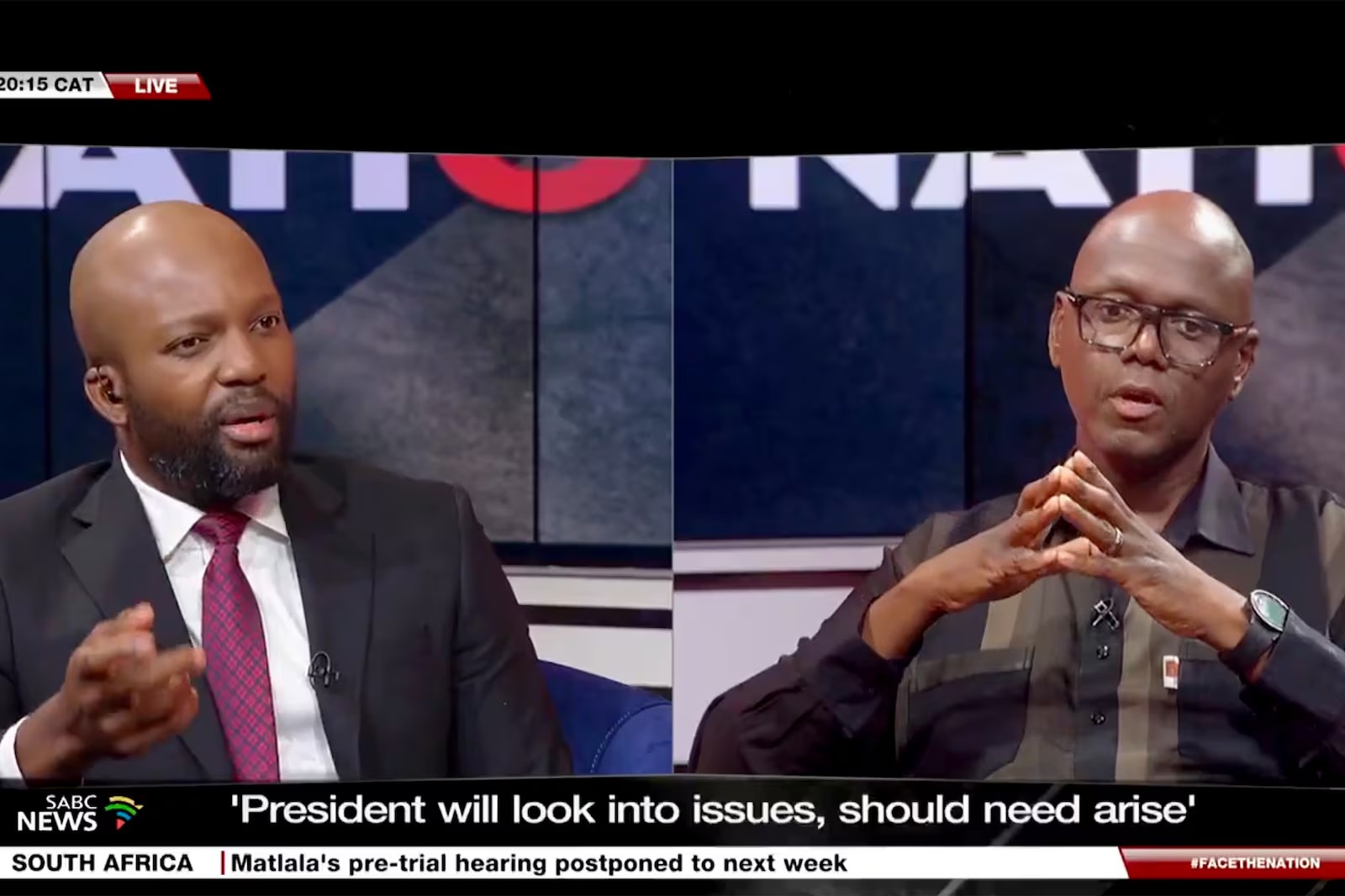

The South African Broadcasting Corporation (SABC) has cancelled its flagship political talk show Face the Nation, hosted by Clement Manyathela, sparking allegations of political interference by the ANC and government officials.
The programme, which aired twice weekly in prime time, was popular with viewers and had even been considered for expansion.
SABC management informed Manyathela last month that the show would not be renewed because the broadcaster could no longer afford the show.
However, insiders claim the real reason was pressure from the Presidency and ANC headquarters, Luthuli House, who were unhappy with the host’s tough questioning of government representatives.
Senior ANC figures like secretary-general Fikile Mbalula and Nomvula Mokonyane have shunned invitations.
The breaking point is said to have been a January interview with Presidency spokesperson Vincent Magwenya, in which Manyathela pressed him on President Cyril Ramaphosa’s handling of the Madlanga commission report and the suspension of Police Minister Senzo Mchunu.
Manyathela asked Magwenya why President Cyril Ramaphosa had not made the Madlanga commission interim report public and why he had not fired police minister Senzo Mchunu, instead of just suspending him.
Minister in the Presidency Khumbudzo Ntshavheni has been accused of leading the push against Manyathela, though she denies involvement.
Magwenya himself defended the host, describing the interview as robust but fair, and said he had not lodged any complaints.
Despite this, sources within the SABC suggest newly appointed head of news, Deidre Uren, faced sustained pressure from the Presidency and ultimately decided against renewing the show.
The decision has shocked staff, who argue the programme was cost-effective and drew millions of viewers.
Some insiders believe the cancellation was disguised as a budgetary issue, but in reality stemmed from political discomfort with Manyathela’s style of holding leaders accountable.
The host himself acknowledged he would not be surprised if political pressure played a role, noting past tensions with officials who refused to appear on his show.
The SABC insists the move was part of routine programming reviews, but critics say it raises serious questions about editorial independence at the public broadcaster.
More: Sunday Times
 Pindula WhatsApp Channel
 Facebook Page


Leave a Reply