


The Consumer Council of Zimbabwe (CCZ) has called on the government to temporarily review certain fuel taxes, levies, and administrative charges to help keep pump prices in check.
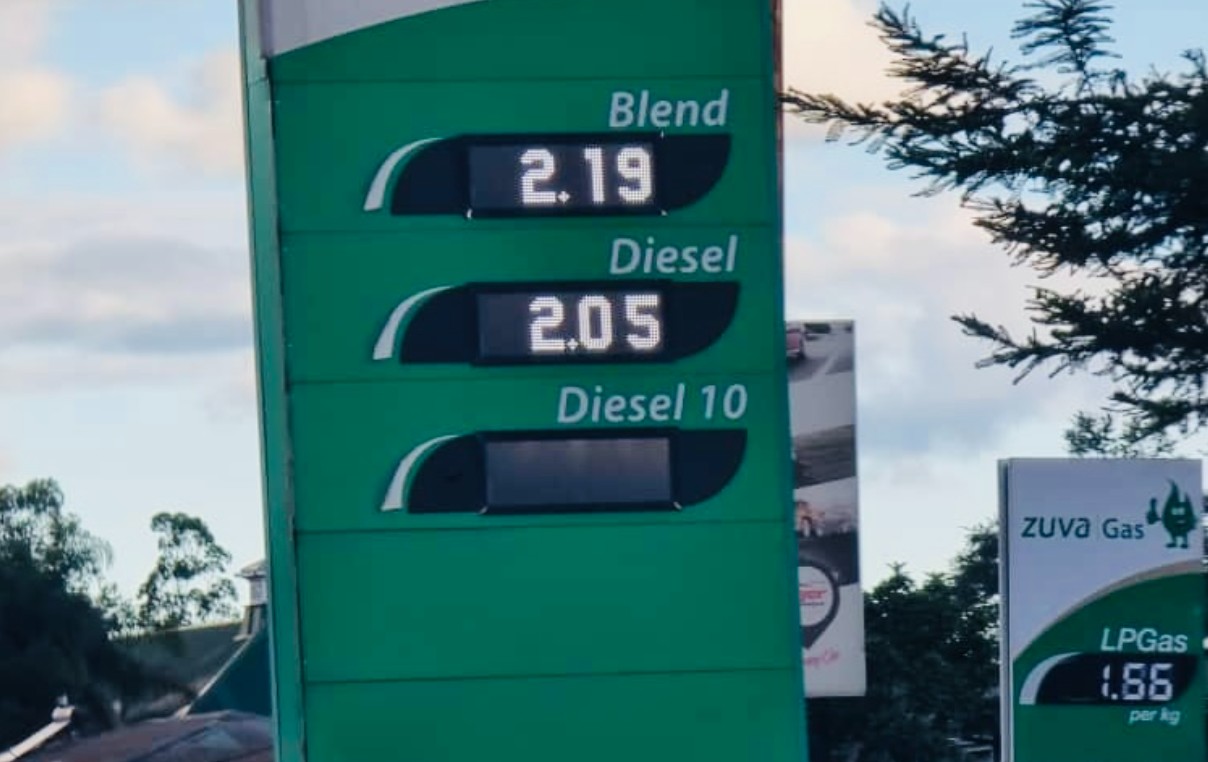
Fuel prices have shot up sharply this month. Diesel now sells at US$2.05 per litre, up from US$1.52, while petrol (E5) has climbed to US$2.17 from US$1.56 before 4 March 2026.
CCZ Chief Executive Officer Rosemary Mpofu pointed out that while the ongoing conflict in the Middle East has driven up global fuel costs, domestic pricing structures also play a big part in determining what drivers pay at the pump. She said:
“However, the ZERA price build-up also shows that the final pump price is not determined by import cost alone.
“It includes taxes and levies, administrative charges, blending costs, distribution costs and margins.
“On the latest build-up, taxes and levies alone account for US$0.422 per litre on diesel and US$0.857 per litre on Blend E5.
“This means the government, as much as it cannot control the external shock itself, could still cushion consumers by reviewing the domestic components of the fuel price.”
She called on the government to take immediate measures to cushion citizens from the rising costs. Said Mpofu:
“CCZ therefore urges Government to act in the short run by temporarily reviewing selected fuel taxes, levies and administrative charges; prioritising relief for public transport and essential food supply chains; and intensifying monitoring of fares and basic commodity prices to curb speculative markups.”
Mpofu expressed particular concern over the impact of fuel price hikes on vulnerable families, noting that basic commodities were already on an upward trend. She said:
CCZ is particularly concerned about the effect on the low income urban family basket for a family of six. In February 2026, the basket stood at ZWG20,450.90, or US$600.48, and some items had already started rising, including margarine, tea leaves, fresh milk and tomatoes.
“These are among the products that tend to respond quickly to transport and distribution cost increases.
In practice, the first round effects were seen in commuter fares, milk and bread distribution, fresh produce, and frequently purchased grocery items.
For low-income households, every extra dollar spent on transport reduces what is available for food, rent, school needs and health care.”

 Pindula WhatsApp Channel
 Facebook Page


Leave a Reply