



The Mthwakazi Republic Party (MRP) used this year’s 16 Days of Activism Against Gender-Based Violence to call for justice for women who were raped and killed during the 1980s Gukurahundi massacres, a dark period that claimed an estimated 20,000 lives.
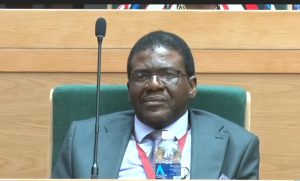
MRP leader Mqondisi Moyo said the campaign serves as a reminder of decades of gender-targeted atrocities and exposes the ongoing state-engineered silence affecting the people of Matabeleland. Said Moyo:
“For the MRP and the broader Mthwakazi nation, this is not just another diarised campaign.
“It is a period carved into our collective memory by the blood, tears, and irreversible trauma inflicted upon our women, girls, and children during the Gukurahundi genocide.”
He described the violence as deliberate, targeted, systematic, and tribal, arguing that the abuses were part of a structured military operation to break communities.
Moyo also pointed out the enduring intergenerational trauma, particularly for children born of rape, who face lifelong spiritual dislocation and uncertainty about their identity and origins. He said:
“Their lives became living evidence of a crime that sought not only to destroy a people, but to erase their future.”
Moyo criticised the government for its ongoing refusal to fully acknowledge the atrocities or deliver justice, describing its stance as politically dishonest and morally bankrupt. He said:
“You cannot claim moral authority while suppressing truth. You cannot champion women’s rights while refusing to confront what was done to women in Matabeleland.”
He called for an independent, transparent, and victim-focused process to address the violations, including reparations for survivors and the families affected.
The Gukurahundi atrocities were carried out by the Zimbabwe National Army’s Fifth Brigade, which had been trained by North Korean instructors.
The unit was deployed to Matabeleland and Midlands provinces soon after independence by former president Robert Mugabe, to neutralise the ZAPU liberation movement led by Joshua Nkomo.
The exact number of people killed between 1983 and 1987 is not known with absolute certainty, but most human rights organisations and historians estimate around 20,000 deaths.
Because the killings occurred in remote areas and the government has never formally released its investigation, the Chihambakwe Commission report, figures vary depending on the source.
A 1987 unity accord between ZAPU and ZANU brought an end to the killings, as Mugabe moved towards establishing a one-party state.
When President Emmerson Mnangagwa came to power in 2017, he promised a swift resolution to the Gukurahundi issues, but so far, progress has been limited to a few largely symbolic initiatives.
More: Southern Eye
 Pindula WhatsApp Channel
 Facebook Page


Leave a Reply