

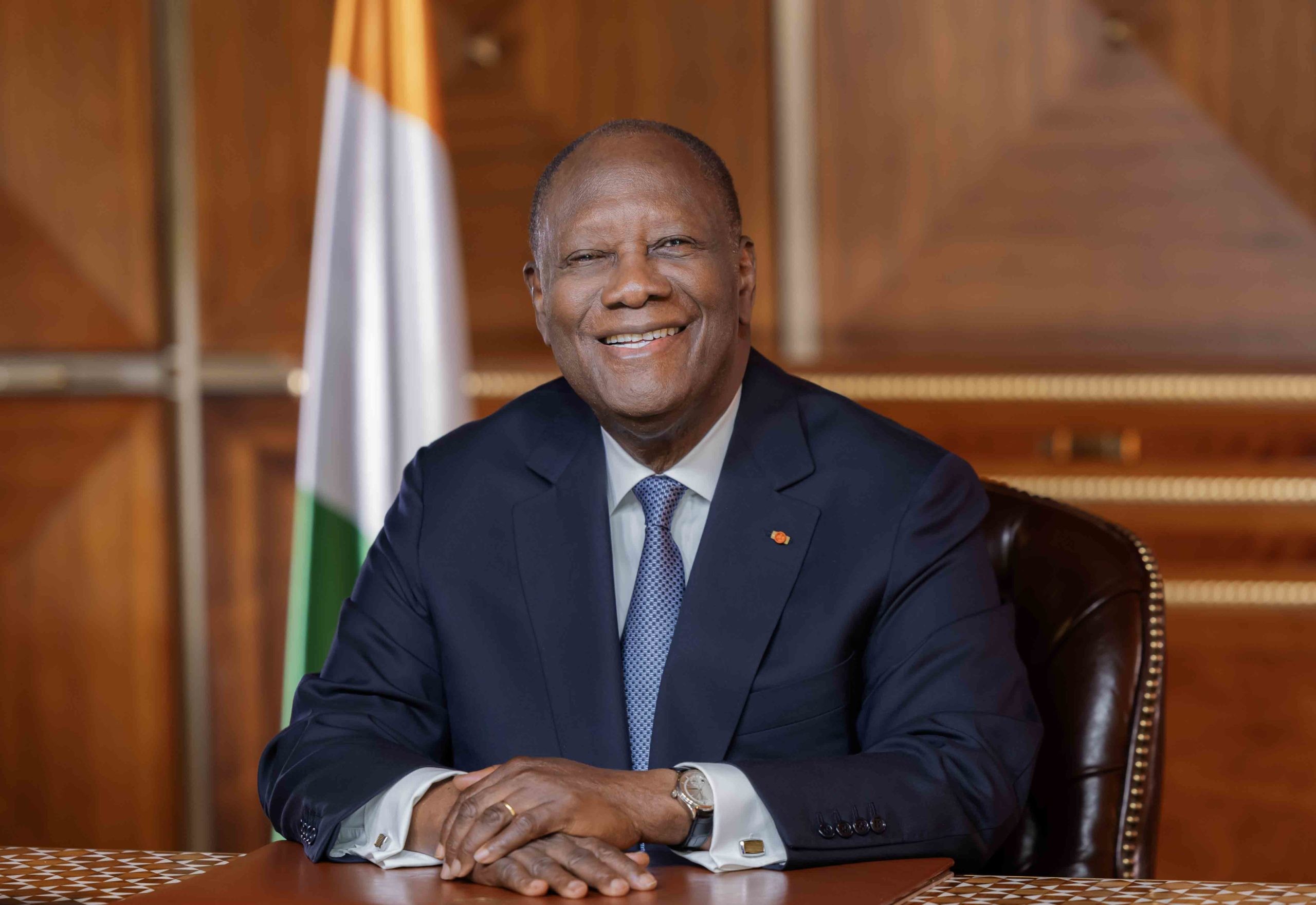

Ivory Coast President Alassane Ouattara has won a fourth term in office, taking 89.77% of the vote, according to provisional results announced on Monday.
The victory extends his 14-year rule in an election marked by low voter turnout and the absence of major opposition candidates.
The 83-year-old leader’s re-election came as little surprise after his two strongest rivals, former president Laurent Gbagbo and ex-Credit Suisse chief Tidjane Thiam, were barred from contesting.
With the opposition sidelined, Ouattara’s main challengers, Jean-Louis Billon, a former commerce minister, and former First Lady Simone Gbagbo, managed only 3.09% and 2.42% of the vote, respectively.
Both Billon and Gbagbo conceded quickly. Billon congratulated Ouattara on Sunday, and Gbagbo followed suit the next day, easing fears of post-election violence.
The 2010 presidential dispute between Ouattara and Laurent Gbagbo left more than 3,000 people dead, plunging the nation into months of turmoil.
Still, the latest election was marred by voter apathy, with turnout hovering around 50%, a sharp decline from the 80% participation recorded in 2010.
Analysts say the drop reflects public frustration and a sense of inevitability after key opposition figures were excluded.
During his long rule, Ouattara, a former IMF economist and international banker, has overseen a period of economic growth and relative stability in the world’s top cocoa producer.
His supporters credit him with spearheading infrastructure development and economic reforms, while critics accuse his government of eroding democratic freedoms and tightening control over political life.
Celebrations broke out at the ruling Rally of Houphouëtists for Democracy and Peace (RHDP) headquarters in Abidjan, where supporters waved flags and danced to music.
Turnout was reported to be near total in Ouattara’s northern strongholds, but far lower in the southern regions, where opposition sentiment remains strong.
Disqualified candidate Tidjane Thiam dismissed the election as “not a true democratic exercise”, urging Ivorians to “peacefully reclaim their democracy.”
Civil society groups have echoed similar concerns, warning that the shrinking political space could undermine the Ivory Coast’s long-term stability.
 Pindula WhatsApp Channel
 Facebook Page


Leave a Reply