

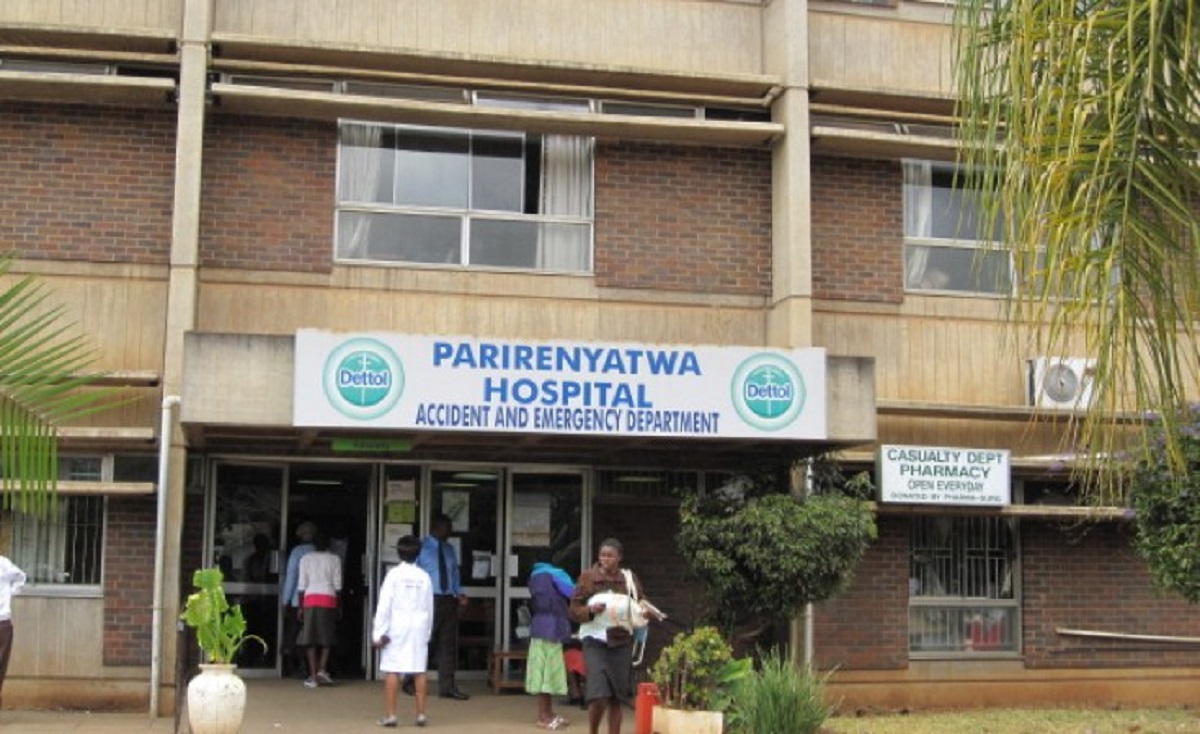

A local health expert has urged the government to release funds allocated to the health sector on time to ensure smooth service delivery.
Speaking on the sidelines of a stakeholder meeting on health financing, Community Working Group on Health executive director Itai Rusike said that although the health sector receives a significant portion of the national budget, nearly half of the allocated funds are never released. He said:
“Sometimes we celebrate when the budget is announced and when we hear the figures in terms of the percentage allocations, especially to the health sector, and it is said that sometimes what is allocated is not necessarily what is disbursed.
“As civil society, we continue advocating for the full disbursement of whatever is allocated, especially to the health sector, and a timely disbursement of those funds, not the current situation where sometimes you get to the end of the year and less than 50% of the budget has been disbursed.”
Rusike also stressed the need for the country to come together to develop strategies for strengthening domestic health financing. He said:
“It’s also an opportunity for us to review and reflect on the various earmarked health taxes, as we are aware, given that the national health budget is not sufficient to address all the health needs of our population.
“The country has come up with various health financing strategies and these include the various earmarked health taxes, such as the sugar tax, the airtime tax and also the fast food tax, in an effort to try and mobilise additional resources.”
Also speaking at the meeting, development economist Prosper Chitambara commended the government for raising US$60 million through the sugar tax but criticised the lack of its effective utilisation. Said Chitambara:
“As a way of fighting against cancer, financing the fight against cancer, the figures certainly show that to date we have raised about US$60 million through the sugar tax, which is quite significant.
“But unfortunately, the funds have not yet actually been disbursed in terms of the procurement of the cancer equipment, I think that is still a major challenge.
“One option of addressing that could be through learning from the Aids levy, where we have created the National Aids Trust Fund, where the funds mobilised from the Aids levy are actually deposited into that fund and they are then utilised or governed through the National Aids Council, which is a board that is representative of the key stakeholders in the country.”
Chitambara also said there was a need to establish a clear framework to ring-fence the sugar tax, to promote transparency and accountability while guaranteeing that the money collected is used for its intended purpose. He said:
“Because it’s been created specifically to help in the fight against NCDs and in particular cancer, so it would be critical to establish that, to ring-fence that, through supporting legislation.
“But also come up with a governance structure in terms of a board that is inclusive of key stakeholders, including the private sector, but also the communities and civil society organisations, and government, obviously, in the spirit of social dialogue.”
The 2025 national budget allocated Z$28.3 billion (US$785.9 million) to the Ministry of Health and Child Care, representing just 10.2% of the total budget, down from 10.6% in 2024.
This amounts to only 2.1% of GDP, significantly below the 15% benchmark for health funding set under the Abuja Declaration.
More: NewsDay

 Pindula WhatsApp Channel
 Facebook Page


Leave a Reply