

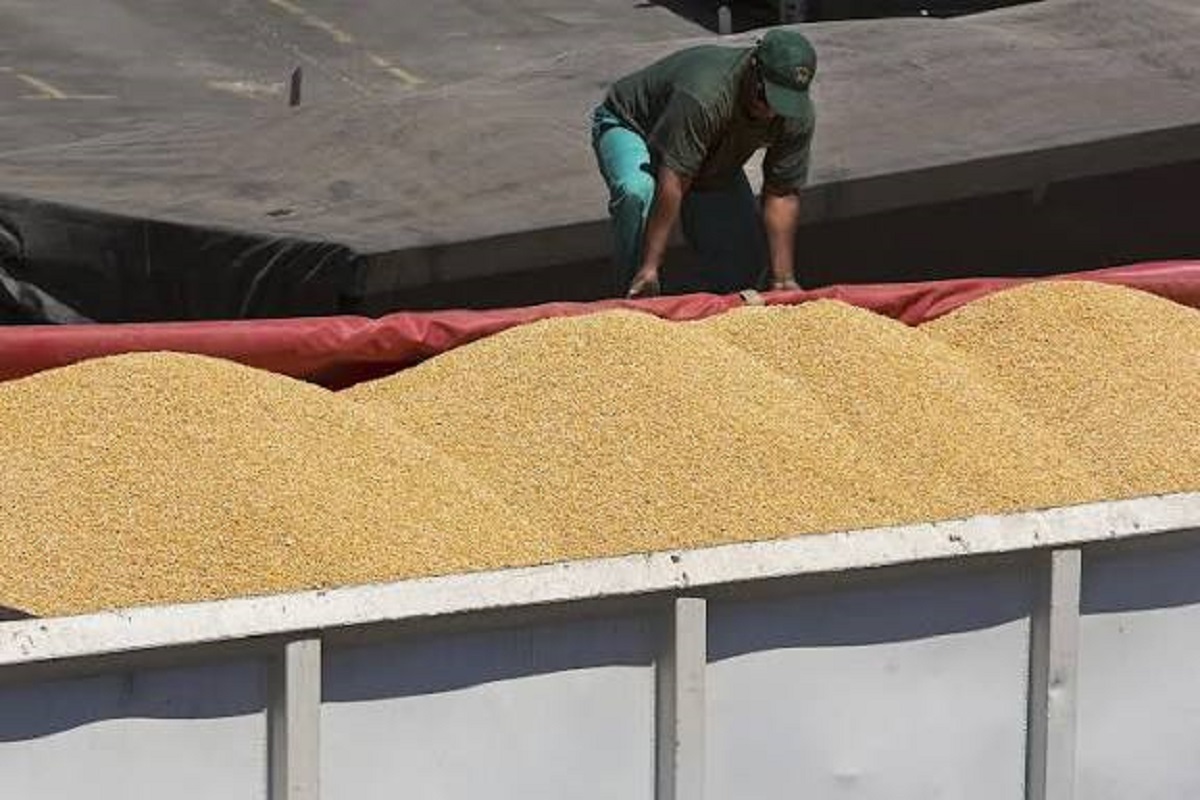

Zimbabwe’s second-biggest milling company, Blue Ribbon Foods, has shut down its Bulawayo plant after running out of grain.
During a site visit on Monday, the company’s sales coordinator for Matabeleland North, Nqabutho Mkhize, said their seven silos were empty. He said:
“We have seven silos outside that hold about 180 tonnes each. They all have been empty since April. We are wondering when they will actually have full capacity again.”
At full capacity, the milling company operates two shifts a day, employing 34 workers per shift and producing up to 60 tonnes of maize meal daily.
However, since the last maize consignment was milled several months ago, the production floor has fallen silent.
Mkhize said the company can only wait for the situation to improve so that normal operations can resume, with workers’ livelihoods currently hanging in the balance.
According to David Moyo, chairperson of the Grain Millers Association of Zimbabwe (GMAZ) Southern Region, maize supplies were once easily sourced locally. He added:
“Now it is hard to fill even a 30-tonne truck. Some days, all we get is two or three 50kg bags. It can take a whole week just to fill one tonne truck.”
The government banned maize imports back in June, basing the move on what now looks like inflated harvest figures from the lands and agriculture ministry.
Since then, several companies, among them Sunset Marketing, National Foods, Mathokozisi Milling, and Bulateke Milling, have either scaled down operations or let workers go as they struggle with shortages and red tape. Said Moyo:
“We are asking those in charge to help fill the gap. Right now, these regulations are making a bad situation worse. We don’t want to shut down permanently. We want to feed the nation.”
Trade experts are warning that Zimbabwe could run short of grain within weeks if authorities persist with the ban on maize imports.
Jacques Pieener of Commodity Insight Africa said the government’s reluctance to ease restrictions is driven more by politics than by market realities, and that the stance could quickly escalate into a food crisis.
In May, President Emmerson Mnangagwa told a ZANU-PF Central Committee meeting that the country was set for a bumper harvest.
His confidence was reinforced by Lands and Agriculture Minister Anxious Masuka, who reported a cereal harvest of 2.9 million tonnes, well above the national consumption requirement of 2.2 million tonnes.
However, doubts have since emerged over the accuracy of those figures. Economist Tinashe Murapata recently argued that actual maize production was closer to one million tonnes, far below the 2.3 million tonnes projected in the 2025 national budget.
The prolonged closure of milling plants has raised concerns not only over urban food security but also over the potential for large-scale job losses and soaring mealie meal prices.
With many households already struggling under the weight of inflation and unemployment, analysts say the impact could be severe if corrective measures are not taken quickly. Said Moyo:
“We are not asking for handouts. The private sector is here to complement government efforts.
“But we need an environment where we can import maize freely and let market forces determine the price.
“Ultimately, deregulating the maize import framework will lower the cost of mealie meal for consumers.
“It is not just about the miller but about every Zimbabwean’s right to affordable food.”
More: ZimLive

 Pindula WhatsApp Channel
 Facebook Page


Leave a Reply