

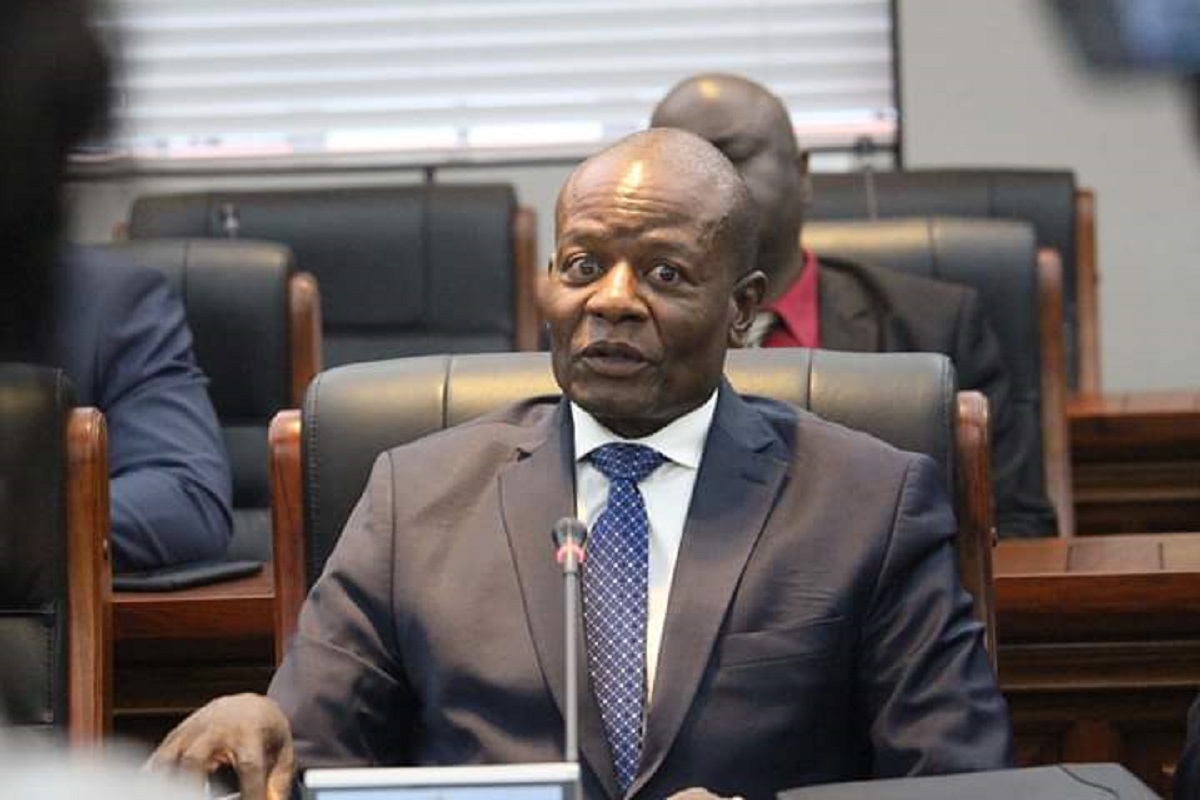

The government is set to appoint three additional chiefs in Murewa District, Mashonaland East Province, in an effort to curb corruption by parallel traditional leaders and to ease the workload on the incumbent Chief Mangwende, who has been struggling to oversee the vast area.
Murewa District once had four traditional leaders, but three of the chieftaincies were dissolved during the colonial era, leaving the entire district under the Mangwende chieftaincy.
Local Government and Public Works Minister Daniel Garwe recently told a ZANU PF inter-district meeting at Hurungwe Primary School that government would soon install three more chiefs in Murewa to reduce the burden on Chief Mangwende, born Morgan Taaziva Gatsi. Said Garwe:
“The government, with the guidance of traditional leaders, will continue to resuscitate chieftainships that were affected by colonial legacies.
“In Murewa, government is set to install three new chiefs whose chieftainship was once abolished by the white settlers in 1896 because the people had refused to cooperate and to be subjugated by the colonialists. Chief Mangwende will remain a chief.
“The addition of these chiefs will be instrumental in building a prosperous Murewa and contributing to Vision 2030.”
The incumbent Chief Mangwende has appointed a steering committee to help manage affairs in his area of jurisdiction.
However, the committee has been accused of running a parallel structure without the traditional leader’s knowledge.
It is alleged to have installed village heads and headmen in resettlement areas, particularly in Murewa South constituency, without Chief Mangwende’s approval.
At present, resettlement areas are officially administered by village development committees.
The steering committee is chaired by Franklin Mukarakate, with Edmore Mangwende as secretary, and members Tichafa Chibanda and Charles Mukarakate.
According to a report by a six-member team led by C. Shumba, Principal Director of Rural Development and Rural Local Authorities, there is a proposal to split the current Mangwende chieftaincy into two, while also reviving the Bandakamwe RaGatsi and Nyagwizu Chikonamombe Dzete chieftainships. This would create four chieftainship areas in total.
The report, based on the 2012 census, noted that Chief Mangwende presides over 195,085 subjects, compared to Binga District in Matabeleland North, where each chief has an average of 6,000 subjects.
It concluded that having only one traditional leader for the entire district was fuelling corruption and making it costly and difficult for some villagers to access justice through the chief’s court, which is often far from their communities. Part of the report reads:
“Communities from the furthest areas, on average, have to fork out US$30 in a single journey to Mukarakate, when, on average, for each dispute, more than five people will be needed, including witnesses.
“This amount of money is difficult to get in communal areas, effectively meaning many disgruntled communities cannot have their disputes resolved in time or at all because the chief is not easily accessible.
“The cost factor is deterrent enough for Murewa people to access legal justice from the chief’s local court.
“The effect of all this is very destructive on the ground and it has led to rampant corruption among the five headmen who have grown too powerful for the chief to institute discipline and this has also cascaded to the village heads who are involved in the ‘Seke style land sales’ to land seekers from Harare and former workers, thereby causing sprawling human settlements and land degradation.”
According to the report, the investigation team’s findings were presented to the National Chiefs’ Council meeting held from 28 to 29 September 2017.
The council adopted and endorsed the recommendations, which called for the establishment of three additional chieftainships in Murewa District.
More: NewsDay

 Pindula WhatsApp Channel
 Facebook Page


Leave a Reply