



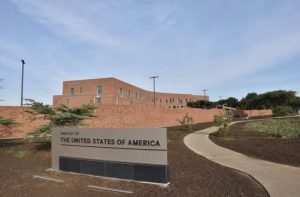
The United States has suspended the processing of most visas in Zimbabwe until further notice, the U.S. Embassy in Harare announced on Wednesday, citing unspecified concerns with the government.
In a post on X, the Embassy clarified that the move does not constitute a travel ban and that existing visas will remain valid. It said:
“We have paused routine visa services in Harare while we address concerns with the Government of Zimbabwe… This is not a travel ban… All valid visas remain valid.
“We will provide updates on resuming visa services as soon as there is a change.”
The suspension took effect on August 7, according to a notice on the U.S. State Department’s website, and applies to all visa services except most diplomatic and official visas. Reads the notice:
“Effective, August 7, 2025, U.S. Embassy Harare has temporarily paused all routine visa services. This pause includes applications for immigrant visas as well as nonimmigrant visas for tourists, business travelers, students, exchange visitors, and most other nonimmigrant categories.
“At this time, no visa appointments can be scheduled at U.S. Embassy Harare. We will update our website when appointment scheduling resumes and inform applicants directly when they can reschedule.
“Pursuant to the Presidential Proclamation on Restricting the Entry of Foreign Nationals to Protect the United States from Foreign Terrorists and Other National Security and Public Safety Threats, which takes effect at 12:01 a.m. eastern daylight time on June 9, 2025, the United States is suspending or limiting entry and visa issuance to nationals of certain countries.
“Applicants who are subject to this Presidential Proclamation may still submit visa applications and attend scheduled interviews, but they may be ineligible for visa issuance or admission to the United States.”
Harare resident Angella Chirombo told Reuters that her 18-year-old son, who had received a scholarship to pursue a bachelor’s degree at Michigan State University, was waiting for a visa interview when the suspension took effect. She said:
“He was supposed to be in school already. I paid for everything else and was waiting for the visa so I could buy tickets.”
She said other parents were considering scheduling visa interviews at U.S. embassies elsewhere in Southern Africa, but she could not afford the travel. Added Chirombo:
“Now they are saying we can go to Zambia and Namibia. I don’t even have money right now and I don’t know where to get this money. They are so many students that have been affected.”
Meanwhile, journalist Hopewell Chin’ono has criticised the ZANU PF-led government, saying its actions are contributing to the situation adversely affecting Zimbabweans.
Chin’ono said the Zimbabwean government has declined to reciprocate the visa durations granted to Americans, limiting what Zimbabweans can obtain from the United States. He said:
“In essence, if Zimbabwe grants American citizens only three months for a particular visa, America will now reciprocate by granting Zimbabweans the same period.
“Successive American ambassadors to Zimbabwe have told me that Washington removed the ten-year tourist visa that Zimbabweans once enjoyed because the Zimbabwean government stubbornly refused to grant Americans the same.
“The Americans then reduced the validity to one year, but again, the Zimbabwean government refused to match that arrangement.
“As a result, under Donald Trump’s administration, America formally adopted a strict reciprocity policy; America now issues visas with time periods that mirror what the other government grants its citizens.
“The American government now sets visa validity, number of entries, and issuance fees based on how the destination country treats American citizens. They call it ‘reciprocity adjustment.’”
 Pindula WhatsApp Channel
 Facebook Page


Leave a Reply