

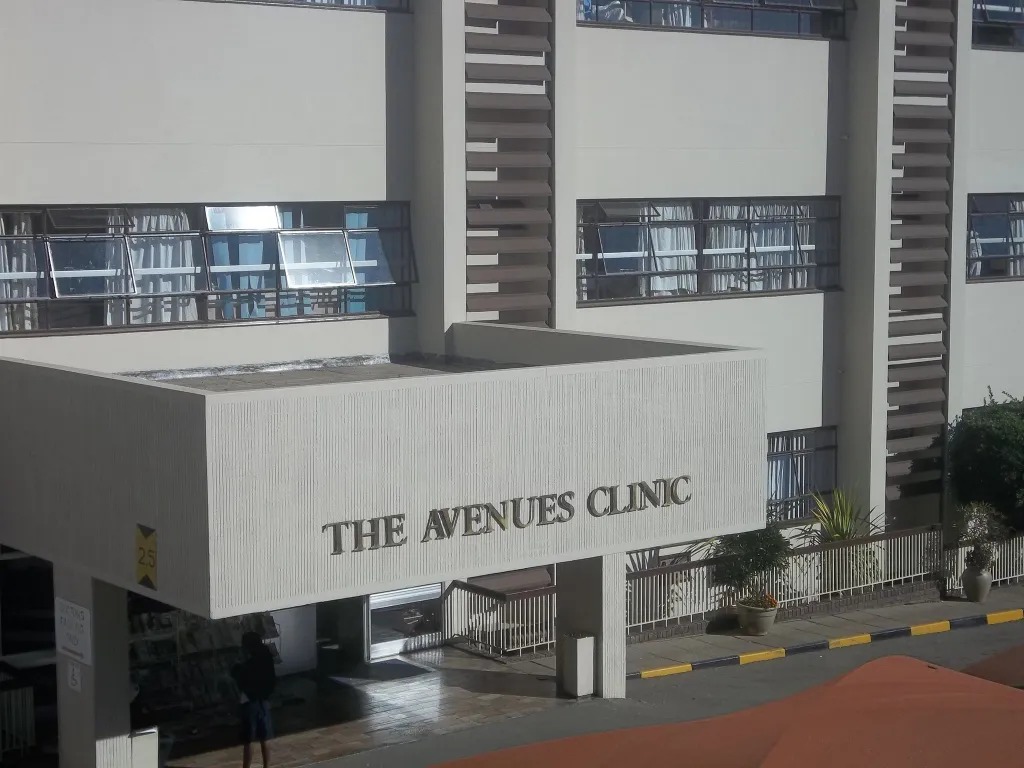

The High Court has thrown out a US$520,000 medical negligence claim against Avenues Clinic over the death of a patient who allegedly fell from his hospital bed.
Justice Mary Zimba-Dube granted the clinic absolution from the instance at the close of the plaintiffs’ case, ruling that the family had failed to produce expert evidence linking the hospital’s conduct to the death.
The claim was brought by Sheila Nyadundu and her two children, Mutsa and Takunda, over the death of Francis Nyadundu. They were ordered to pay the clinic’s legal costs jointly and severally.
The court heard that Francis Nyadundu, a former banker, was admitted to Avenues Clinic in March 2024 for treatment for liver cirrhosis. His family said he was stable and awaiting medication ahead of expected discharge.
He had been restless and had attempted to get out of bed. Nursing records showed he was given lorazepam for restlessness, bed rails were raised, and clutter was removed to reduce the risk of a fall.
In the early hours of 10 March, he was found injured after falling from his bed. His family said they were only told his condition had worsened and discovered wounds to his head and face when they arrived at the hospital. He later died.
A post-mortem recorded the cause of death as a skull vault fracture, subarachnoid haemorrhage and head trauma.
The family accused the clinic, which is operated by Medical Investments [Private] Limited, of leaving a patient known to need special care unattended, failing to respond adequately after the fall, delaying notification of his doctor and family, failing to properly monitor and manage his condition, and concealing the cause of death. They said his death had left them emotionally and financially distressed, with Sheila developing hypertension and depression and Takunda having to take over his father’s farm.
Avenues Clinic denied negligence. It argued that Nyadundu had multiple serious underlying conditions and received care consistent with his treatment plan and his doctor’s instructions, and that the family had failed to provide expert evidence that its staff breached the accepted standard of care or that any breach caused his death.
Justice Zimba-Dube found that the family had established, at least prima facie, that the hospital owed Nyadundu a duty of care and that the nursing records showed the risk of a fall was foreseeable given his restlessness, dizziness and attempts to leave the bed.
But she said foreseeability alone was not enough.
The plaintiffs needed expert evidence to establish what level of monitoring and fall-prevention measures were medically required, whether the clinic departed from that standard, and whether that departure caused the death.
“The plaintiffs cannot authoritatively speak to whether the monitoring intervals were reasonable, sufficient or to the acceptable standard as they are not medical experts,” she said.
“A fall alone in a hospital setting resulting in death of a patient cannot raise inferences of negligence without exploring the circumstances of the fall and evidence from a medical expert.”
“Without expert opinion on the standard of care in medical negligence cases, a plaintiff’s case cannot succeed,” she added.
The court held that the post-mortem, on its own, could not establish negligence or causation. While it showed the physical cause of death, it did not establish how the fall occurred, whether the fall caused the fatal injury, or whether underlying conditions contributed to the death. Nor was there expert evidence that a quicker response would have saved him.
The judge also found that the two children had not properly proved their individual loss-of-support claims.


 Pindula WhatsApp Channel
 Facebook Page


Leave a Reply