



The High Court has quashed the conviction and the effective 15-year sentence imposed on former Old Mutual manager Musa Nyasha Dube Manyika for raping a University of Zimbabwe student, after finding serious defects in the trial record.
Manyika, 43, was convicted in March on two counts of rape, relating to alleged incidents in 2022 and 2024, and sentenced to an effective 15 years in prison. The High Court set aside the proceedings in the magistrates court and ordered his immediate release.
The case turned not on the merits of the allegations but on the state of the record.
Advocate Lewis Uriri, instructed by Admire Rubaya and appearing with Rubaya and Norman Chimuka, identified about 50 material and irreconcilable discrepancies. These included evidence attributed to the wrong witnesses, different answers recorded from the same witness to the same question, and two separate versions of Manyika’s defence case signed by the same magistrate.
“Does the record tell us what happened in the magistrate’s court? Which version of the record is correct?” Uriri asked.
The National Prosecuting Authority itself told the court that “the record before the court does not give a true reflection of the proceedings in the court a quo” and that it could not make an informed response until the discrepancies were resolved. The state argued the matter should be sent back to the Magistrates Court for the trial magistrate to explain.
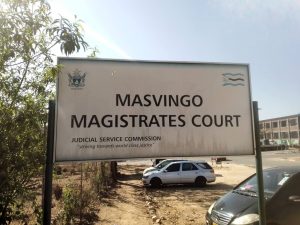
Justices Isaac Muzenda, Davison Moses Foroma and Lawrence Masimba Murasi, sitting as an appeal court, rejected that approach. They held that the record must speak for itself and that a magistrate has a duty to keep a complete and regular record of proceedings. Exercising their review powers, they set aside the magistrates’ court proceedings.
The underlying case concerned two alleged rapes.
In the first, in 2022, the complainant, a holder of an Old Mutual scholarship, alleged she was raped near the office of the scholarship coordinators, where Manyika was manager for business development.
The defence argued that she said she had “made noise” to attract attention during the alleged attack, but did not scream or call for help when she later saw security guards. Afterwards, she told people she was sick or that “something was happening at home” but did not name Manyika as the alleged assailant.
She later went to the University of Zimbabwe clinic with vaginal discharge and sores. According to the appeal, she only raised the rape allegation after being examined, prescribed medication and questioned about the cause of her condition.
The defence said the medical evidence did not record who had allegedly raped her, where, when or how it happened, whether she had struggled, whether protection was used or how she had reacted.
The second allegation was in 2024. The complainant went to Arundel Hospital complaining of abdominal pain and vaginal discharge and was diagnosed with a sexually transmitted infection. The defence said she then alleged she had been raped by her boss during discussions about an HIV test.
Manyika denied both allegations, saying he and the complainant were in a consensual relationship. The defence argued she continued to communicate with him on social media and visit his office after the alleged incidents. The trial court itself had found that “it could be possible that later they developed a love relationship.”
The defence also challenged the delay in reporting, saying the complainant did not identify Manyika as the alleged perpetrator in the first case until years later, and argued that the prosecution case depended largely on a single witness and that the magistrate had failed to apply the necessary caution.
More: ZimLive

 Pindula WhatsApp Channel
 Facebook Page


Leave a Reply