

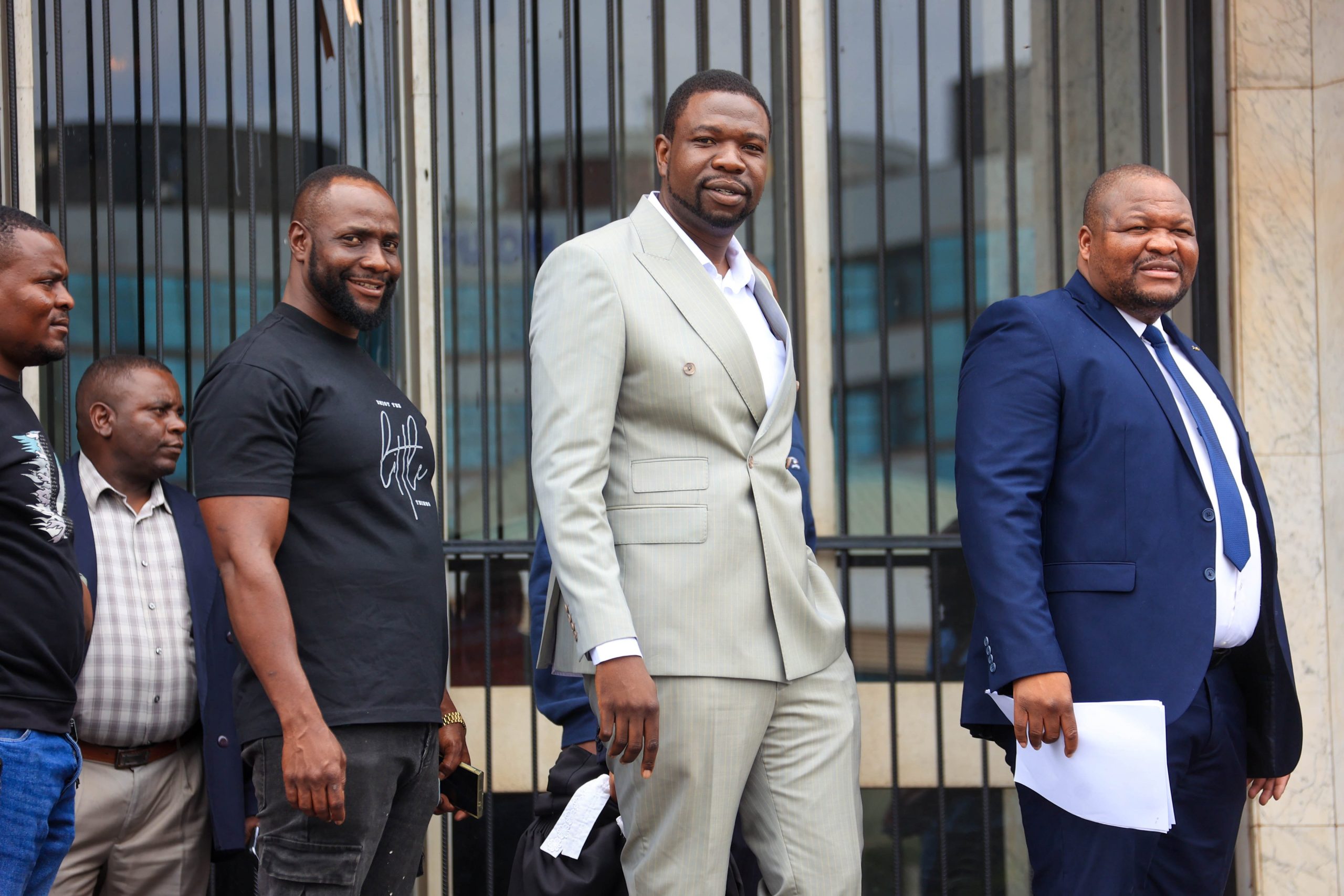

The High Court has set aside a ruling by Harare regional magistrate Ester Chivasa that had allowed three women who accuse preacher Walter Magaya of rape to testify in the Victim Friendly Court.
Justice Tawanda Chitapi found that the magistrate failed to properly apply the legal test for declaring a witness vulnerable before granting special protection.
He remitted the matter back to the regional court and directed that the prosecution and Magaya’s lawyers may raise the same dispute afresh, this time with the magistrate properly guided by the requirements of the Criminal Procedure and Evidence Act (CPEA).
Magaya, the founder and leader of PHD Ministries, is facing three counts of rape involving congregants of his church, allegedly committed at the Yadah Hotel in Waterfalls, Harare.
The prosecution alleges he raped the first complainant in Villa 13 at the hotel on an unknown date in July 2020, and the second and third complainants in the hotel’s Presidential Suite in July 2023 and December 2023 respectively. The three complainants were aged 24, 22 and 21 at the time.
Magaya’s trial was set down before Chivasa on 16 February this year in the Victim Friendly Court, a specially equipped room at the Harare Magistrates Court complex normally reserved for cases involving vulnerable witnesses such as children.
His lawyers objected before he could be asked to plead, arguing the trial should instead be held in the ordinary open court where he had appeared for remand hearings.
Prosecutor Clemence Chimbari then made an application under section 319B of the CPEA to have the trial proceed in the Victim Friendly Court and for the complainants’ evidence to be heard in camera.
He argued that “the complainants who are supposed to testify before this court are vulnerable witnesses” who had been going through “quite a lot mentally, emotionally,” and that some had “expressed their reservations to be in direct contact with the accused.”
Chimbari also told the court the complainants were former congregants of Magaya’s church and that the presence of other church members following the proceedings would place “a heavy burden on the witnesses who are the victims.”
Magaya’s legal team opposed the application, arguing the State had produced no medical or psychological evidence to support its claims. His team submitted that the prosecution “was not a medical doctor to judge that the witnesses would suffer emotional stress” and was “not a psychologist” either, and urged the magistrate to interview the complainants herself under section 319C(2) rather than rely on submissions “over the bar from a lawyer.”
The defence said denying Magaya the opportunity to face his accusers would breach his constitutional right to a fair trial.
Chivasa dismissed the objection and granted the State’s application. She reasoned that a vulnerable witness is “someone who the court believes needs special protection when giving evidence because testifying in a normal court set up may cause serious distress or trauma,” and that the law required only that vulnerability “appear” to the court, not be proved with certainty.
The magistrate held that medical evidence was unnecessary and concluded that “in rape matter all witnesses are vulnerable and cannot force them to testify in an open court.”
In his judgment of 30 July, Justice Chitapi said that was an overstatement. “It is an overstatement to say all witnesses in rape matters are vulnerable,” he wrote.
He agreed, however, with Chivasa’s rejection of the defence’s argument that the arrangement amounted to a “secret trial,” noting Magaya retained the right to be present, legally represented and to cross-examine his accusers.
Justice Chitapi said the heart of the matter was not whether the complainants deserved protection, but process. Section 319C(1) of the CPEA requires a court to “pay due regard” to a list of factors — including the witness’s age, mental and physical condition, cultural background, relationship to the accused and the interests of justice — before granting protective measures.
Because the factors are joined by the word “and,” they “must therefore be considered cumulatively and interdependently with no one factor having an overriding effect on the others,” he held.
Chivasa’s ruling, he found, never engaged with that checklist. “She did not even advert to the section by reference,” he said, adding that on the question of age, she had contradicted herself, first acknowledging that a “child, an adult or even a grandfather or 80-year-old could be a vulnerable witness” before then ruling that age “was not a factor to consider in this case.”
“The court’s role in such applications is therefore not a passive one,” Justice Chitapi said. “The court must enquire into the listed factors… all must be traversed and findings of fact made.”
Even so, he rejected Magaya’s broader argument that the magistrate’s error rendered the whole process a nullity. “The applicant misses the point,” he wrote. “The first respondent did not do anything which the law prohibits. The first respondent omitted to do what the law requires… The first respondent did not therefore commit a void act or an illegality.”
The court also declined to grant Magaya’s request for a different magistrate, noting he had not proffered any justification for recusal.
Justice Chitapi ordered that the 16 February ruling be set aside and the matter remitted to Chivasa, with either party free to raise the vulnerable-witness question again, properly guided by the operative sections of the CPEA. There was no order as to costs.
More: ZimLive
 Pindula WhatsApp Channel
 Facebook Page


Leave a Reply