

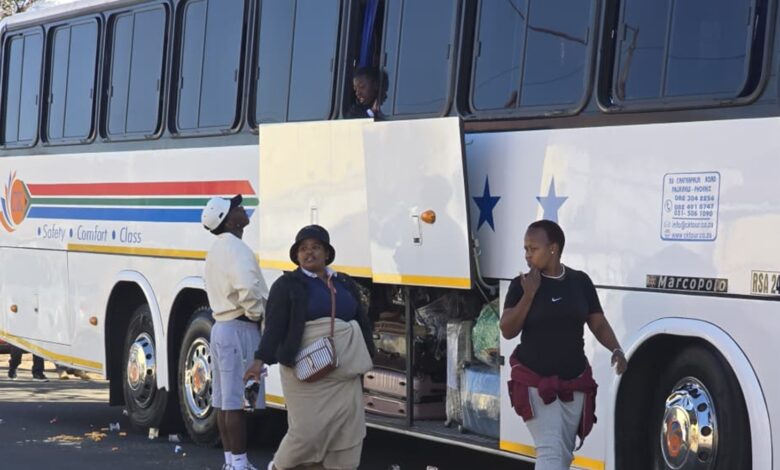

Dozens of Zimbabwean and Malawian nationals have gathered at a church property in Pietermaritzburg, South Africa, after being forced from their communities, with buses now arranged to take Zimbabweans back to the border.
According to a report by Newzroom Afrika on Friday afternoon, three buses parked at the site were filled with Zimbabwean nationals who had been at the camp since Tuesday. The buses were expected to depart within 30 minutes for Musina.
The camp also received a group of Malawian nationals who arrived on Thursday night. Most said they were chased from their communities following door-to-door searches. Community members allegedly pressured landlords to hand over foreign nationals and ensure none remained behind.
Some of the displaced came from as far as Howick and neighbouring townships, about two hours away. They said they were unable to gather their belongings and fled their homes in fear.
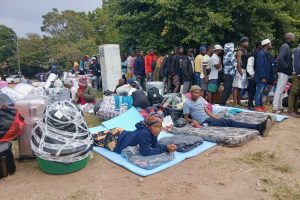
Because Zimbabweans had arrived first, the Malawians were forced to occupy the back end of the property. They spent the night there and were now being moved to the bottom of the property to set up camp.
Luggage and personal items were scattered around the site, as many had left in a hurry.
One Malawian man, who had lived in Mpophomeni for almost five years, said residents told them they would be burnt if they stayed. “That’s why we escaped from there,” he said.
He said when they arrived at the camp, Zimbabweans told them there was no space for Malawians.
He said he had a passport and was in the country legally.
On the way forward, he said he did not know what authorities planned for the group. “I thank God because I’m alive. I will see what I can do in my life now.”
Those at the camp said they felt some safety at the church and were waiting to see if assistance would come in the form of buses to take them back to Malawi.
Philip Tinago, a Pietermaritzburg resident and Zimbabwean national, told The Witness the Zimbabwean Consulate organised the buses.
He added that they will travel to Beitbridge border post, where returnees would be processed before the Zimbabwean government transports them to their home villages and towns.
“It is heartbreaking to see people leaving behind everything they have worked for and returning to a future they know very little about,” said Tinago.
“About 70% of those leaving are documented migrants who have lived and worked in South Africa for many years.”
He said he was worried about the hardships awaiting many on their return, adding that older migrants who had spent decades in South Africa would be hardest hit.
“Some are over 50 years old and have lived here for more than 20 years. Starting over will not be easy. Many have also left most of their belongings behind because they are only allowed to board with one large and one small bag,” he said.
Tinago added that the temporary camp has relied heavily on support from non-governmental organisations, which provide food, water, sanitation, and emotional support to those awaiting transport.

 Pindula WhatsApp Channel
 Facebook Page


Leave a Reply