

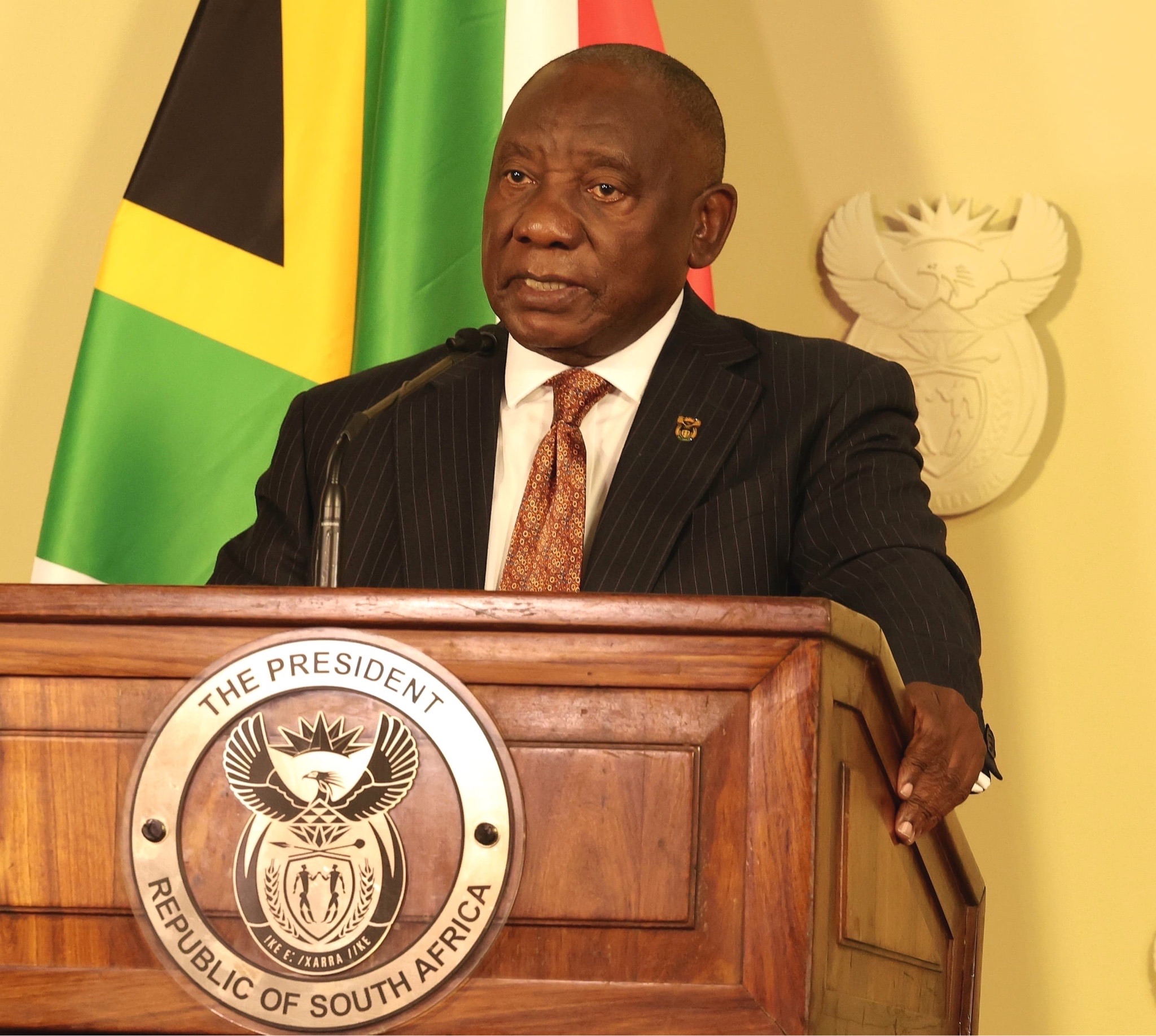

South African President Cyril Ramaphosa has castigated groups in the country that he accused of attacking foreign nationals and trying to destabilise the nation by inciting lawlessness and violence.
In a national address on Sunday evening, Ramaphosa criticised some South Africans for using social media to spread misinformation, fake news and lies about foreign nationals.
He also condemned anti-foreigner sentiment, which he said is at times accompanied by tribal and ethnic slurs, insults or attacks aimed at other South Africans.
“We know that South Africans are not xenophobic as there is no space for xenophobia, racism, sexism, Afrophobia or any other forms of intolerance in South Africa,” said President Ramaphosa.
“As communities and as a society, we must not be tempted to join those who want us to turn against people who were not born in South Africa and who are in our midst.
“We will and must not allow groups to use the legitimate concerns of South Africans to destabilise our country through inciting lawlessness and violence.
“We will act against forces who are exploiting the concerns of our people about illegal immigration to further their own political, personal or criminal agendas.
“We will not be fooled or influenced by social media campaigns that spread misinformation, fake news and lies about foreign nationals.
“We must be concerned that anti-foreigner sentiment is at times accompanied by tribal and ethnic slurs, insults or attacks aimed at other South Africans.
“We expect foreign nationals to respect our laws. We therefore need to respect them ourselves.
“Almost all South Africans recognise that illegal immigration is a significant challenge.”
Ramaphosa warned that South Africa’s security, stability and economic progress are at risk if illegal migration is not brought under control.
“We know that illegal migration affects service delivery and places additional burdens on essential services such as health care and education,” he said.
“Illegal migration routes increasingly overlap with organised crime.
“Criminal syndicates involved in trafficking, extortion, illegal mining, drugs and money laundering often use undocumented migration for recruitment and concealment of goods.”
Xenophobic violence in South Africa hits Zimbabweans hard because they are one of the largest migrant groups in the country and are heavily concentrated in the informal economy, where tensions over jobs and services flare first.
Attitudinal surveys show Zimbabweans are among the most disliked migrant groups in South Africa, a deep-seated prejudice that shapes everyday interactions and leaves them exposed when hostility turns violent.
That fear has real consequences: families limit their movements, children miss school, people avoid clinics and are reluctant to approach the police, and disrupted trading cuts incomes and the remittances that support relatives back in Zimbabwe.
 Pindula WhatsApp Channel
 Facebook Page


Leave a Reply