

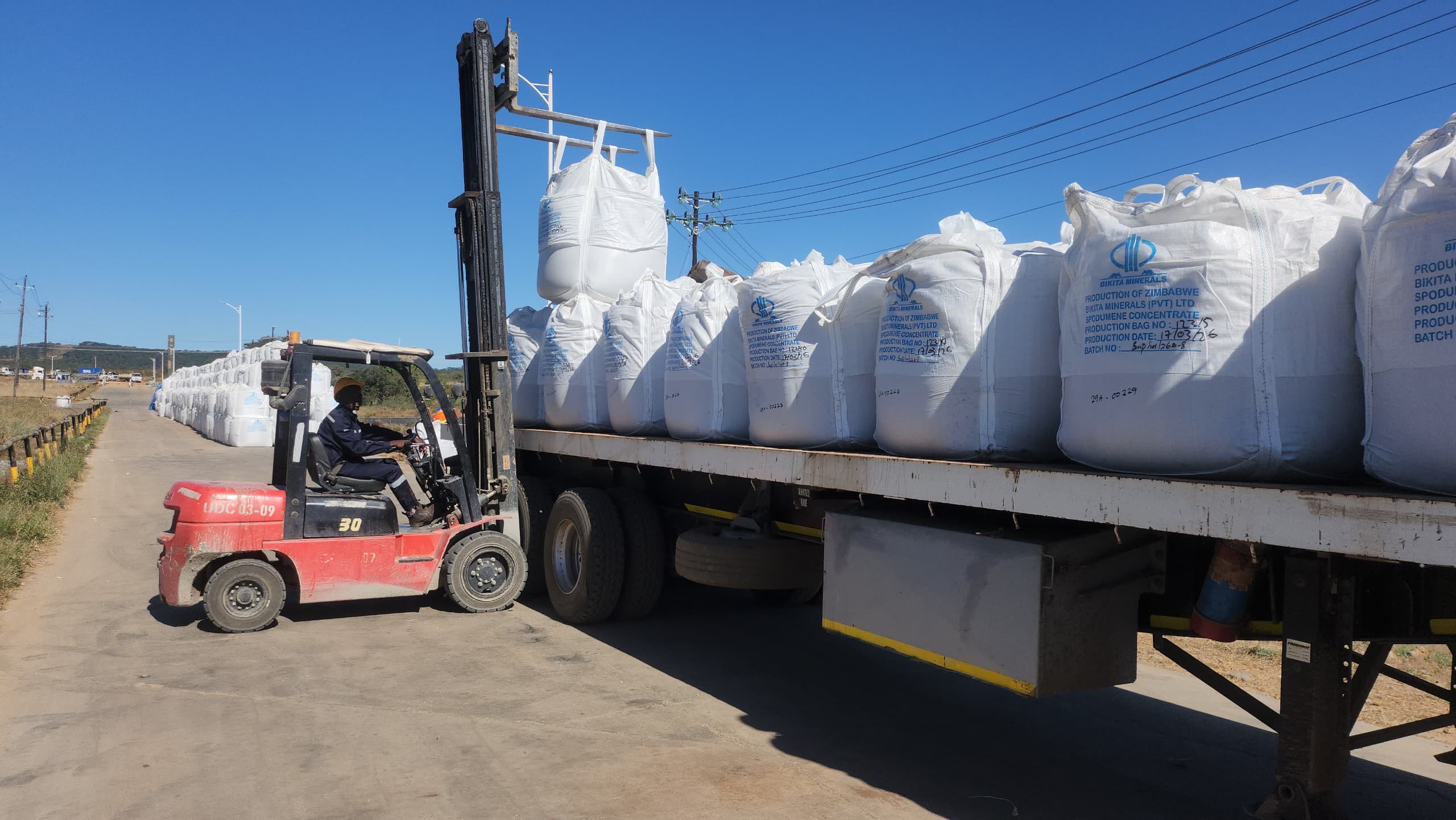

Bikita Minerals, a subsidiary of Sinomine Resource Group, has resumed lithium concentrate exports after securing an export licence from the Ministry of Mines and Mining Development.
The licence was granted under the country’s new lithium export framework.
In a statement, Bikita Minerals said the approval was a significant step in aligning its operations with government policy and strengthening investor confidence in Zimbabwe’s mining industry.
“We have resumed lithium concentrate exports after securing an export licence from Zimbabwe’s Ministry of Mines and Mining Development under the country’s framework. This marks a milestone in our commitment to responsible mining, transparency, and value addition,” reads the statement.
“As part of our long-term beneficiation strategy, we are advancing plans for a US$400 million lithium sulphate processing plant in Zimbabwe ahead of the 2027 deadline for unprocessed lithium exports. Preliminary works are underway.
“We remain committed to responsible mining, employee welfare, environmental stewardship, and sustainable economic development. With nearly 1,500 direct employees and thousands of indirect livelihoods supported, we continue building long-term value for Zimbabwe.”
In April 2026, Zimbabwe granted export quotas to two Chinese mining companies: Chengxin Lithium, which operates Sabi Star Mine, and Sinomine Resources, which runs Bikita Minerals.
Chengxin Lithium said its lithium concentrate production capacity in Zimbabwe is about 290,000 metric tons annually, adding that the quota allocated was sufficient to meet production needs. Sinomine Resources said it had received a quota of 200,000 metric tons, roughly equivalent to its monthly output in Zimbabwe, the report said.
The move followed the Government’s abrupt decision in late February to suspend exports of lithium concentrates and other raw minerals.
The ban was introduced to curb revenue leakages and encourage miners to invest in local processing.
However, under revised guidelines introduced in April, authorities began allowing controlled exports through a quota system subject to strict conditions, effectively reopening the sector on a selective basis.
Under the framework, export permits are issued on a case-by-case basis, with companies required to meet tighter regulatory requirements, including financial transparency, environmental compliance and adherence to labour standards.
Firms must also commit to establishing lithium sulphate processing plants in Zimbabwe by January 2027, as part of a broader strategy to shift from exporting raw spodumene to higher-value battery materials.
A 10% export tax on lithium concentrates remains in place during the transition period, while the Government maintains that a full ban on raw lithium exports will take effect in 2027.

 Pindula WhatsApp Channel
 Facebook Page


Leave a Reply