


Bulawayo Mayor David Coltart has voiced strong opposition to the Constitutional Amendment (No. 3) Bill, 2026, saying the proposed changes upset the carefully balanced powers between the executive, legislature, and judiciary that were established in the 2013 Constitution.
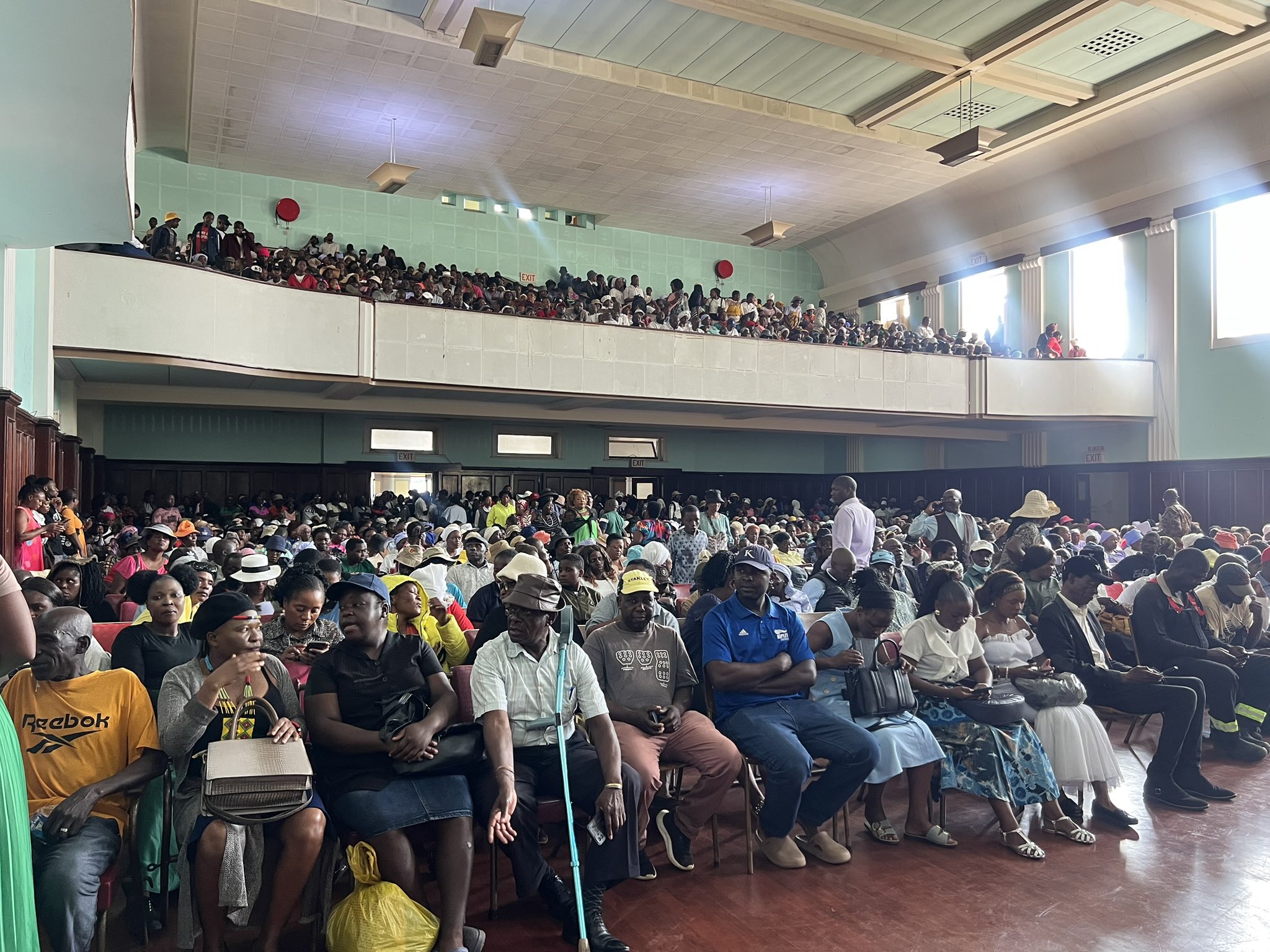
Speaking during a public hearing meeting at Bulawayo City Hall on Monday, 30 March, Coltart argued that the Bill gives too much power to the executive, undermining the authority of the other arms of government. He said:
“The fundamental problem with this is that it distorts that balance. It gives the president too much power in appointing senators.
“It gives the president too much power in appointing judges. It gives the president too much power in appointing people like the Registrar General, who is responsible for the voters’ roll.
“It also undermines some of the critical elements of our society. Let’s look at chiefs for a moment. Chiefs are our equivalent of royalty. It is hereditary.
“People in rural areas, in particular, look up to chiefs. They say that chiefs are the neutral arbiters.
“As we know, in the rural areas, chiefs are responsible for arbitrating. Now, if chiefs can become partisan, they become partisan arbiters, and that is fundamentally wrong.”
The Bill also seeks to extend the terms of office of the Presidential, parliamentary, and local authorities from 5 to 7 years.
This will apply retroactively and extend President Emmerson Mnangagwa’s term to 2030. Said Coltart:
“My principal objection to this is the extension of terms by two years. And I say it for two reasons.
“Firstly, there is a very clear provision in our constitution, Section 328, Subsection 7, that says that if the effect of any amendment is to give an incumbent further time in office, then it must be subjected to a referendum.
“And that applies to the president, it applies to MPs, it applies to councillors. If the effect, and I’m quoting verbatim, the section says if the effect is to extend, doesn’t matter how you do it, if the effect is to extend, then there has to be a referendum.
“And whatever we think about this Bill, whether we support it or not, those provisions which will extend the office of incumbents, including myself, must be subjected to a referendum.
“So that’s the legal argument, but there’s a moral argument as well.”
Coltart, a former Senator and Minister of Education during the GNU era, said he was elected as a councillor in 2023 for a five-year term and cannot unilaterally extend his tenure without a clear mandate from the people. He said:
“I was elected to Parliament three times, twice to the lower house, once to the Senate, elected, not on proportional representation.
“In 2023, I was elected to my present office with a majority of 86%. I suspect that’s one of the highest majorities in the country. But my mandate was for five years.
“That was the contract between the electorate and me as a councillor. They elected me for five years.
“I can’t then, as an elected official, arbitrarily extend my own term of office without a mandate from the people.
“And so what I was going to say to the committee members is follow my example. I’ve said publicly, and I say it again today, that my term as a councillor is five years.
“Come the end of those five years, whether this bill is passed or not, my term will finish because that is the moral and the correct thing to do.
“And I urge honourable members, if they are people of integrity, if this is not subjected to a referendum, if they do not get the mandate of the people, then at the end of their five years, they should stand down as I will.”
Coltart implored parliamentarians to carefully consider the implications of the Bill and to vote against it when it eventually reaches them.

 Pindula WhatsApp Channel
 Facebook Page


Leave a Reply