

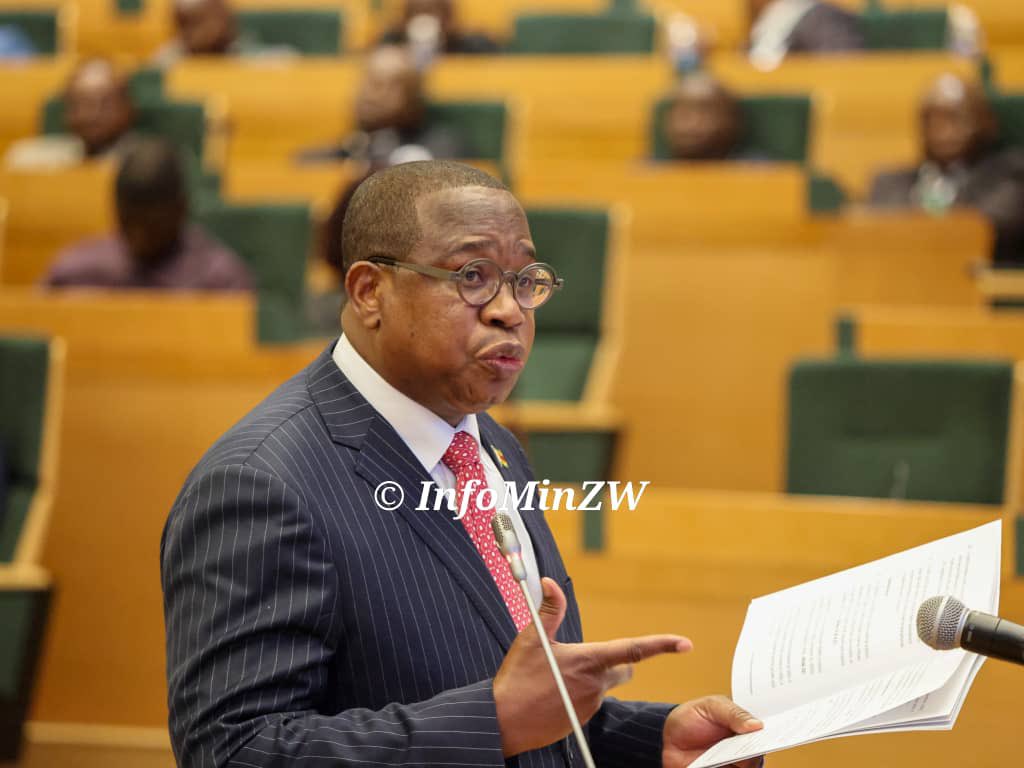

Economic expert Professor Gift Mugano has described the 2026 national budget, presented by Finance Minister Mthuli Ncube on Thursday, 27 November, as the worst budget to date.
In a post on X on Saturday, Mugano argued that measures such as taxing cash withdrawals, raising gold royalties, increasing VAT and retaining the IMTT contribute to what he believes is the weakest budget the country has ever seen. Below is what Prof Mugano wrote:
Why the 2026 budget is the worst budget ever?
This budget is about revenue collection, and there is nothing in this budget that is pushing for investment promotion and economic development, which is part of the mandate of the Ministry.
Specifically, the following observations qualify this budget to be the worst in history:
1. Cash withdrawal levy is an effective instrument of anti-banking. Hakuna munhu akapusa anoisa mari mu bank kuti azotorerwa nehurumende oburisa mari yake
2. Increasing gold royalties to 10% (the highest in the world) on sales is punitive & will cause smuggling of gold.
3. Increasing VAT to 15.5% will fuel inflation & make the lives of people miserable
4. Keeping the 2% tax is unfortunate as it sustains informality, continues to push up the cost of doing business and fuels USD inflation, which is sitting at 13.1%.
5. GoZ has reported a staggering US$1.7 billion of unverified outstanding payments for the period 2022 – 2024 – this is a sign of poor governance & mismanagement of the national purse. Ironically, it didn’t tell us verified outstanding payments for the same period as well as for the 2025 fiscal year
6. Between July – September 2025, domestic debt increased by US$900 million, that is, from US$8.9 billion to US$9.8 billion. Chii chakwidza debt ne US$900 million in a space of 3 months isu tichiti zvakarongeka?
7. As part of the domestic debt, @ZimTreasury revealed that it owes US$1.280 billion to service providers, which basically cripples the private sector or threatens their survival
8. Strikingly, in a fashion that showcases the ugly head of corruption, @ZimTreasury reveals that as part of outstanding payments which are still to be verified, a staggering US$700 million has been spent on dams. Where are the dams which took all this money? One of the magnificent dams which was built inland by the first dispensation is Tokwe Mukasi, and it cost around US$260 million. If at least US$700 million, which is claimed as unverified, was spent on dams over and above verified & approved payments, are we saying this country has completed at least 4 dams of the Tokwe Mukosi type? Where are the dams?
9. With regard to the proposed payment mechanism for the US$1.7 billion, @ZimTreasury proposes to undertake verification process and issue non negotiable instruments which will be paid between now and 2030 – it basically means that at the very least outstanding payments for BEAM (US$98 million), Dam construction (US$700 million), Road construction (US$220.20 million), input support scheme (US$380 million), ZIMSEC (US$50 million), statutory payments to NSSA, PSMAS & pension fund (US$122 million), etc will have to wait for more than 8 years without payment, that is, from 2022 – 2030. This is as good as a death sentence to schools & the affected businesses/organisations.
10. The budget continues to show a sustained trend of overutilization of funds by some ministries. For example, by 30 September 2025, the Ministry of Transport (267% ), OPC (124%), National Housing (161%), etc. However, critical ministries, which as Industry and Commerce, and Foreign Affairs & Int Trade, received a mere 23% of their vote by 30 September – ideally, these ministries should have used 75% of their votes by 30 September since this is the 3rd quarter of the year. This makes the budget and budgeting process ceremonial
11. The 2026 budget is silent about workers’ welfare
12. Introduction of tax on emerging digital services is counterproductive. Ideally, @ZimTreasury should offer tax incentives to promote this emerging sector as opposed to punishing it. I can go on and on.

 Pindula WhatsApp Channel
 Facebook Page


Leave a Reply