




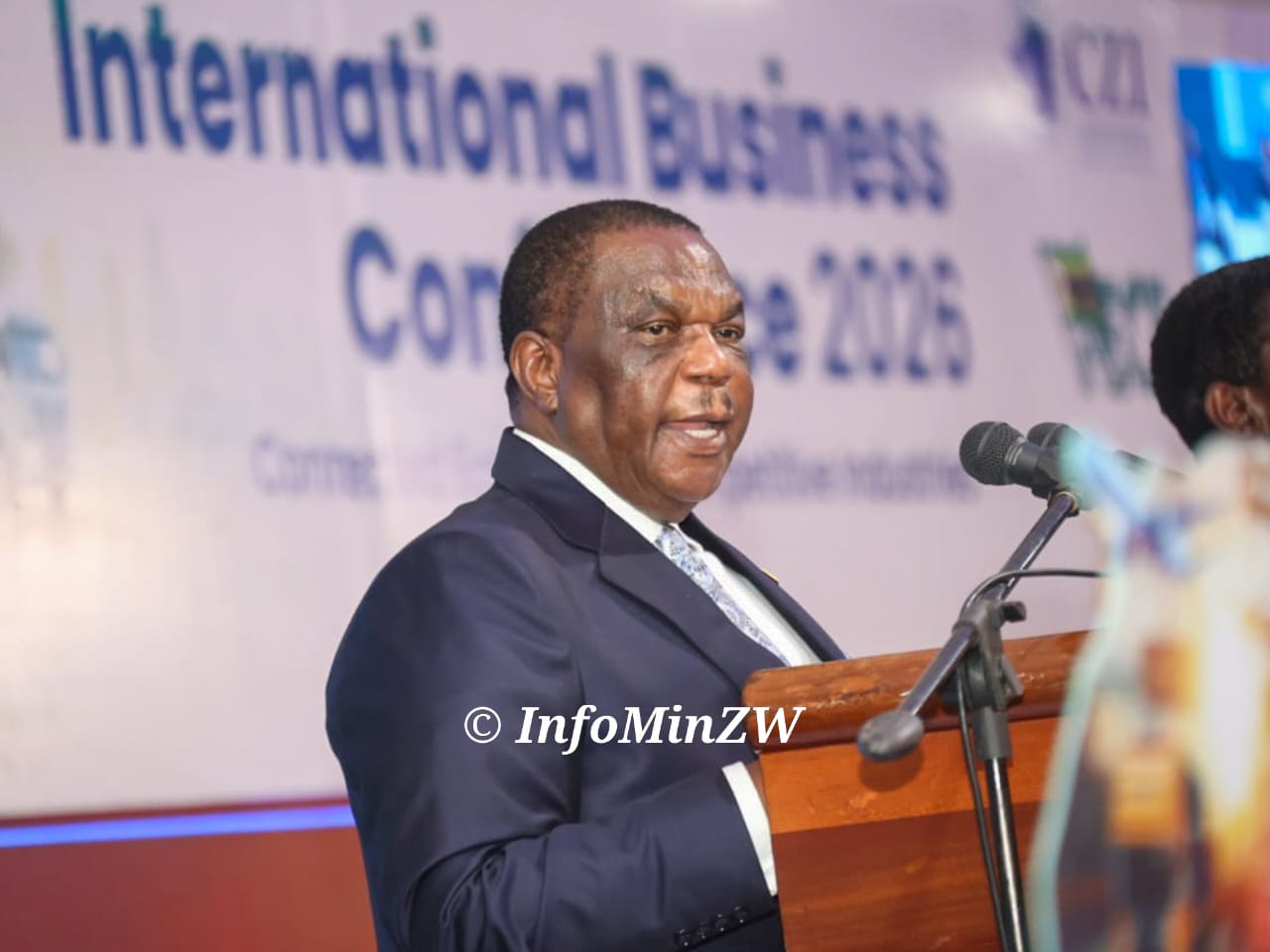


A local political and legal commentator, Davis Laque, has described Vice-President Constantino Chiwenga’s remarks at ZANU PF’s ongoing National People’s Conference in Chinhoyi as “very sobering”, saying the Second Secretary posed a fundamental question that the ruling party has failed to answer.
Chiwenga, while introducing President Emmerson Mnangagwa, asked delegates: “Are we not repeating the mistakes of the past?”
Laque’s answer is unequivocal: Yes.
In an X thread responding to the speech, Laque argued that ZANU PF has not only repeated the mistakes of the First Republic but has institutionalised them.
Laque said the first category is political mistakes. He argued that ZANU PF has once more institutionalised the concentration of power in Mnangagwa, with virtually all other key positions in the party filled through personal appointment.
“This ongoing Conference is equally aimed at concentrating even more power in ED,” he said.
That concentrated power, he said, has manifested through nepotism, tribalism, the use of statutory instruments as a governance model of choice, and constant shuffles even in the security sector. The consequence, he argued, has been a super presidency with zero checks and balances within and outside ZANU PF.
On constitutional mistakes, Laque pointed to what he called constant rule changes to suit incumbency. He cited the removal of direct election of the President and the “illegal extension of the contested 2023 election tenure” as illustrations of what he termed an unrepentant disregard for the social contract.
On elections, he said polls remain a “rigged and meaningless ritual”. Just as during the Mugabe era, he argued, the right to choose anything besides ZANU PF continues to be characterised as illegal regime change, attracting state-sponsored violence with no meaningful recourse.
Ironically, Laque said, ZANU PF’s own internal contradictions are now becoming more glaring, manifesting from a so-called “gentlemen’s succession agreement” and a sense of entitlement. The preference of citizens within and outside the party, he said, is secondary.
Parliament, he argued, has been reduced to a structure of ZANU PF at most, and a ZANU PF affiliate at best. The Auditor-General’s report on governance is ignored, while oversight bodies and independent commissions are treated as subservient to the authorities.
He said the weakening of administrative institutions has continued through the non-implementation of devolution as provided for in the Constitution. Local authorities still exercise no real authority and continue to suffer from the “choke-hold” of the Local Government Ministry through centralisation of power.
Access to tenders, mines, commercial and agricultural land, fuel, foreign currency and property, he said, continues to rely heavily on political relations and networks.
“The economy, just like the Mugabe days, continues to be a machine of and for patronage,” Laque said.
On corruption, Laque said catch and release continues to be the norm. A consequential fight against corruption, he argued, requires investigation, prosecution, asset recovery and lifestyle audits.
“Ours is the old pattern of selective prosecution and a blind eye towards the politically connected,” he said.
On social mistakes, Laque pointed to the rising cost of living, poorly remunerated civil servants working under terrible conditions, lack of water and electricity in most communities, and the collapse of public health and local infrastructure.
He argued that Zimbabwe continues to be a country and not a state.
He cited recent remarks by Mnangagwa, who he said bragged that it matters not how much a citizen does well for the country, as long as they are not a member of ZANU PF, which is apparently the first and foremost qualification of a “hero”.
“Such utterances, as complemented by different actions, expose an absence of a willingness to learn from the so-called mistakes of the old Mugabe order. There’s zero agency towards uniting citizens beyond these superficial differences,” Laque said.
“It betrays a leadership kwashiokor.
“So yes, General Chiwenga, ZPF leaders learned nothing from past mistakes of the first republic. In fact, no legacy was ever restored. Yet, this is a fundamental question that cannot be reduced to just ZANU PF as a party, nor resolved through internal succession.”





Leave a Reply Cancel reply