





The Confederation of Zimbabwe Industries (CZI) has called on the Government to review the sugar content tax on beverages, warning that the levy is having unintended consequences for industry.
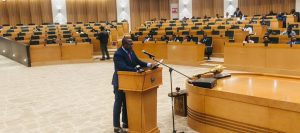
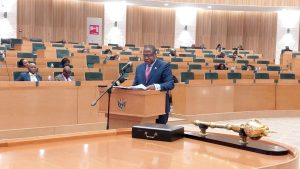
CZI chief economist Cornelius Dube issued the warning in a presentation to the Parliamentary Portfolio Committee on Industry and Commerce on the organisation’s expectations for the 2027 National Budget.
“The sugar content tax is having unintended consequences not only for the beverages industry, but also for the broader sugar industry value chain,” he said.
The tax currently stands at US$0.001 per gramme on sugary beverages and US$0.0005 per gramme on cordials.
“This means from a cost perspective, for every tonne of sugar that a beverage producer would use, they would have paid US$1,000 on sugary beverages and US$500 on cordials at a time when the average price of sugar is about US$800 per tonne,” Dube said.
He said industry feedback showed the tax accelerated the substitution of locally produced sugar with artificial sweeteners, threatening the long-term viability of the local sugar industry, with the industry estimated to have lost at least 20 per cent of its anticipated growth potential.
Dube added that imports of grey-market beverages had also increased by 10 per cent, creating unfair competition for compliant local manufacturers and reducing the effectiveness of the tax as both a revenue and public health measure.
CZI recommended a review of the tax to strike a balance between public health objectives and industrial development, employment preservation, value-chain sustainability and alignment with regional practices.
Dube suggested the Government could introduce exemption thresholds similar to those in Botswana and South Africa, where a levy-free threshold of 4 grammes of sugar per 100 millilitres applies to ready-to-drink beverages, with the surtax applying only to sugar above that threshold.
Portfolio Committee chairperson Clemence Chiduwa said the committee will compile a report for presentation at the annual pre-budget workshop for MPs later this month.
“The focus of the committee is, let’s mobilise and generate resources for funding the budget, but in the process let’s look at taxation which is coming from Treasury,” he said.
“Let’s tax for growth instead of revenue because, at the end of the day, what we want is to develop the economy, to grow the economy.”
The Government introduced the tax in 2024 to mobilise resources for cancer treatment equipment, and it has raised nearly US$100 million.
It says the funds have been used to procure four cancer treatment machines for Mpilo Hospital in Bulawayo and Parirenyatwa Group of Hospitals in Harare.
More: The Herald





Leave a Reply Cancel reply