




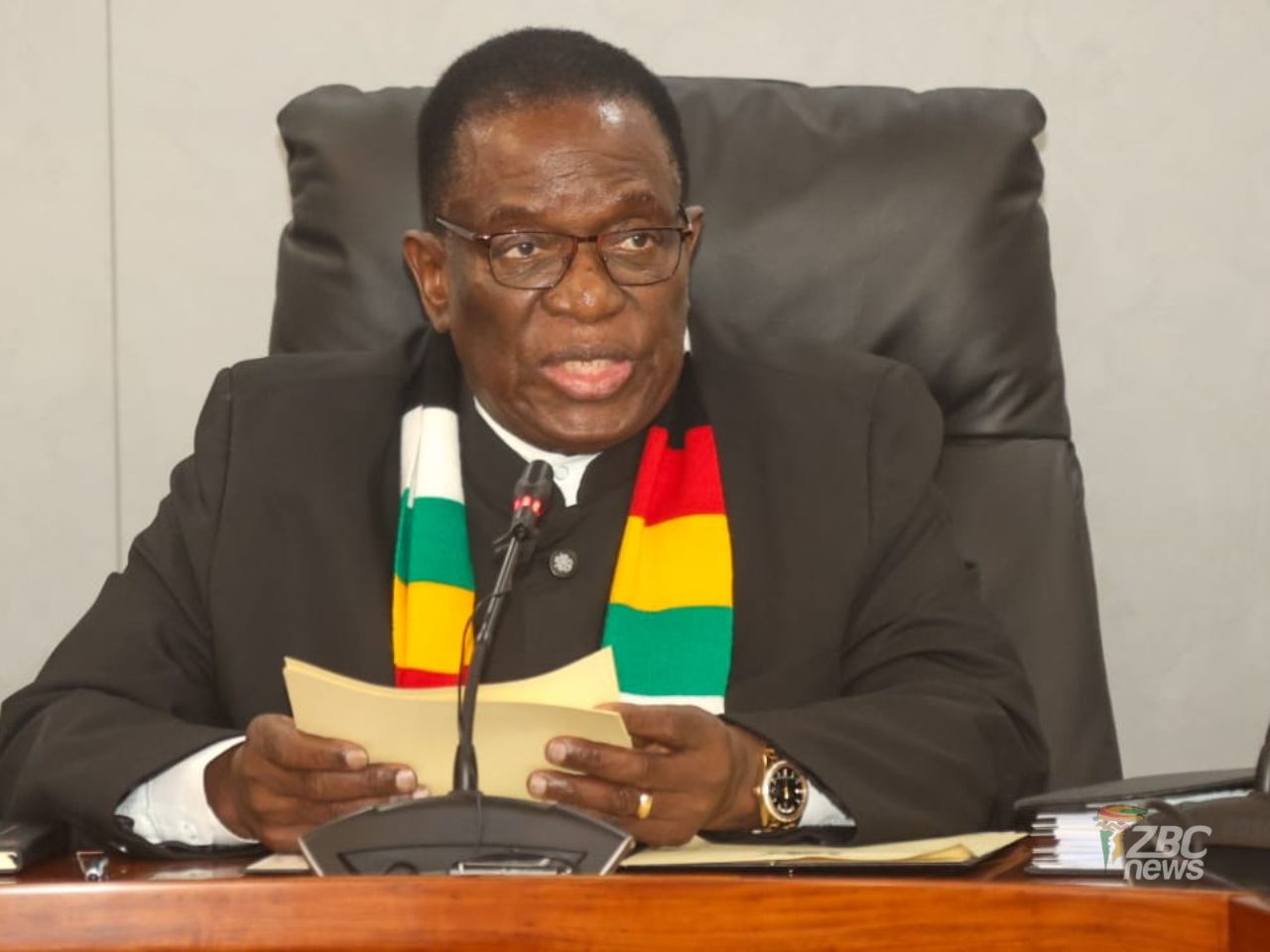


President Emmerson Mnangagwa is pushing for further changes to the country’s electoral laws, months after amendments that extended his current term by two years and moved the next election to 2030.
Delivering his State of the Nation Address (SONA) in Parliament on Tuesday, Mnangagwa said consequential amendments were needed to align various laws with the Constitution following the enactment of Constitutional Amendment Act Number Three.
“Following the successful enactment of Constitutional Amendment Act Number Three, there is a need to undertake consequential amendments to ensure that various pieces of legislation are aligned with the Constitution,” he said.
“In particular, the Ministers of Justice, Legal and Parliamentary Affairs will facilitate the following: amendment of the Electoral Act, amendment of the Constitutional Court Act, and enactment of a new Delimitation Commission Act.”
The changes under CAB3, which became law on 7 July 2026, have already triggered legal challenges over the extension of the current term and alterations to how future presidents will be elected.
Earlier this month, Mnangagwa fuelled fresh speculation about his political future when he suggested publicly that he would still be in power in 2035 – five years beyond the newly extended timetable. The remarks have intensified debate over whether further constitutional changes are being pursued to prolong his tenure.
Opposition figures and war veterans say they will resist any such move, setting the stage for another fierce political and legal battle over the constitutional order.
Tendai Biti, of the Defend the Constitution Forum, said: “The ink on CAB3 is still wet. CAB3 became law on the 7th of July 2026. But we are concerned that the regime is already on autopilot to amend this constitution, not just to amend it, but to destroy this constitution through the introduction of a monarchy and the destruction of a republic. Zimbabwe is a republic. People died to establish this republic.”
War veteran Godfrey Gurira said the principles of the constitution had been violated.
“What’s the point? What did we fight for? This is what we are asking and the people are no longer given the opportunity to directly elect their president. In fact, it has to be done by some 350 or so people instead of 17 million people,” he said.
Constitutional lawyer Lovemore Madhuku said the government was making a serious error about the source of judicial authority.
“The executive derives its authority from the people. Then when we establish the judiciary, we do so in section 162 of our constitution. Again, it says that the judiciary derives its authority from the people. The judiciary does not derive its authority from the executive or from the legislature,” Madhuku said.
“When they sit and they’re faced there with the war veterans, they are deriving their power straight from the people. Now this government under President Mnangagwa is making a very serious error. They actually think that the judiciary derives its power from the executive.”
More: SABC





Leave a Reply Cancel reply