






Zimbabwe plans to carry out cloud seeding to protect the 2026/27 agricultural season from below-normal rainfall linked to a forecast Super El Niño.
The Meteorological Services Department (MSD) has forecast an erratic start to the rainy season, with much of the country likely to have no effective onset.
In response, Government has assembled three aircraft and drones for cloud-seeding operations. The aircraft will operate from Harare, Bulawayo and Masvingo, with deployments dependent on suitable weather conditions.
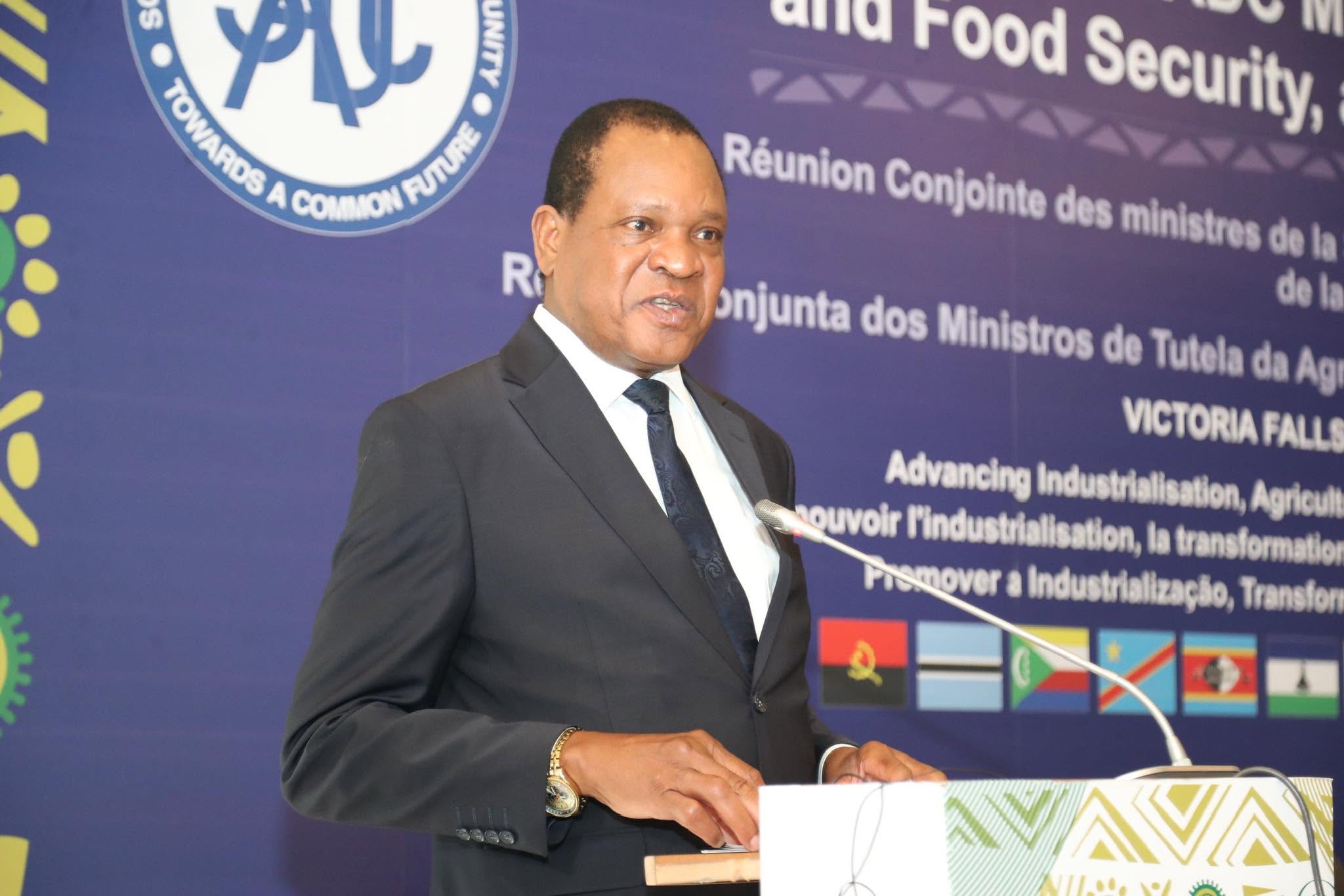
Minister of Agriculture, Mechanisation and Water Resources Development, Anxious Masuka, said cloud seeding forms part of a six-pillar response activated after the seasonal forecast.
The pillars are an enhanced strategic grain reserve, climate-smart agriculture, a new financing architecture, a livestock response, enhanced imports and coordination, and capacity building with early-warning systems.
“As you are aware, Government has already approved a drought mitigation plan with six pillars, and now this meeting came up with a contingency plan whereby this time we agreed to use our conventional aeroplanes and drones that will be availed to conduct cloud seeding when need be,” Masuka said.
Cloud seeding is a weather modification technique that enhances a cloud’s ability to produce rain by introducing tiny particles into the atmosphere.
Rain forms when water vapour in the air cools and condenses around microscopic floating particles such as dust or salt, known as condensation nuclei.
Aeroplanes, drones, rockets or ground generators release substances — most commonly silver iodide, potassium iodide or table salt — into sub-freezing or moisture-laden clouds.
The particles act as extra nuclei. Water vapour and supercooled droplets latch onto them, freeze into ice crystals or cluster together until they become heavy enough to fall as precipitation.
The technique cannot create clouds from clear blue skies or generate moisture from nothing; it only improves the precipitation efficiency of clouds that have already formed.
A nearly decade-long randomised trial in the United States found that seeding could increase precipitation by 5 to 15 per cent.





Leave a Reply Cancel reply