





The World Bank has warned Zimbabwe against rushing to phase out the US dollar in the economy, saying it could trigger capital flight.
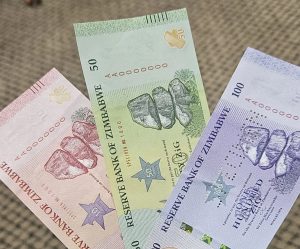
The government plans to phase out domestic use of the US dollar and make its gold-backed ZiG the only currency.
In a report on Friday, the Bank said: “The government’s goal of transitioning to a mono-currency ZiG system carries a risk of premature de-dollarisation.”
It said experience, including Zimbabwe’s own re-introduction of the Zimbabwe dollar in 2019, “shows that forcing a shift before local currency credibility is established triggers capital flight, widens parallel market premiums, and reverses stabilisation gains.”
The Zimbabwe dollar was replaced by the ZiG in April 2024 after repeated crashes that fuelled inflation and eroded its use.
“The pace and sequencing of any transition will be as important as the destination,” the World Bank said.
The multi-currency system, which is dominated by the US dollar, was originally due to end in 2025. The government then extended it to December 2030 through Statutory Instrument 218 of 2023.
Under that plan, Zimbabwe would have moved to a mono-currency system by 2030, where all domestic transactions would be done in ZiG only. The roadmap is set out in the National Development Strategy 2, NDS2, which covers 2026 to 2030.
In 2026, however, both the Ministry of Finance and the Reserve Bank of Zimbabwe said 2030 is no longer a fixed deadline.
The RBZ said it has decoupled the mono-currency plan from a specific date and is now taking a conditions-based approach – what it calls a “conditions precedent” approach.
Finance Minister Mthuli Ncube said: “The move towards a mono-currency will no longer be date-driven, but will instead depend on market conditions.”
Speaking in Harare in May, he added: “The journey towards mono-currency will no longer be driven by a date. It’s no longer date-driven, but rather it will be determined by conditions in the market – market-led.”
He pointed to two key conditions – building foreign reserves to cover at least six months of imports, and maintaining a longer track record of single-digit inflation.
Ncube also said Zimbabwe is not yet ready for a single currency and “needs to regain access to credit lines before it can adopt the ZiG as its sole currency”, including making progress on its US$21 billion debt.
Meanwhile, the World Bank also said Zimbabwe, which has been locked out of international debt markets since defaulting in 1999, now has a chance to restore access and improve its external financing position as it engages multilateral creditors over clearing its arrears.
It expects the economy to grow by 5% this year, in line with the government’s own forecast, before slowing in 2027 due to El Niño.
Forecasters are predicting the current El Niño cycle will be the strongest on record, raising the threat of severe drought across parts of southern Africa.






Leave a Reply Cancel reply