





The Bulawayo High Court has set a binding precedent on maintenance obligations after overturning the acquittal of a prominent Bulawayo doctor and ruling that maintenance orders remain enforceable until formally varied by a court.
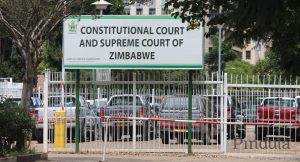
The High Court, sitting at Bulawayo, allowed an appeal by the Prosecutor General against the acquittal of Bulawayo medical practitioner, Dr Nkonzo Ndebele, who had been charged with failing to comply with a maintenance order.
In a statement issued on 2 September 2026, the National Prosecuting Authority of Zimbabwe (NPAZ) said the court set aside the acquittal entered by the Bulawayo Magistrates Court and substituted it with a guilty verdict, before remitting the matter back to the lower court for determination of the maintenance arrears and sentencing.
The case has a long history. According to reports, a maintenance order M1136/13 was issued in August 2015 requiring Dr Ndebele to pay US$500 per month. It was alleged that he had accrued maintenance arrears totalling US$38,500 over a seven-year period.
Dr Ndebele of Bellevue suburb was acquitted in April 2025 by Bulawayo magistrate Challenge Mahembe. The magistrate ruled in his favour, citing legal technicalities arising from Zimbabwe’s evolving currency policies.
In his defence, Dr Ndebele asserted that the two parties had agreed that his former wife would use business profits from Quick Ketch Enterprises to cover the maintenance payments.
He also argued that Zimbabwe’s shift from US dollars to local currencies had affected the enforceability of the original US dollar-denominated order.
The State, through the Prosecutor General, appealed.
In allowing the appeal, the NPAZ said the High Court reaffirmed three critical principles that will affect thousands of maintenance cases across Zimbabwe.
First, the judgment reaffirmed the binding nature of maintenance orders and clarified that such orders remain enforceable until formally varied or set aside by a competent court.
Second, the Court held that an informal agreement between parties cannot, on its own, relieve an individual of the obligation to comply with an existing court order. The court rejected the argument that the private business arrangement with Quick Ketch could replace the court order.
Third, the court also rejected the argument that subsequent changes in currency legislation could automatically suspend or extinguish an obligation imposed by a maintenance order.
This point is significant in Zimbabwe, where maintenance orders issued in US dollars during the multi-currency era became contentious after the reintroduction of the RTGS dollar in 2019, the Zimbabwe dollar, and now the Zimbabwe Gold (ZiG).
The High Court made it clear that where a maintenance order remains valid, the person against whom it was issued is expected to comply with it unless the order is formally changed through the courts.
Finally, the High Court held that disagreements over the calculation or quantum of arrears do not erase criminal liability.
The court made it clear that disagreements over the calculation or quantum of maintenance arrears do not, in themselves, erase criminal liability arising from non-compliance.
Such disputes, the court said, can be considered when determining the actual amount owed and the appropriate sentence.
The matter will now return to the magistrates’ court, which must determine the quantum of arrears before proceeding to sentencing.
Under Zimbabwean law, failing to comply with a maintenance order is not merely a civil matter.
Section 23 of the Maintenance Act [Chapter 5:09] provides that any person against whom an order has been made who fails to make any particular payment in terms of the order shall be guilty of an offence, and liable to imprisonment for a period not exceeding one year.
The NPAZ said the judgment serves as an important reminder that parties subject to maintenance orders cannot unilaterally vary or disregard those orders, even where circumstances have changed or the parties have reached a private arrangement. Any variation must be properly sanctioned by a competent court.






Leave a Reply Cancel reply