






Zimbabwe’s foreign currency receipts surged by close to 50% in the first half of the year to US$10.72 billion, driven by a sharp rebound in export earnings and diaspora remittances, Reserve Bank of Zimbabwe Governor (RBZ) John Mushayavanhu has said.
Presenting the 2026 Mid-Term Monetary Policy Statement on Thursday, 20 August 2026, Mushayavanhu said total foreign currency receipts rose from US$7.25 billion in the January to June period last year to US$10.72 billion over the same period this year.
According to the central bank, the growth was mainly driven by improved export receipts and diaspora remittances.
Export proceeds almost doubled, up 90.7% from US$3.95 billion in the first half of 2025 to US$7.53 billion in 2026. Exports now account for 70.3% of all foreign currency receipts, up from 54.5% a year earlier.
Diaspora remittances, the second largest source, rose 41.4% to US$1.55 billion from US$1.09 billion, contributing 14.4% of total receipts.
The central bank data also shows a strong recovery in foreign direct investment, which jumped 126.8% to US$269.9 million from US$119 million, while income from foreign investments rose 35.9% to US$88.9 million.
However, receipts from NGOs fell sharply by 46.1% to US$296.6 million from US$550.1 million, while private loan proceeds declined 33.1% to US$984.9 million from US$1.47 billion.
In total, receipts stood at US$10.72 billion, a 47.8% increase on last year.
Mushayavanhu said mining remained the anchor of export performance. Mining export earnings more than doubled to US$6.21 billion, up 121.3% from US$2.81 billion in the first half of 2025.
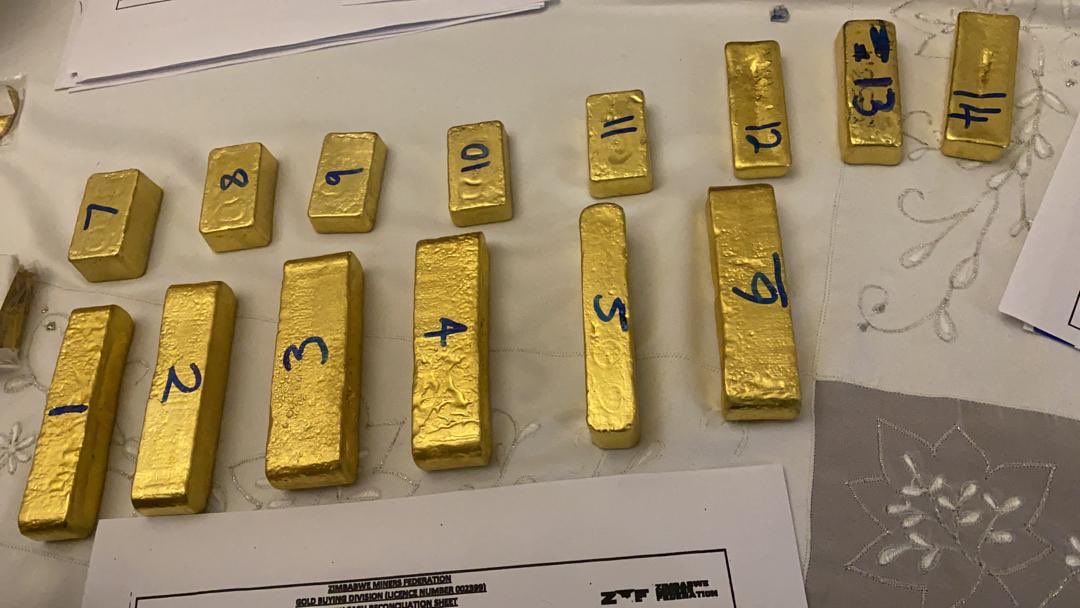
Gold was the standout performer, with earnings surging 176% to US$3.82 billion from US$1.38 billion, reflecting both improved output and firm international prices.
Platinum earnings rose 82.8% to US$1.46 billion from US$797.2 million, while lithium ore and concentrates brought in US$382.4 million, up 78.2% from US$214.6 million.
Chrome ore and ferrochrome exports grew 60.1% to US$239.5 million, while coke earnings increased 12.9% to US$100.9 million. Iron and steel exports recorded the biggest percentage jump, up 373.4% to US$62.2 million from just US$13.1 million last year.
Coal earnings rose 49% to US$9.8 million and other minerals grew 77.1% to US$14.7 million. The period also saw US$16.1 million from lithium sulphate, a new export line.
Diamonds and granite were among the few decliners, with diamond earnings falling 24.9% to US$101.3 million and granite down 29.5% to US$6 million.
Outside mining, tobacco remained the largest non-mineral export, up 23.5% to US$967.6 million from US$783.7 million. Manufacturing exports rose 15.9% to US$105.1 million.
Transport receipts were flat at US$90.6 million, while tourism receipts dipped 10.3% to US$83.1 million, agriculture fell 9% to US$43.4 million, and horticulture was unchanged at US$17.1 million.
Overall, total export earnings stood at US$7.53 billion, up 90.7% year-on-year.
On the payments side, foreign payments through authorised dealers increased 44.9% to US$7.3 billion in the first six months of 2026, from US$5.0 billion in the same period last year.
Mushayavanhu said trade-related payments accounted for 81% of all foreign payments as at 30 June 2026, reflecting the country’s heavy dependence on imported goods and services.
Of that, 37% — about US$2.7 billion — went towards the importation of raw materials, intermediate goods and capital goods.
Fuel imports drove a significant part of the increase. Payments for fuel rose 64.6% to US$1.4 billion from US$853.5 million in 2025, which the RBZ attributed to higher global energy prices.
The Governor said the strong foreign currency receipts position had helped stabilise the foreign exchange market and support the ZiG currency in the first half of the year, with the central bank expecting the momentum to continue into the second half.





Leave a Reply Cancel reply