




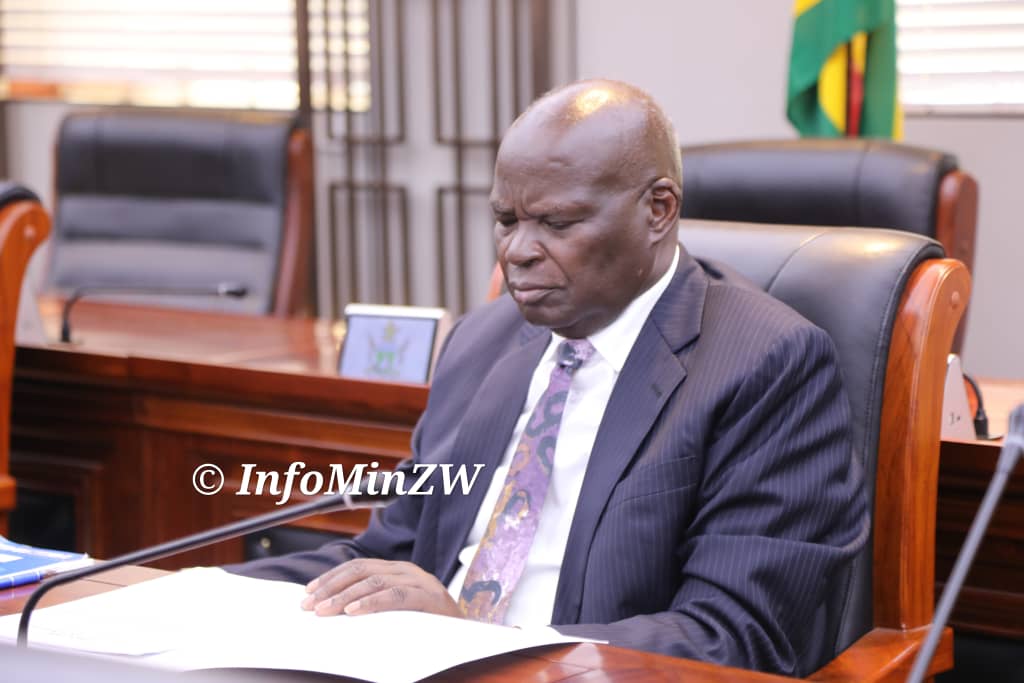


Energy and Power Development Minister July Moyo has attributed the improved electricity supply and drop in load-shedding to increased generation capacity and cost-reflective tariffs.
Speaking at a post-Cabinet briefing in Harare on Tuesday, he said the cost-reflective tariffs had also boosted ZESA’s ability to build up financial reserves to cover any potential shortfalls in supply.
“We want to assure the nation that ZESA will continue to supply electricity thanks to the cost-reflective tariffs. They can put money aside to cover whatever shortfall there might be,” said Moyo.
“If there is a shortfall of whatever size, you go into the market in the region; there are places with excesses which will be mopped up by those with shortages.
“That is why there is no load-shedding. We have taken measures so that there will be fewer disruptions of supply by ZESA because energy, as an enabler, is very critical.”
Moyo said ZESA is using the Southern African Power Pool (SAPP) day-ahead market to buy in power whenever domestic generation falls short of demand.
“If there is a shortfall of whatever size, you go in the market in the region, and there are places where there is excess, and that excess can be mopped up daily by those who have shortages,” Moyo said.
He said the arrangement, combined with the current tariff structure, is giving ZESA more flexibility to respond to any potential shortages.
According to the Zimbabwe Power Company (ZPC), a ZESA subsidiary, Hwange was generating 997MW, Kariba 460MW and independent power producers 51MW on 19 August 2026, for a total of 1,508MW.





Leave a Reply Cancel reply