





The cost of constructing Kunzvi Dam has risen to about US$133 million from an initial budget of US$108.2 million when work on the project began on 14 October 2021.
Assistant Resident Engineer John Tangayi said during a media tour of the site that the increase was largely due to the inclusion of a housing programme for families affected by the project and the relocation of graves.
He said the Government had adopted a new resettlement model for displaced families, replacing cash compensation with the construction of new homes.
“In the past, affected families were simply compensated financially after valuation of their properties. However, that system presented several challenges,” Tangayi said.
“Under this project, Government is constructing replacement homes for the affected families to ensure a smoother and more sustainable resettlement process.”
He said that of the planned 435 houses, 268 have already been completed, while the remaining 90 residential stands were allocated this week to allow construction work to begin.
The Government has also launched a US$500,000 programme to exhume and rebury 534 graves that will be affected once the reservoir is filled.
“The chiefs here said they did not want the graves to be inundated by the dam. They requested that they be exhumed and reburied,” Tangayi said.
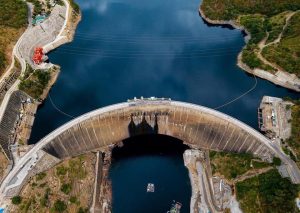
The Kunzvi Dam, being constructed across the Nyagui River, is expected to improve water security for Harare and surrounding districts while creating opportunities for irrigation, power generation and rural economic development.
Located about 14 kilometres south of Juru Growth Point, the strategic project is set to become one of Zimbabwe’s largest inland reservoirs once completed.
“The dam will have a storage capacity of 158.4 million cubic metres of water, making it one of the country’s major inland reservoirs,” Said Tangayi.
He added that the reservoir would have a reliable annual yield of about 70 million cubic metres, ensuring consistent water supplies even during periods of below-average rainfall.
According to Tangayi, the completed dam wall will stand 50.2 metres high from the lowest foundation level to the crest and will hold water to a maximum depth of 45 metres.
Once filled, the reservoir will cover nearly 985 hectares, extending about 8.5 kilometres from the dam wall to the upper reaches of the catchment area. It will draw water from a catchment spanning approximately 730 square kilometres.
The project also includes a 130-metre concrete spillway, outlet works comprising a reinforced concrete intake tower connected to 1,000mm steel pipes, and a balancing dam across the Nora River, where construction is already underway.
Tangayi said engineers were also finalising designs for a mini-hydroelectric power station that would use the dam’s water resources to generate electricity.
Supporting infrastructure is also being upgraded, with the 14-kilometre Njiru-Kunzvi access road being tarred to improve connectivity and promote economic activity in surrounding communities.
More: 263Chat






Leave a Reply Cancel reply