




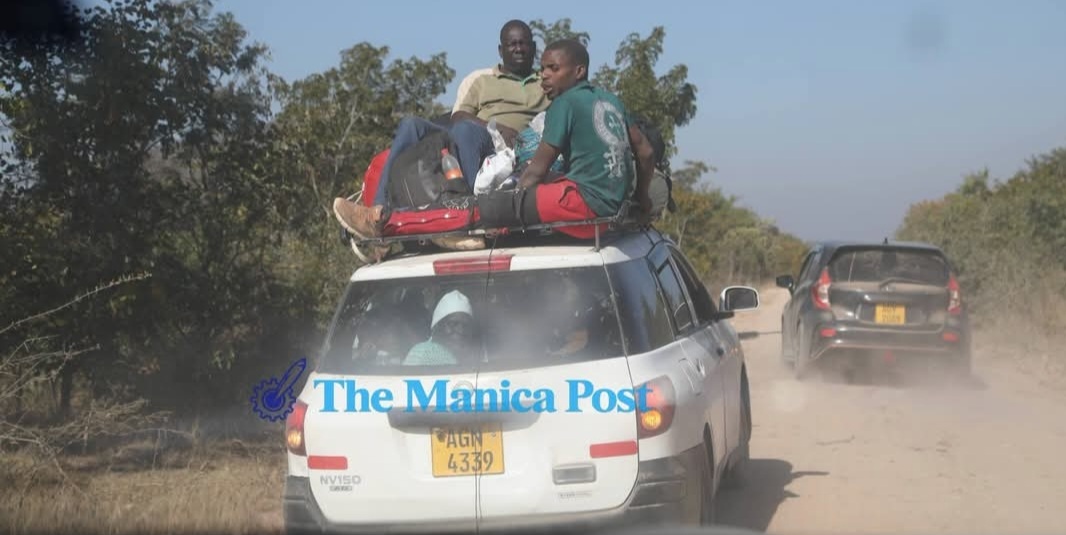


The driver of an unregistered taxi (mushikashika) whose overloaded vehicle was pictured in photographs that circulated widely on social media has been arrested.
Acting Manicaland provincial police spokesperson Assistant Inspector Wiseman Chinyoka told The Manica Post on Sunday evening that Criminal Investigation Department (CID) detectives and traffic police jointly tracked down the vehicle using registration plates captured in the photographs. This led to the arrest of the driver and the impounding of the vehicle.
“An alert dragnet team comprising CID detectives and traffic police tracked down the vehicle, a Nissan AD van, which was captured by The Manica Post photographer Nyasha Chawatama, carrying passengers on top of its roof,” said Chinyoka.
“I can confirm that the driver has been arrested and is in police custody as we speak, while the vehicle in question has been impounded.
“The driver is currently assisting the police with investigations and is expected to appear in court once we are through.
“The driver was putting the lives of innocent people in danger.”
Chinyoka also urged members of the public to avoid boarding overloaded vehicles, warning that such practices endanger lives.
Mushikashika drivers tend to overload their vehicles because it is more profitable and there is high demand for it.
Most drivers do not own the vehicles. They are given a high daily target by the owner, and fuel costs are high, so they try to carry as many people and as much luggage as possible on each trip. Overloading is the quickest way to make extra money.
There are not enough buses and registered kombis, especially during peak hours, in high-density suburbs and on rural routes. Passengers are desperate to get to work or home and will board an already full vehicle.
Many people travel with goods for resale, groceries from town, or farm produce. There is no separate affordable system to move luggage, so it is loaded onto the same vehicle as passengers.
Although police do mount blitzes, mushikashika largely operate outside formal ranks and licences. They can avoid checkpoints, use back roads and operate late at night when enforcement is low. Some drivers also pay bribes to be allowed to pass.
Furthermore, competition on busy routes keeps fares low. To make the trip worthwhile, drivers compensate by carrying more than the vehicle’s capacity.




Leave a Reply Cancel reply