




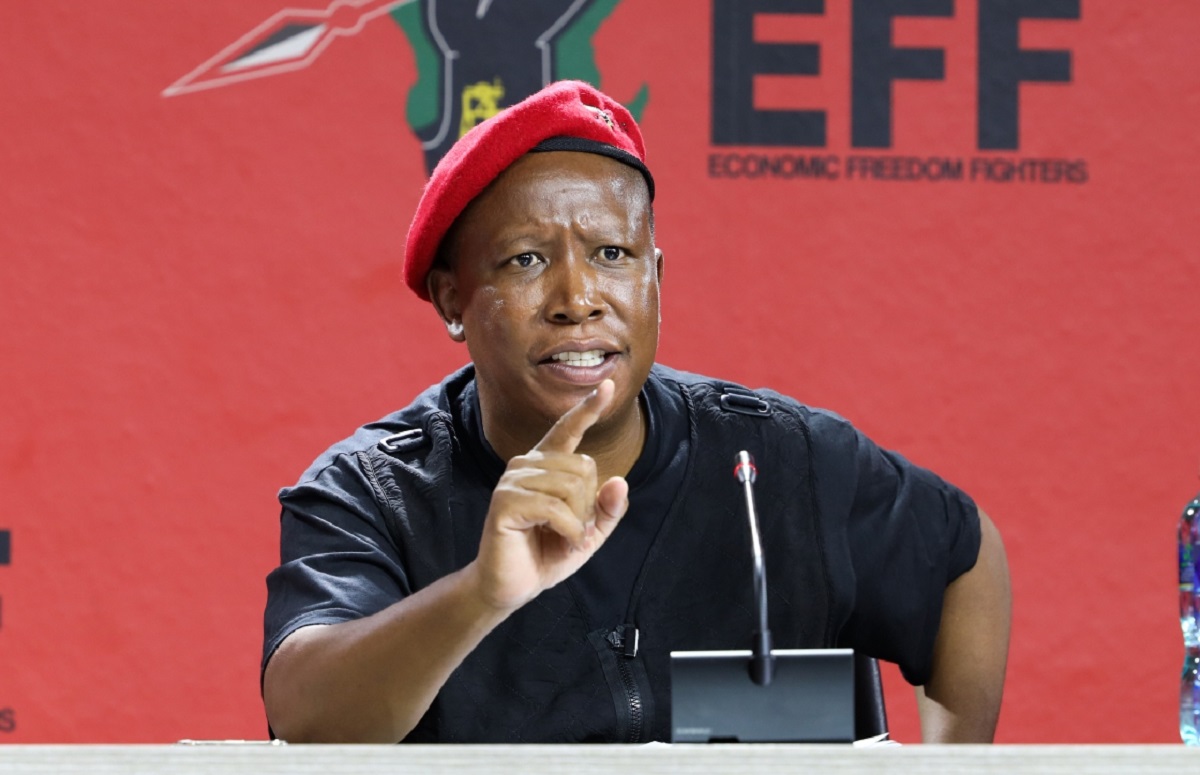


South Africa’s Economic Freedom Fighters (EFF) has criticised President Emmerson Mnangagwa for signing constitutional amendments that extend Zimbabwe’s presidential term from five to seven years.
The criticism follows Mnangagwa’s assent to the Constitution of Zimbabwe (Amendment) Act (No. 3), 2026, which was published as Act No. 6 of 2026 in a special Government Gazette on Tuesday, 7 July.
The Act extends presidential terms from five to seven years, allowing Mnangagwa to remain in office until 2030, and abolishes the direct popular election of the president in favour of a vote by Parliament.
Both Houses of Parliament, dominated by the ruling ZANU PF party and the so-called opposition led by Sengezo Tshabangu, approved the Bill late last month.
In a statement issued on Tuesday, the EFF, led by Julius Malema, said it noted the decision “with deep concern”.
The party argued that extending the presidential mandate through a constitutional amendment, rather than at the ballot box, “represents a deeply disappointing development”.
While acknowledging Zimbabwe’s liberation from settler colonialism as “one of the greatest victories in the history of Africa”, the EFF said no liberation movement acquires a permanent entitlement to govern.
“The legitimacy won on the battlefield must continually be renewed through the democratic consent of the people,” the statement read.
The EFF accused ZANU-PF of behaving as though Zimbabweans “owe it perpetual political loyalty” because it led the liberation struggle.
“This dangerous mentality has transformed a liberation movement into an establishment that appears more concerned with preserving its hold on power than responding to the daily struggles of ordinary Zimbabweans,” it said.
The party said President Mnangagwa had failed to address “profound economic hardship, unemployment, collapsing public services, and widespread poverty”, with millions leaving Zimbabwe because the government “has failed to create conditions for a dignified life”. Instead, it said, Harare had “prioritised constitutional amendments that extend its stay in office”.
The EFF warned that using constitutional instruments to entrench power “creates the perception that constitutional instruments are being manipulated to entrench political power instead of strengthening democratic accountability”.
“Any government that fears returning to the people for a fresh democratic mandate is one that is certain it has lost the will of the people,” the EFF said.
It called on the Government of Zimbabwe to “place the needs of its people above the political interests of those in power”, citing the need for “urgent economic renewal, accountable governance, functioning public institutions, and leadership committed to restoring hope”.






Leave a Reply Cancel reply