




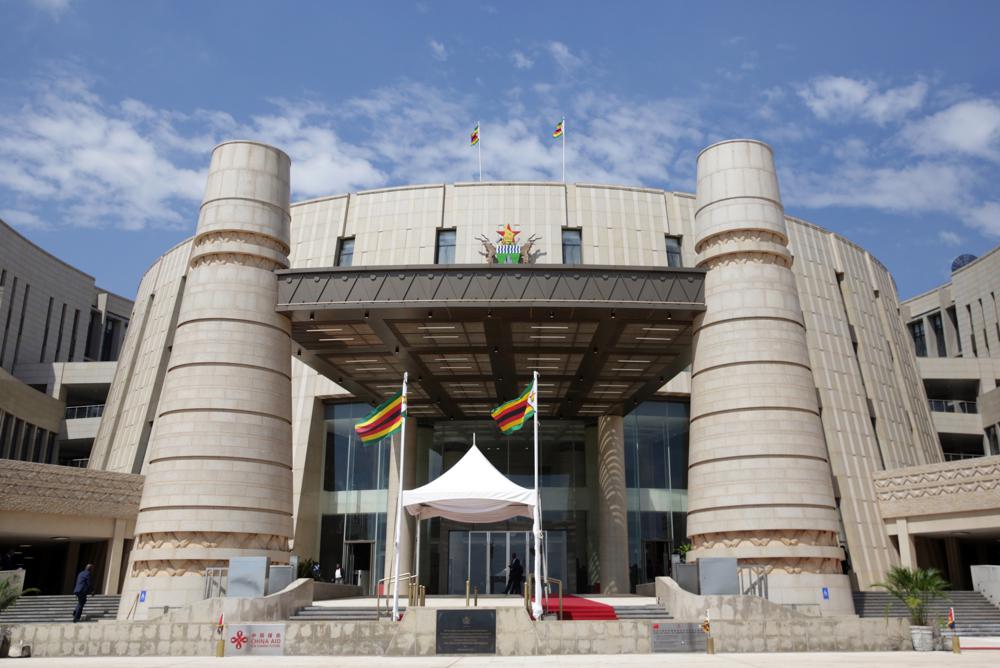


Marondera Central MP Caston Matewu (CCC) was ejected from the National Assembly on Tuesday during debate on the Zimbabwe Constitution Amendment Bill No. 3.
Tempers flared after Justice, Legal and Parliamentary Affairs Minister Ziyambi Ziyambi tried to rush the second reading debate, without allowing every MP who wished to speak to take the floor.
Ziyambi arrived in the chamber at the start of the sitting, apparently expecting to close the second reading debate and move to the committee stage.
In his opening remarks, he noted that a record 120 members had already debated the Bill — a comment intended to suggest that enough had been said. Opposition MPs, though few in number, disagreed.
Deputy Speaker Tsitsi Gezi then suggested that the remaining members could contribute at the committee stage, prompting a fresh round of objections from the opposition benches.
Matewu was the first to challenge the move. Raising a point of order, he argued that all 210 constituency representatives and all 10 provinces were entitled to be heard before the debate was closed.
“We cannot adjourn this debate until Hon. Members have represented their constituencies; it is their right to be heard,” Matewu told the House.
“Marondera, Chiredzi, Hwange, Bulawayo and Harare constituencies must be heard before we close this debate. We shall not allow, Madam Speaker, to close this debate until we have been heard.”
Under pressure from the opposition benches, the government compromised. ZANU PF chief whip Pupurai Togarepi proposed limiting each MP to 10 minutes, rather than the usual 20, with 54 speakers still on the list.
Matewu objected, insisting that the standing orders entitled every member to 20 minutes. However, the deputy speaker ruled that the 10-minute limit would apply, and debate resumed.
Matewu’s own contribution ended in his removal from Parliament. He rose to deliver what he called a message from “the resilient people of Marondera Central,” declaring his “absolute and unyielding opposition” to the Bill.
He argued that the 2013 Constitution was “a sacred covenant written in the ink of national consensus” that the amendment sought to dismantle.
“This Bill is not a constitutional amendment; it is not an administrative reform, nor a technical correction,” he said.
“It is a fundamental attempt to alter the relationship between the people of Zimbabwe and the State without first consulting Zimbabweans.”
Ziyambi raised a point of order, insisting that nothing in the Bill threatened democracy. The deputy speaker said he would have an opportunity to respond to all contributions and allowed Matewu to continue.
“Clause 2 provides that we eliminate the direct popular election of the president and instead hand it over to the power of a joint sitting of parliament,” Matewu continued.
“Why should the people surrender a democratic right that we already possess? Why should the Zimbabwean voter lose the right to directly elect a president of their choice in this republic?”
Twice, the deputy speaker told Matewu his time was up. Matewu disputed the count, saying he had spoken for only two minutes and had more time left. After he ignored a final warning to sit down, Gezi ordered him out of the House.
Kuwadzana MP Chalton Hwende (CCC) rose on a point of order, arguing that the 10-minute rule was an ad hoc arrangement that did not override standing orders.
A member could not be ejected for insisting on his rights under those orders, Hwende said. His objection triggered more uproar from the opposition benches, but the deputy speaker’s ruling was not reversed.
More: ZimLive






Leave a Reply Cancel reply