






By Gay Mufambi
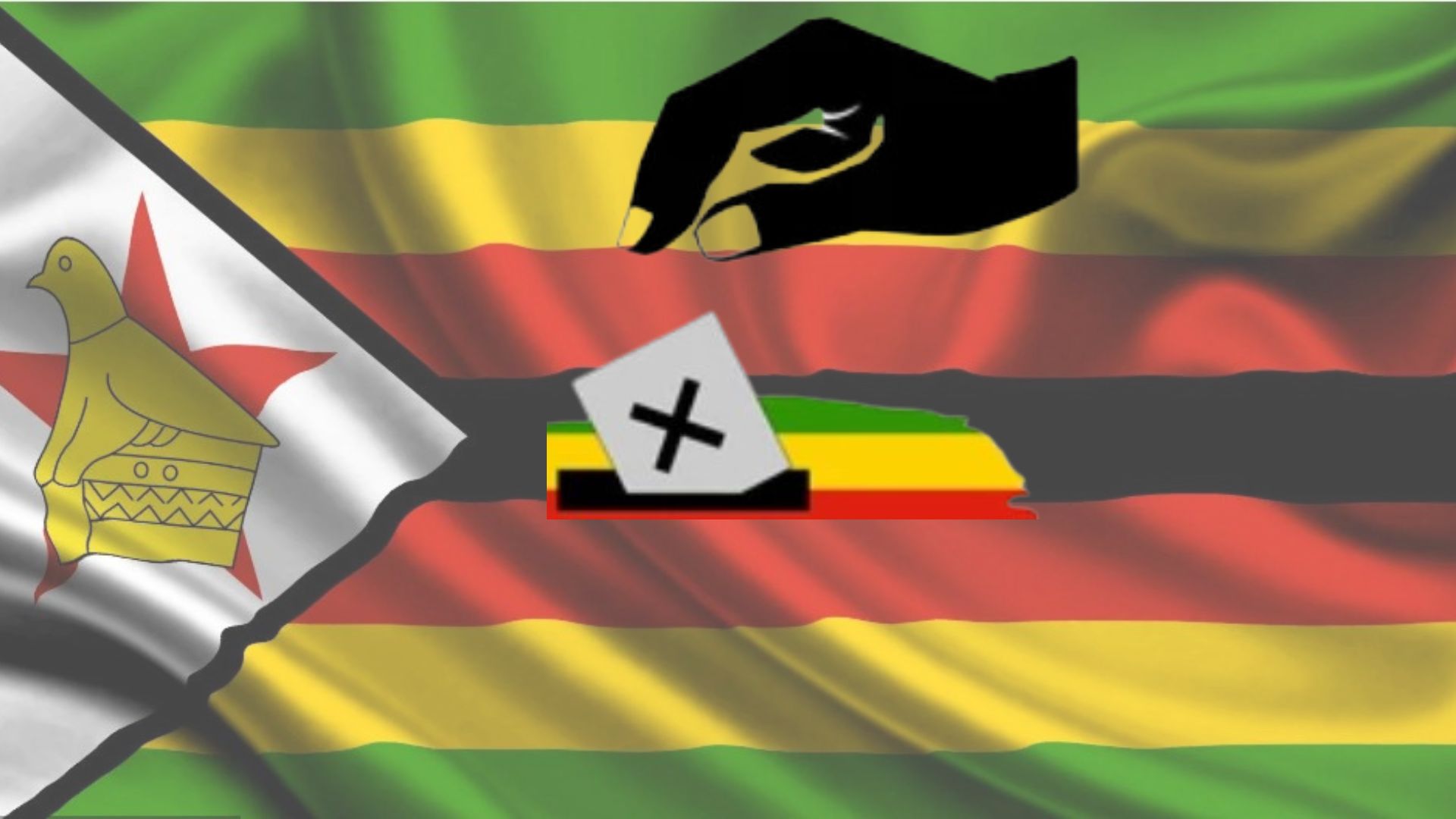
Some critics of the Constitution of Zimbabwe (Amendment No. 3) Bill, 2026 argue that its proposal to have Parliament elect the President, rather than having citizens vote directly, betrays the “one man, one vote” principle that the liberation generation fought and died for. This is a serious accusation that deserves a serious answer.
The answer, however, requires going back to where one man, one vote was actually destroyed the colonial franchise system of Southern Rhodesia because only that history reveals what the principle truly means and what genuinely violates it.
How One Man, One Vote Was Destroyed in Colonial Rhodesia
The colonial franchise system of Southern Rhodesia did not announce itself as racist. Its genius was that it used apparently neutral qualifications, income, property, and education to achieve racial exclusion while maintaining a non-racial constitutional façade.
As early as 1898, the Southern Rhodesia Order in Council established a franchise that required voters to occupy a building worth £75 or earn £50 annually and pass an English literacy test. In 1898, the average indigenous Zimbabwean earned a fraction of £50, was confined to reserves, and was largely excluded from formal employment. The vote was technically available to all races. In practice, it was available only to white settlers.
When rising African wages began to bring small numbers of educated Africans within reach of the franchise, the colonial government simply raised the threshold. The Electoral Act of 1928 increased the property qualification to £150 and the income requirement to £100.
The Electoral Amendment Act of 1951 raised it again to £500 property value or £240 annual income, a direct response to the growing number of Africans who were threatening to qualify. The message was clear: whenever Africans approached the threshold, the threshold moved.
The most sophisticated assault came with the dual-roll system introduced in 1957. The “A” Roll required an annual income of £720 or property worth £1,500, qualifications that excluded virtually all Africans. This roll elected the majority of Parliament.
The “B” Roll was nominally accessible to a small number of employed Africans, but its votes were constitutionally cross-devalued so that they could never outvote the “A” Roll. An African voter did not have one vote equal to a European voter. He had a fraction of a vote, a vote whose weight was determined by his race. The Southern Rhodesia Constitution of 1961 formalised this: of 65 parliamentary seats, 50 were anchored to the white “A” Roll and only 15 to the “B” Roll.
Ian Smith declared UDI in 1965 specifically to prevent Britain from imposing a transition to one man, one vote. The Republican Constitution of 1969 then tied African parliamentary representation to the proportion of income tax paid by Africans, ensuring that, since Africans were confined to low-paying jobs, they could never legally gain a political majority.
The House of Assembly gave Europeans 50 seats and Africans only 16. Even the Internal Settlement of 1978, which introduced universal adult suffrage, reserved 28 of 100 parliamentary seats for whites representing just 3 per cent of the population, with veto power over the constitution. It was Lancaster House in 1979 that finally dismantled this entire system and established a genuine one-man, one-vote framework for the 1980 elections.
What the Liberation Struggle Was Really Fighting For
From this history, three precise meanings of one man, one vote emerge. First, equal access: every citizen, regardless of income, property, race, or education, must have the right to vote. Second, equal weight: every vote must count for the same as every other vote no dual-roll devaluation, no cross-valuation, no income-tax formula. Third, racial neutrality: political outcomes must be determined by democratic will, not by racial constitutional engineering.
Crucially, one man, one vote did not mean that every government officer must be chosen through a separate national plebiscite, or that representative democracy is inferior to direct democracy. The liberation fighters were fighting against the unequal worth of votes, not against the concept of elected representatives making decisions on behalf of their constituencies.
The Self-Contradicting Critics
Those who argue that Amendment Bill No. 3 violates one man, one vote have a serious problem: the 2013 Constitution they defend already operates through exactly the mechanisms they condemn.
Section 124(1) of the Constitution provides that Members of Parliament elect the Speaker of the National Assembly, not the citizens directly. Section 122(1) provides that senators elect the President of the Senate. Section 104(1) provides that Cabinet ministers are appointed by the President, not elected by the people. Judges are appointed, not elected.
If Parliament electing the Speaker does not violate one man, one vote, why does Parliament electing the President? The argument collapses under its own weight. Section 97 of the current Constitution of Zimbabwe expressly empowers Parliament to remove a President who was elected by the entire nation through a direct popular vote, the very election that critics claim is the sacred expression of one man.
The deafening silence of Amendment Bill No. 3’s critics on this point is the most telling evidence that their objection is not a principled constitutional position but a selective political argument.
Why Amendment Bill No. 3 Honours the Covenant
Amendment Bill No. 3 does not touch, restrict, dilute, or qualify the citizens’ vote in any way. Every Zimbabwean above eighteen years of age still votes one man, one vote to elect their Members of Parliament.
Those elected representatives then do what the Constitution already asks them to do in dozens of other contexts: make a consequential decision on behalf of their constituents. The presidential election moves from citizens voting directly to citizens voting through their elected representatives. The foundational vote that the liberation struggle died for remains intact, equal, and universal.
The liberation generation did not fight for a particular voting mechanism. They fought for the equal worth of every Zimbabwean’s political voice. Amendment Bill No. 3 does not disturb that worth. It honours it.
Development Practitioner and Academic Researcher specialising in governance, constitutional law, and development practice. Contact: +263775662662 | mufambigay@gmail.com




Leave a Reply Cancel reply