




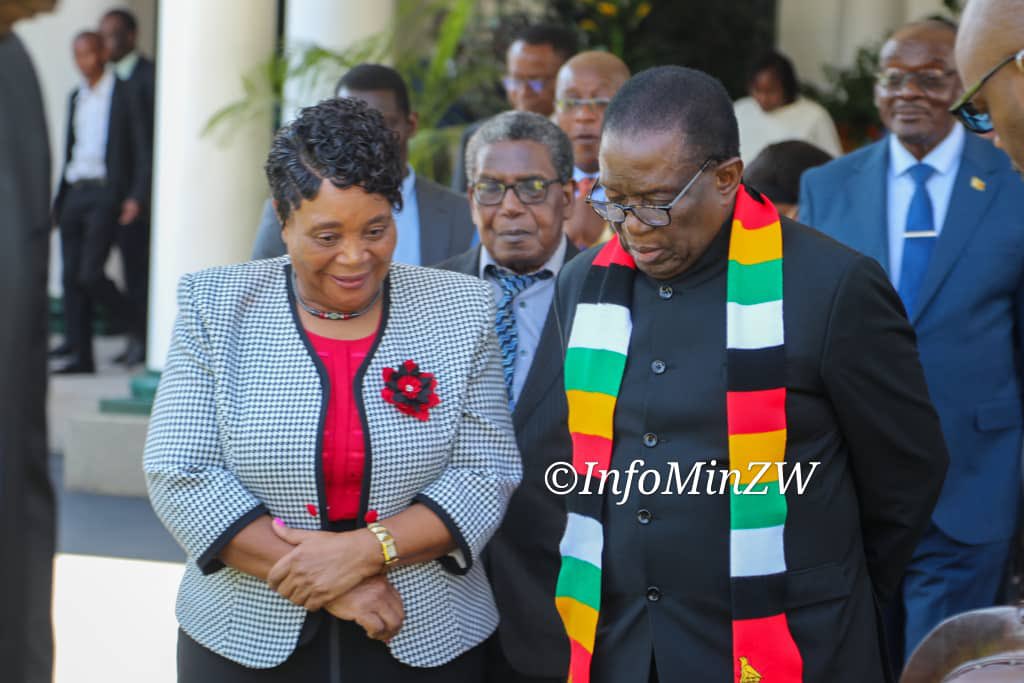


Chief Justice Elizabeth Gwaunza has refused a request from local news agency Sources Media Network to broadcast Wednesday’s Constitutional Court hearing live from inside the courtroom.
The request was considered at a case management meeting, where the court ruled that no sufficient basis had been put forward to justify live coverage. The decision was confirmed in a letter from the Constitutional Court to law firm Atherstone & Cook on 19 May 2026.
The ruling comes just days after Gwaunza was sworn in as Chief Justice on 15 May, making it one of her first major decisions in the role.
Sources Media Network, represented by journalists Panashe Makufa and Xolisani Ncube, had written to the Judicial Service Commission on 4 May through Atherstone & Cook. They sought permission to livestream the hearing of Reuben Zulu and Five Others v President of the Republic of Zimbabwe and Another.
The case was brought by six war veterans who are challenging the President’s role in Cabinet processes that led to the approval of the Constitutional Amendment (No. 3) Bill.
They allege that President Mnangagwa breached the constitution by chairing discussions on amendments that could personally benefit him.
Drafted by constitutional law expert Lovemore Madhuku, the application seeks the court to declare the Cabinet’s deliberations on the bill null and void and to block the President from taking the proposed amendments further.
In its reply to Atherstone & Cook’s Chris Mhike, the JSC said the request was put before Chief Justice Gwaunza. A case management meeting was held the same day, where submissions were heard from the applicant and the parties to the case.
“Following the case management meeting and after considering the submissions made by the requester and the parties, the considered view of the Honourable Chief Justice is that no sufficient basis has been demonstrated to warrant the granting of the request for live coverage inside the courtroom,” the letter reads.
Beyond its conclusion that the request lacked sufficient basis, the court offered no further comment or legal reasoning in the letter.
In its application on 4 May, Sources Media Network argued that the case was of major legal and political importance to Zimbabwe.
The agency offered to install cameras and broadcasting equipment before proceedings started, to avoid any disruption to the court.
It had also said it would comply with any practical guidelines or conditions set by the Judicial Service Commission.
More: ZimLive






Leave a Reply Cancel reply