




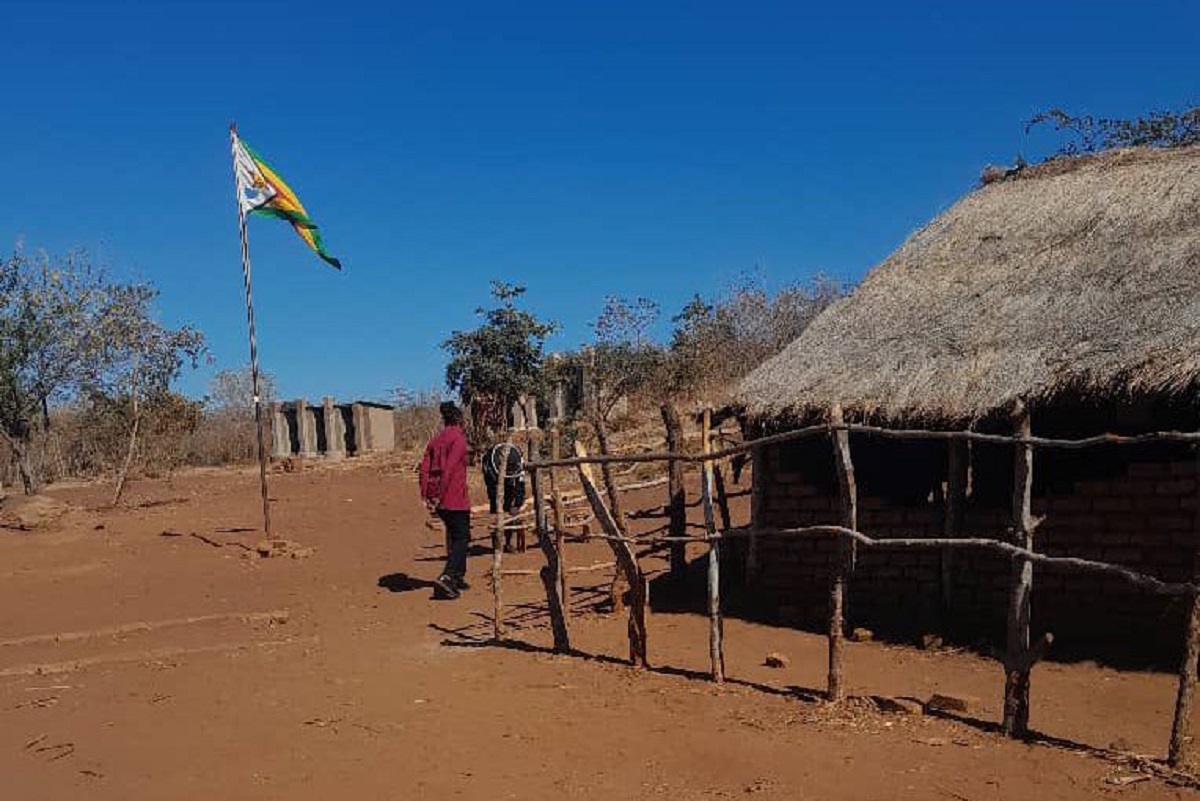


When the Constitution of Zimbabwe was adopted, it was hailed as a progressive, transformative document that breathed new life into the social and economic rights of ordinary citizens. Chief among these promises was Section 75(1)(a), which explicitly guarantees every citizen and permanent resident the right to a “basic State-funded education.” To reinforce this, Section 27 mandates that the State must take all practical measures to promote free and compulsory basic education. Subsequent amendments to Section 68A of the Education Act [Chapter 25:04] further codified this ethos, erecting a statutory shield against financial exclusion in our schools.
Yet, more than a decade after the supreme law was enacted, the reality on the ground tells a story of systemic betrayal. The latest and most alarming manifestation of this crisis is the Minister of Primary and Secondary Education’s recent address to Parliament. In his speech, the Minister boldly declared that School Development Committees (SDCs) and School Development Associations (SDAs) must use debt collectors to recover unpaid levies from parents.
This article stands as a direct, uncompromising response to that ministerial directive. It is time to state the plain, uncomfortable legal truth: Statutory Instrument 379 of 1998 is fundamentally unconstitutional, it openly contradicts its parent Act, and the Minister, by actively instructing schools to deploy debt collectors to enforce these levies, is administering and implementing an illegality.
The Structural Illegality of S.I. 379 of 1998
The fundamental flaw of S.I. 379/1998 lies in its core mechanism, which shifts the financial burden of basic education entirely from the State to individual households. Section 7(a) and Section 21(1)(a) of the SI empower SDAs to “impose a levy in respect of each child enrolled at the school.” Worse still, Section 26(1) weaponises this provision by allowing these associations to launch civil lawsuits to recover unpaid levies from struggling parents. This is a glaring constitutional violation. A right cannot be conditional on a citizen’s ability to pay a state-sanctioned debt. While Section 27 of the regulations contains a superficial clause stating that a child cannot be expelled solely for the non-payment of levies, the broader machinery of the SI turns basic education into a fee-dependent commodity.
By transforming parental obligations into actionable civil debts under Section 26—and now, by ministerial decree, unleashing aggressive private debt collectors onto families—the regulation completely undermines the constitutional command that basic education must be State-funded.
Furthermore, Section 37 of the regulations goes so far as to criminalise non-compliance, threatening citizens with up to a year’s imprisonment for structural breaches related to these associations. To threaten a parent with a prison sentence, a criminal record, or the attachment of their meagre household property by a debt collector over public education funding is a draconian absurdity. It creates an environment of fear that is entirely inconsistent with the spirit of human rights protections under our democratic dispensation.
Because a Statutory Instrument is merely subsidiary legislation, it cannot override or narrow the grand vision of its parent Act or the Constitution. S.I. 379/1998 is ultra vires—it exceeds the legal boundaries of what a regulation is permitted to do.
The Minister’s Parliamentary Stance: Validating an Illegality
This brings us to the administrative gatekeeper of this broken system: the Ministry of Primary and Secondary Education. Under the Education Act, the Permanent Secretary and the Minister retain the regulatory power to oversee fee and levy adjustments. This power was originally intended as a consumer protection tool to prevent elite committees from unilaterally pricing poor or vulnerable students out of the classroom. However, the Minister’s latest policy position in Parliament has devolved into a routine administrative rubber-stamping of an illegal framework. By telling public schools to outsource their revenue collection to third-party debt collectors, the Minister is actively validating a system where public education is parent-funded rather than State-funded.
When the Treasury fails to allocate adequate funds to public schools for basic utilities, learning materials, and infrastructure, the Ministry relies on parental levies to cover the deficit. By approving these levy applications year after year, and now sanctioning aggressive debt collection tactics, the Minister is not merely acting as a regulator—the Minister is actively facilitating a system that commercialises a public right.
Under the Administrative Justice Act [Chapter 10:28], all administrative authorities must act reasonably, lawfully, and in a procedurally fair manner. It is fundamentally unreasonable and unlawful for the Minister to authorise compulsory levies that convert into civil debts, and then direct debt collectors to enforce them against impoverished parents, while simultaneously failing to secure core funding from the State as demanded by Section 75 of the Constitution. The Minister cannot use subsidiary regulations, parliamentary speeches, or administrative oversight as a shield to escape a direct, supreme constitutional obligation. In simple terms, you cannot legally enforce an inherently unconstitutional mechanism. By continuing this habit, the Ministry is executing an illegality.
The Road to Judicial Redress
The Minister’s remarks in Parliament represent a profound breakdown of constitutional compliance. We cannot boast of a progressive constitution while allowing a 1998 statutory instrument to dictate the exclusion, harassment, and financial victimisation of our families through debt collection agencies.
The High Court of Zimbabwe must be approached to restore the rule of law. A clear, uncompromising judicial order is required to strike down Sections 7(a), 21, 26, and 37 of S.I. 379/1998. The courts must declare that while the Minister retains the right to regulate private institutions, the Ministry cannot lawfully authorise or approve any levy structure—or enforcement mechanisms like debt collectors—in a Government school that shifts the primary financial burden of basic education from the State to the parent.
Education is not a luxury commodity to be bought, sold, or sued over; it is a constitutional right. Until S.I. 379/1998 is dismantled and the Minister’s unlawful policy directives are legally restrained, the promise of free basic education in Zimbabwe will remain a myth written on paper, continually denied to the children who need it most.
Etiwel Mutero is a parent with school-going children, a teacher, an archivist, a librarian and a political commentator. You can contact him on +263773614293 or etiwelm02@gmail.com





Leave a Reply Cancel reply