





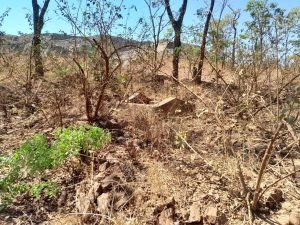
Zi-Heritage and Environmental Consultancy is set to exhume 147 graves at the old Peak Mine Cemetery in Shurugwi, clearing the way for expanded mining operations in a move that has left families scrambling to trace and identify relatives buried decades before Zimbabwe attained independence.
The exercise, which is being funded by Chinese-run Chengxi Mine, will be carried out by Zi-Heritage and Environmental Consultancy.
Chengxi holds extensive gold claims across the Boterekwa Hills, where large-scale mining activities have already transformed sections of the once-scenic landscape into exposed rock — much to the concern of environmentalists.
Zi-Heritage chief executive officer Takudzwa Pasipanodya said all procedural requirements have been met, adding that the relevant authorities, including Chief Nhema, have been consulted and are in agreement with the exhumation process.
“We are exhuming all graves, and we will transfer them to Tongogara Rural District Council Cemetery for those who do not have a place to rebury their relatives, but for those with rural areas to rebury their relatives, we will cater for everything up to the last stage.
“So those who have finalised with other relatives should come forward and notify us so that we strategies the process.
“For those graves where we have no relatives, we have the graveyard map and all documentation. If the grave is at number one at the old grave, we will locate it at number 1 at the new grave so that when relatives come, they will be able to identify,” said Pasipanodya.
The cemetery is believed to contain the remains of mine workers dating back to the 1940s, many of them migrant labourers from Malawi, Zambia and Mozambique who had travelled to the area in search of economic opportunity during the colonial era.
Families with ties to the site gathered last Thursday at the District Development Coordinator’s office, where officials briefed them on the planned exercise and the steps required to identify and relocate the remains of their loved ones.
Among those affected is Mustafo Bero (71), of Ruchanyu Village 3 in Shurugwi, who said three of his relatives, his mother, father and uncle, are buried at the cemetery.
Bero said that they had migrated from Malawi in pursuit of better prospects, and now face the prospect of being exhumed decades after their burial.
“My parents came from Malawi in 1940 to work at Zimasco. I was born here in 1953, my father died in 1956 and was buried at Peak Cemetery,” said Bero.
“Identification is now a challenge, even though we have yet to finalise the identification with some of the family members in Malawi. I can only remember one grave because there are no markings on many graves.”
Richard Zigora of Poshai Village under Chief Nhema said notices regarding the planned exhumations failed to reach affected communities.
He said that calls for objections were published in The Herald, a newspaper he claims is no longer widely read in Shurugwi, and argued that Zi-Heritage should have used a local publication to effectively reach relatives.
“Zimasco stopped maintaining the cemetery. I will rebury my father at our rural home in Poshai. However, this issue is very critical, but only a few relatives are aware of the exhumation process,” said Zigora.
“They should advertise the process through the local paper, traditional leaders and councillors so that the message can reach every corner. No one is still reading the national papers like the Herald here.”
More: Masvingo Mirror





Leave a Reply Cancel reply